
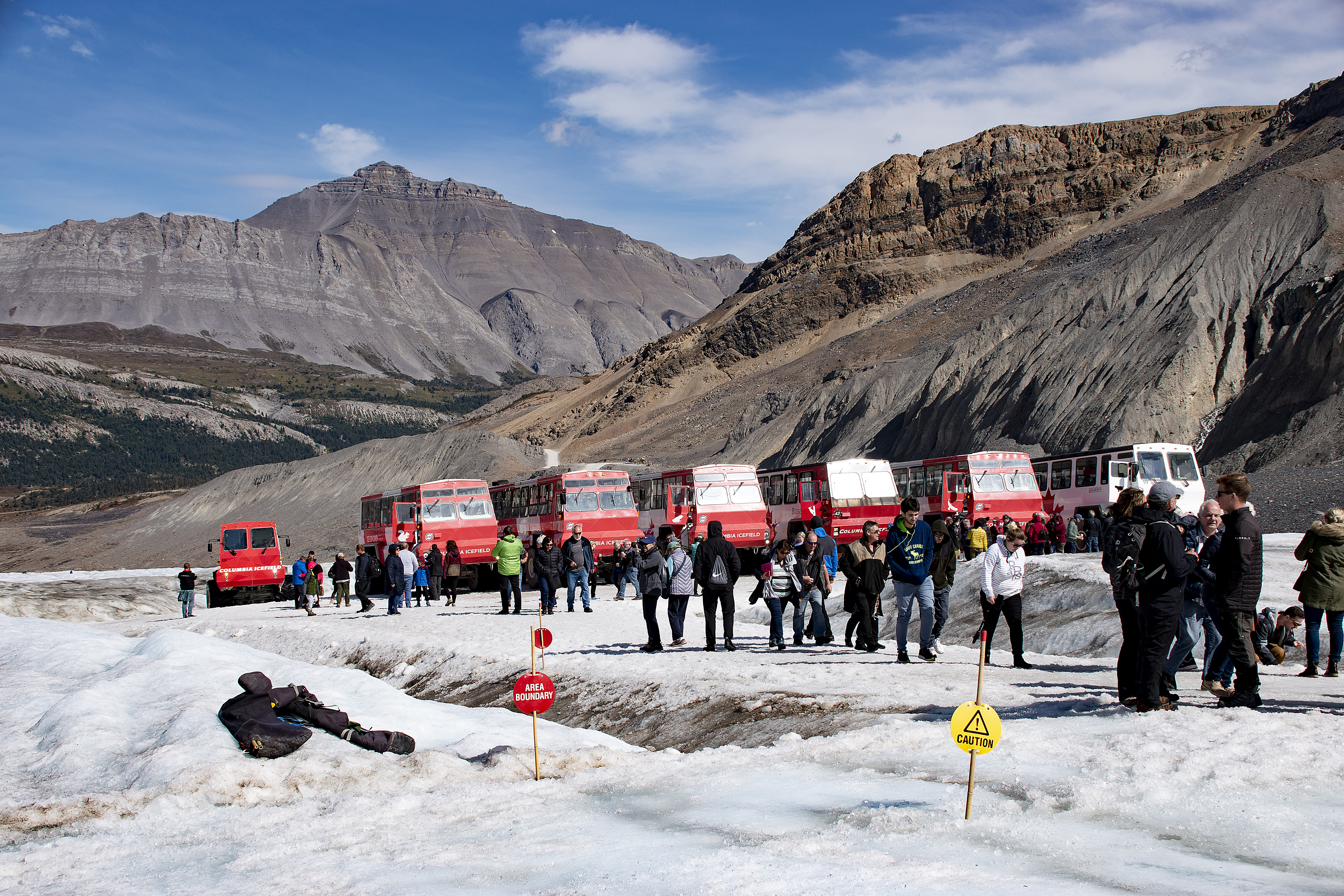
Pursuit Attractions and Hospitality, Inc. has launched the world’s first electric Ice Explorer vehicle for the Columbia Icefield Adventure [1, 2].
The introduction of electric propulsion in this sensitive environment marks a shift toward sustainable tourism in high-altitude glacial regions. By replacing traditional combustion engines, the company intends to minimize the ecological footprint of visitors traveling across the Athabasca Glacier [1, 2].
The new vehicle operates within Jasper National Park, Alberta, Canada [1, 2]. The transition to an electric fleet is designed to reduce carbon emissions and eliminate the noise pollution typically associated with heavy-duty ice machinery. This change allows for a more immersive visitor experience, as guests can observe the glacial landscape without the interference of engine noise [1, 2].
Pursuit Attractions and Hospitality, Inc., which trades on the NYSE under the symbol PRSU, integrated the vehicle into its existing tour operations [1, 2]. The company said the goal is to provide a quieter environment for tourists while protecting the fragile ecosystem of the park [1, 2].
The Columbia Icefield Adventure is a primary attraction in Jasper National Park, bringing thousands of visitors to the ice annually [1, 2]. The deployment of this technology serves as a test case for how heavy-duty transport can be electrified in extreme cold and rugged terrain—conditions that typically challenge battery performance and vehicle durability [1, 2].
“The world’s first electric Ice Explorer vehicle”
This deployment signals a broader trend of 'decarbonizing' luxury and adventure tourism in protected wilderness areas. As glacial landscapes face acceleration in melting due to climate change, the move to electric transport reduces the localized impact of soot and pollutants on the ice, while demonstrating the viability of electric heavy-machinery in sub-zero environments.


