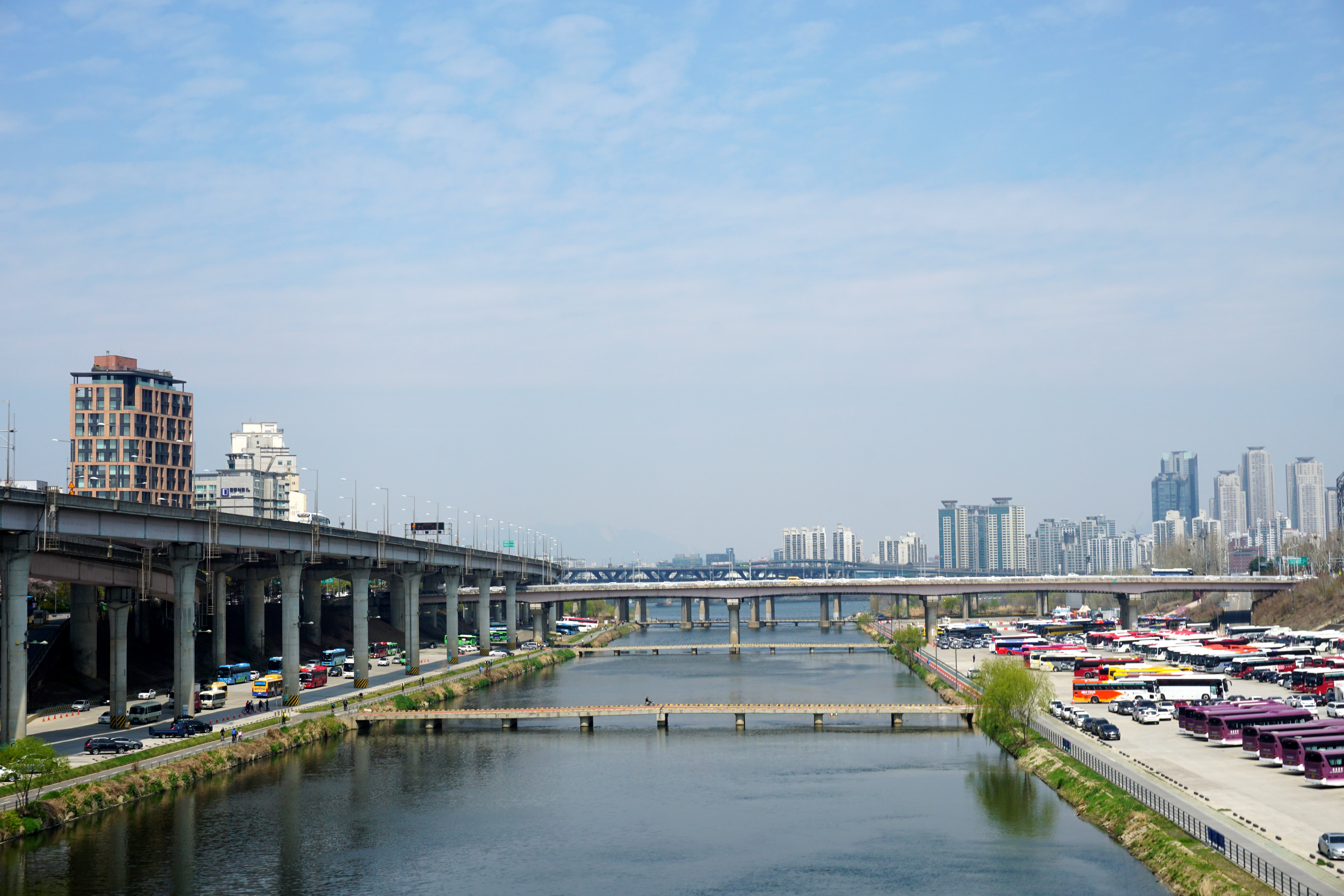
Seoul city authorities implemented a two-way full traffic control of the Dongbu Expressway after rising water levels in the Jungnangcheon stream threatened the road [1].
The closure disrupts a major transit artery in the capital, forcing commuters to find alternative routes while officials monitor the stability of the infrastructure. Such closures are critical for preventing vehicle entrapment during sudden urban flooding events.
The traffic restriction covers the section of the expressway from the underground underpass to the Seongsu junction [1]. This action followed a period of intense precipitation that caused the Jungnangcheon to swell, bringing debris and mud onto the roadway [1].
Traffic management officials focused their efforts near the Hancheon Bridge, where the impact of the rising water was most evident [1]. The flooding was characterized by muddy waters and floating waste, which created hazardous conditions for motorists [1].
Weather conditions began to stabilize later in the morning. An anchor for YTN said that as rain clouds moved out of the Seoul area, the heavy-rain warning was lifted at 7:30 a.m. [1].
Despite the lifting of the weather warning, the road remained closed to ensure safety. Reporter Jung Young-soo, reporting from the Hancheon Bridge, said the Jungnangcheon was covered in muddy water with trash floating in between [1].
City officials continue to monitor the water levels before reopening the expressway to the public [1].
“The traffic restriction covers the section of the expressway from the underground underpass to the Seongsu junction.”
The closure of the Dongbu Expressway highlights the vulnerability of Seoul's low-lying transit infrastructure to the Jungnangcheon stream's fluctuations. Even after official weather warnings are lifted, the lag between peak rainfall and peak river levels can create prolonged disruptions to urban mobility, necessitating cautious, phased reopenings to avoid accidents.


