
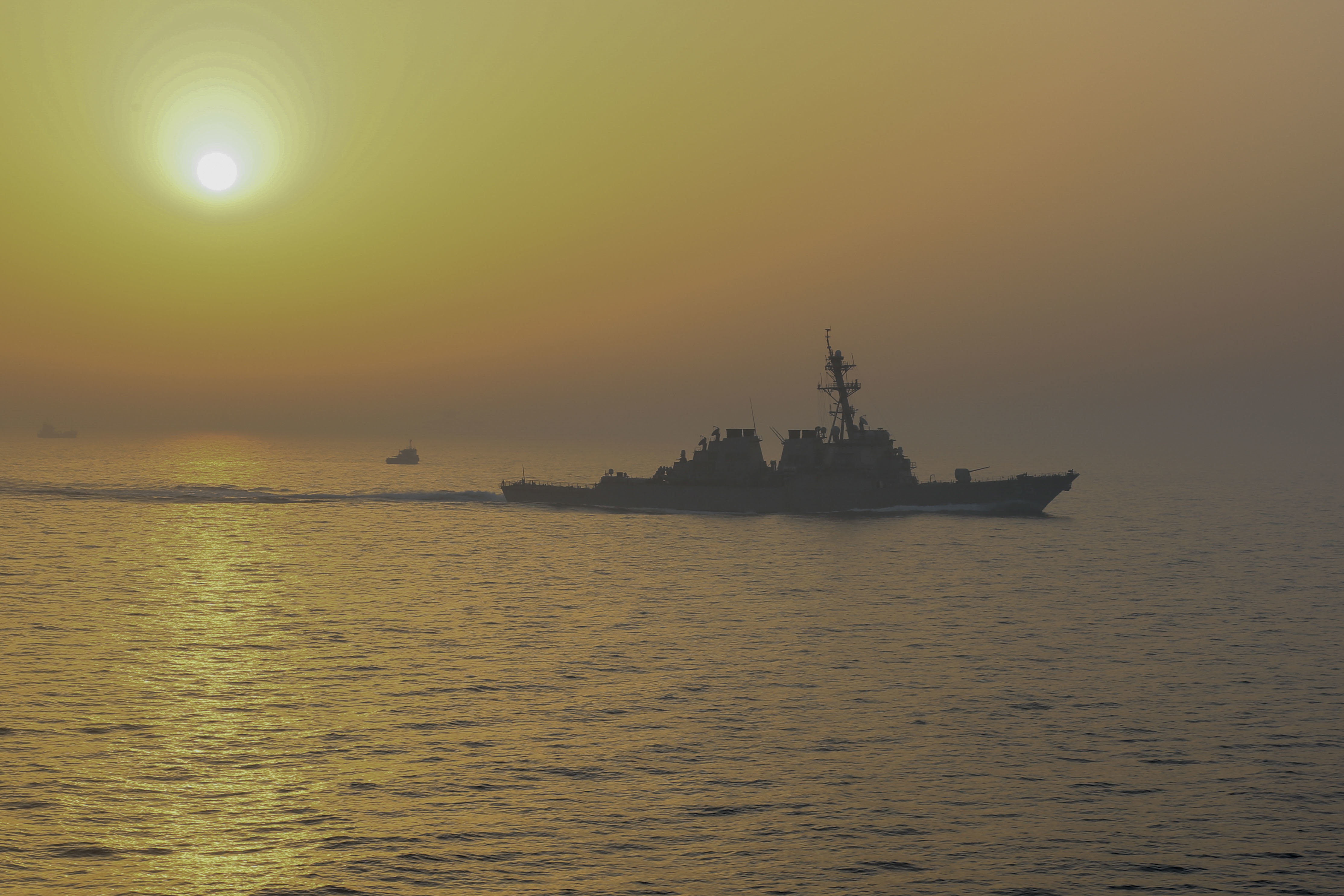
The U.S. military conducted an airstrike in southern Iran targeting vessels that were attempting to lay naval mines near a port [1].
This action occurs as both nations navigate a complex security environment. The strike specifically targets the deployment of mines that could obstruct the Strait of Hormuz, a critical maritime chokepoint for global energy and trade.
U.S. Central Command said the operation was a self-defense measure [1]. According to the command, the strike was not an attack on Tehran, the Iranian capital, but rather a targeted operation against ships engaged in mining activities near a southern port [1].
Nam Sung-wook, a distinguished professor at Sookmyung Women's University, said the location of the strike is significant. He said that the military targeted vessels attempting to lay mines near the port [1].
Professor Nam said that the strike did not target the Iranian mainland in Tehran [1]. He said that the U.S. and Iran must ensure safety, and remove mines, to reopen the Strait of Hormuz. If Iran continues to lay mines, the process of reopening the strait will be delayed [1].
The operation highlights the tension between tactical military actions and broader diplomatic efforts. While the U.S. maintains that the strike was defensive, the act of deploying mines in a strategic waterway suggests a continuing effort by Iranian forces to control access to the region [1].
“The strike was described as a self‑defense measure and not an attack on Tehran.”
The strike underscores the fragility of maritime security in the Strait of Hormuz. By targeting mine-laying vessels, the U.S. is signaling that it will use kinetic force to prevent the closure of the strait, even as diplomatic discussions regarding the end of hostilities may be occurring. This suggests a strategy of 'deconfliction through deterrence,' where the U.S. seeks to maintain open shipping lanes regardless of the status of high-level negotiations.


