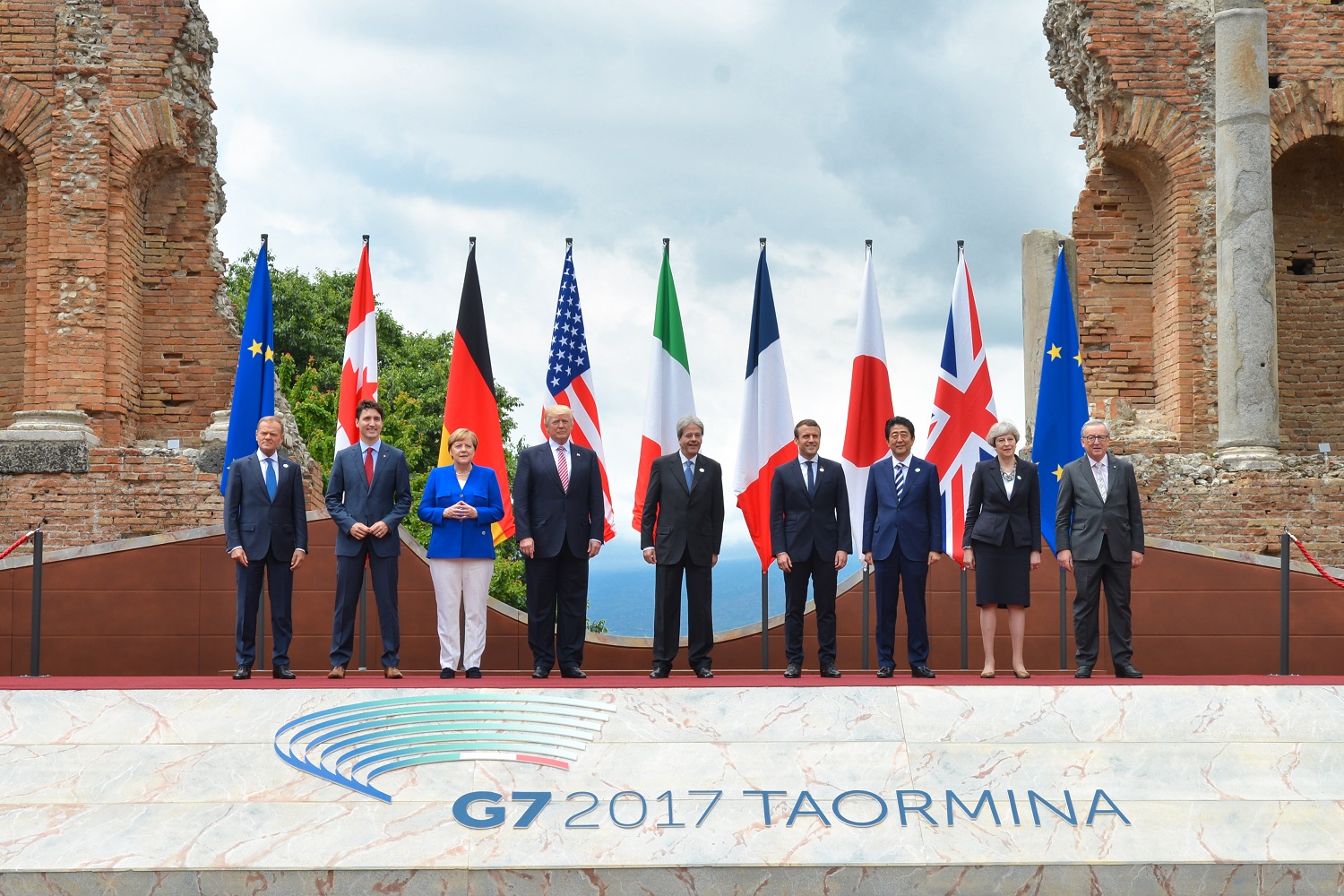
European leaders warned President Donald Trump that a superficial nuclear agreement with Iran could destabilize the Middle East during a G7 summit in Évian-les-Bains, France [1].
These disagreements highlight a rift between the U.S. and its closest allies regarding non-proliferation goals. European heads of state fear that a rushed deal, driven by a desire for a political victory, would undermine long-term security and weaken the collective bargaining power of the seven member states [1], [2].
The tension follows conflicting reports regarding the U.S. approach to negotiations. On Monday, President Trump said, "We are close to reaching an agreement with Iran" [3]. However, other reports indicate the president instructed negotiators not to rush into a deal [4].
Leaders from France, Germany, and the United Kingdom expressed concern that a deal lacking depth would be "superficial" [1]. They said that such an arrangement would fail to provide the necessary safeguards to prevent nuclear escalation in the region [1], [2].
An unnamed European diplomat said there is fear in Europe that the pursuit of a "victory" for President Trump could lead to a compromised agreement [4]. This internal friction comes as the G7 attempts to maintain a unified front on global security issues [1].
The summit in Évian-les-Bains served as the primary venue for these warnings, as European leaders sought to align the U.S. strategy with broader international standards for nuclear monitoring, and verification [1].
“"We are close to reaching an agreement with Iran"”
The friction within the G7 suggests a strategic divergence in how the West manages Iranian nuclear ambitions. While the US may prioritize a swift, high-profile diplomatic win, European powers are prioritizing a comprehensive framework to ensure regional stability. This divide could potentially lead to a fragmented international response to Iranian nuclear activity, reducing the overall efficacy of global non-proliferation efforts.