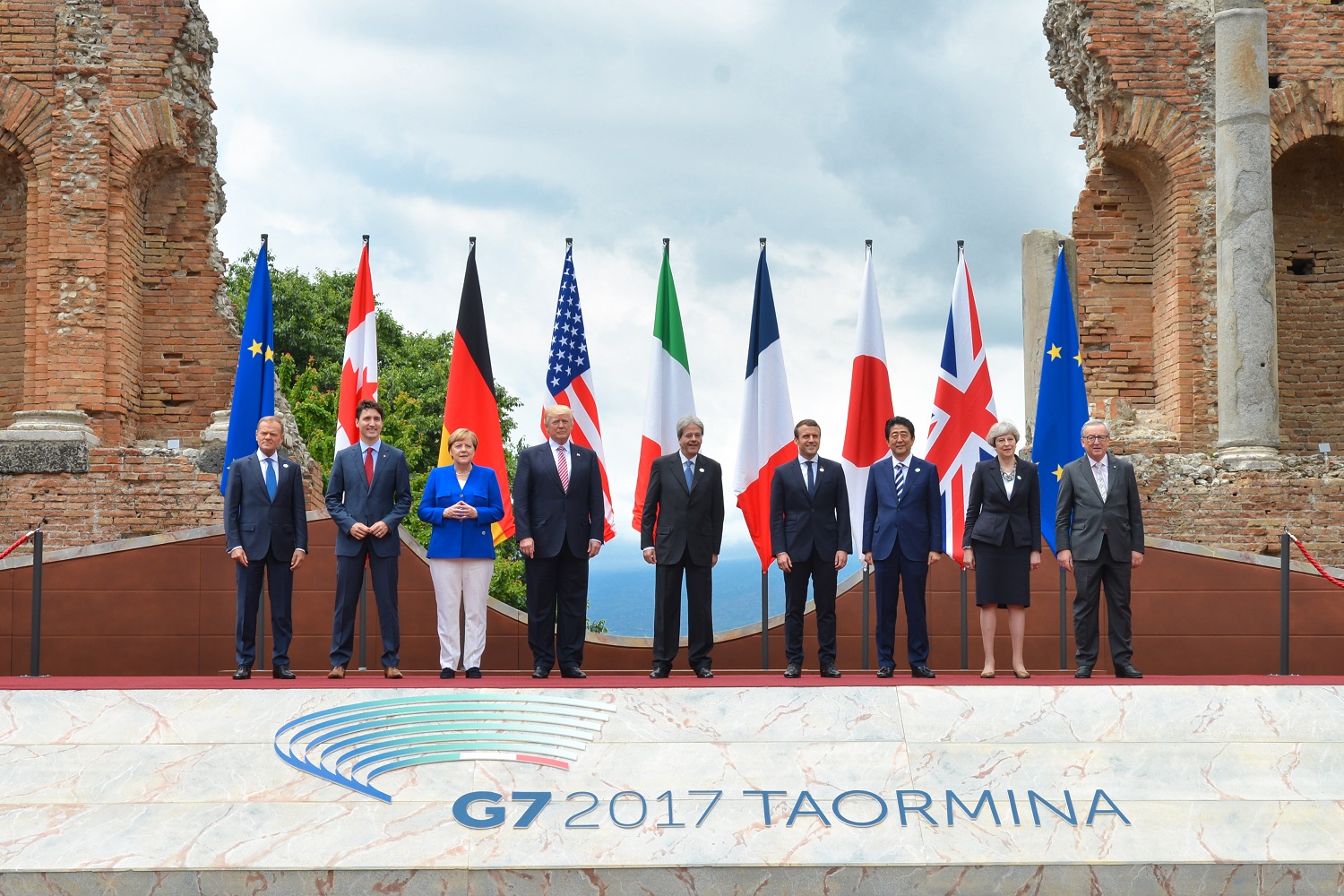
World leaders including Narendra Modi, Giorgia Meloni, Donald Trump, and Emmanuel Macron generated viral social media moments during the G7 summit in Evian, France [1, 3].
These interactions highlight the increasing role of digital diplomacy and personal branding in international relations. As leaders engage in media-friendly exchanges, the resulting memes often reach a broader global audience than official policy statements.
One prominent interaction involved Italian Prime Minister Giorgia Meloni and Indian Prime Minister Narendra Modi. The two leaders shared a light-hearted exchange regarding their social media popularity [1, 2]. During the encounter, Meloni said, "We're most famous couple" [2]. The moment quickly trended online, continuing a pattern of viral interactions between the two leaders.
Other moments of internet buzz centered on Donald Trump and Emmanuel Macron. The two were observed in an animated conversation regarding the UFC [1]. This exchange, along with a separate light-hearted moment involving a watch, contributed to the summit's digital footprint [1].
These casual exchanges occurred alongside the formal diplomatic agenda of the summit. While the leaders met to discuss global governance and security, the informal nature of these clips provided a contrast to the high-stakes environment of the G7 meetings [1, 3].
The viral nature of these clips suggests a shift in how summitry is consumed. Rather than focusing solely on joint communiqués, the public is increasingly engaging with the interpersonal dynamics of world leaders via short-form video and memes [1, 2].
“"We're most famous couple"”
The transition of high-level diplomatic summits into viral content streams indicates that 'soft power' is increasingly wielded through relatability and internet culture. By engaging in meme-able moments, leaders can maintain public visibility and project an image of accessibility, even while negotiating complex geopolitical issues in private.

