
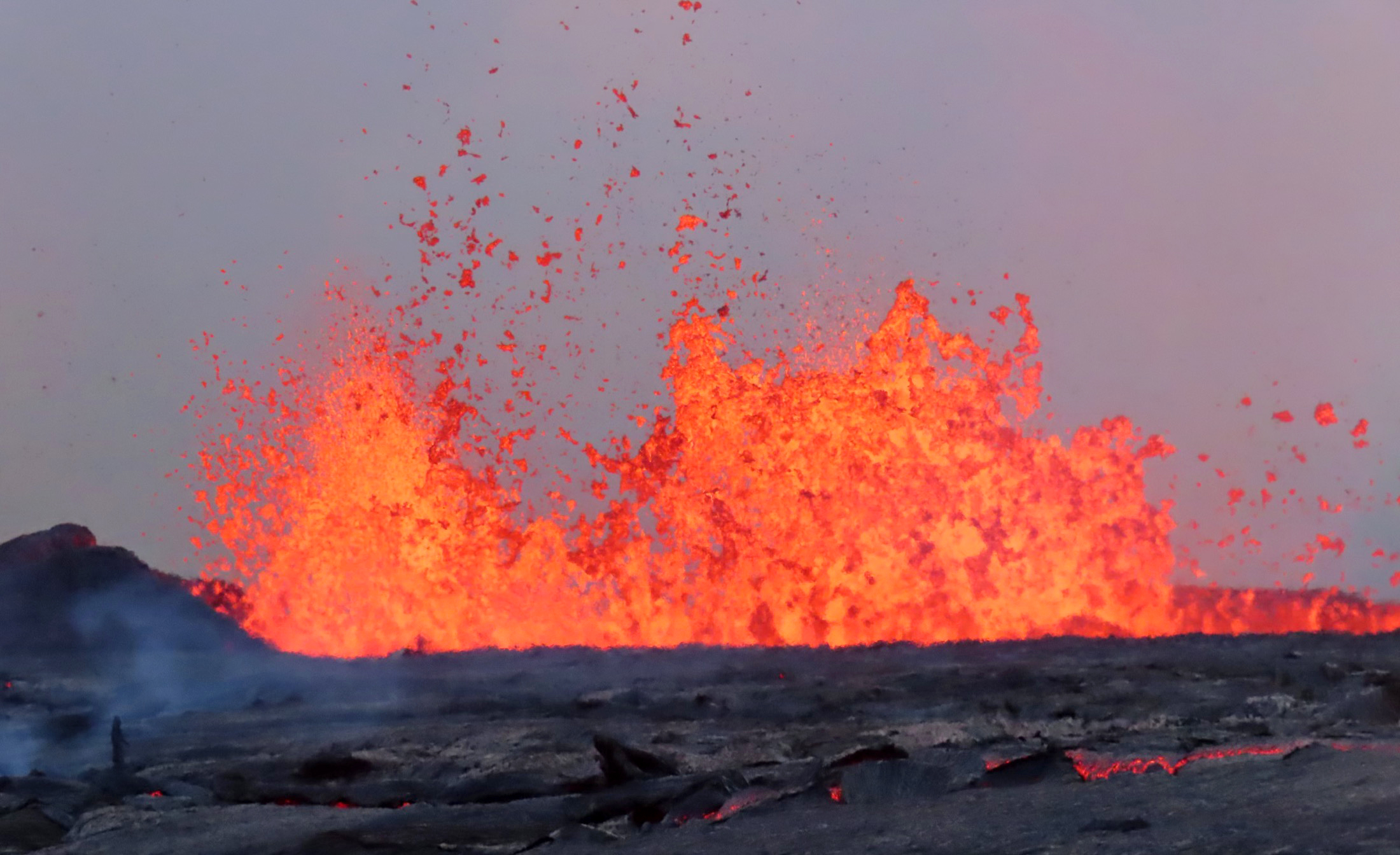
The Kilauea volcano on the Big Island of Hawaii resumed erupting Monday morning, producing intense lava fountains [1, 2].
This activity marks a significant escalation in the volcano's ongoing cycle of eruptions. The event is being closely monitored by U.S. Geological Survey (USGS) scientists to determine the potential impact on the surrounding region [1, 2].
According to reports, this current phase of activity is designated as episode 48 [3]. The transition into this episode began between May 30 and June 1, characterized by initial glows, spatter, and short overflows [3, 4]. Scientists said the lava fountains were expected to reach peak intensity around June 1 [2].
This latest burst of activity follows a period of increased seismic instability. A magnitude 6.0 earthquake recently rocked the Big Island, an event that experts said may have heightened the eruption [5, 2]. The volcano has been active in an on-and-off capacity for more than one year, making this current episode part of a longer trend of volatility [2, 5].
USGS scientists continue to track the fountaining activity as it evolves. The eruption is producing impressive images of lava fountains as the volcano breaks previous records for eruption frequency, and sequence [2, 4].
“The volcano has resumed erupting, producing intense lava fountains.”
The progression to episode 48 indicates a highly active volcanic system with frequent pressure releases. The correlation between the magnitude 6.0 earthquake and the subsequent eruption suggests that seismic shifts in the crust are directly influencing magma movement, necessitating constant surveillance by the USGS to predict future bursts.


