
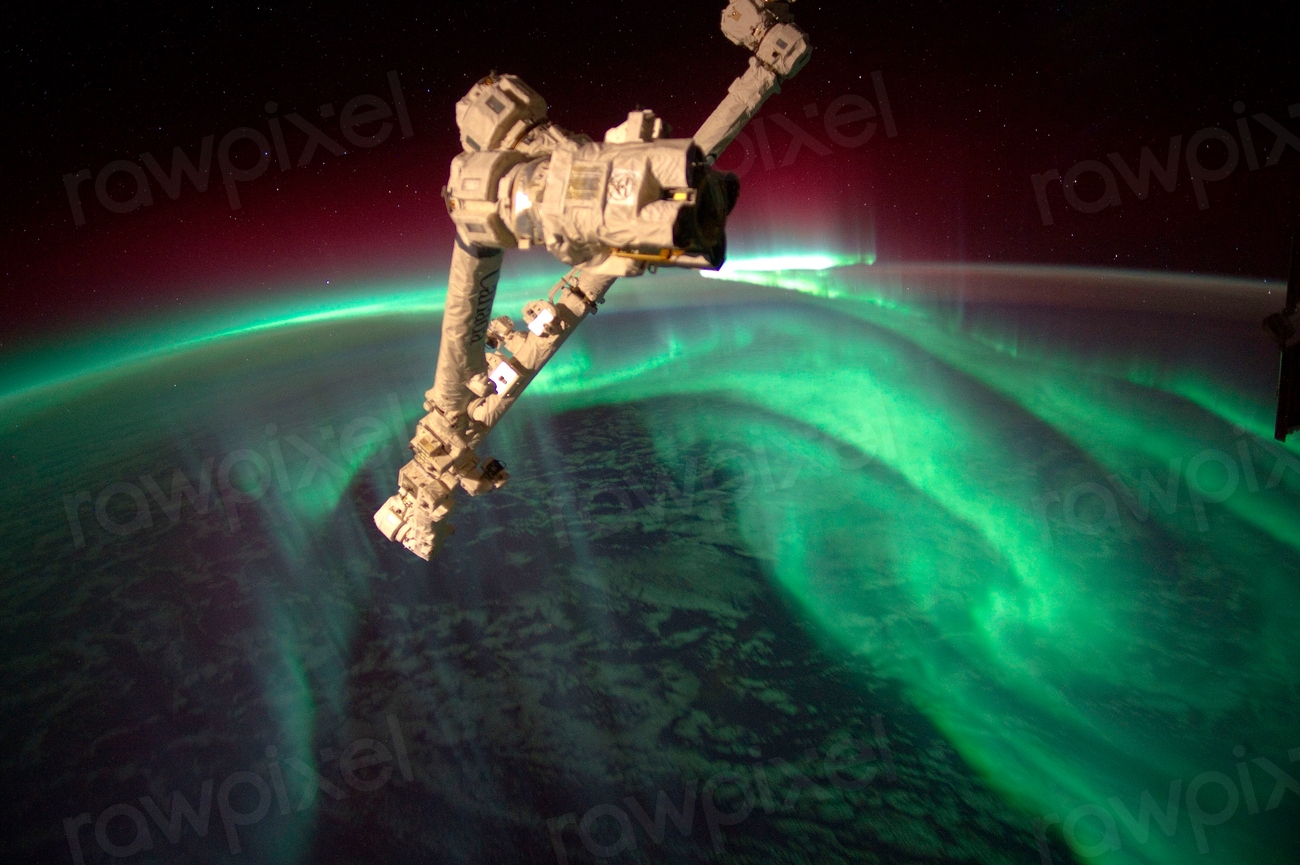
NASA astronaut Jessica Meir captured a timelapse video of the aurora australis from the SpaceX Dragon spacecraft as it orbited Antarctica [1, 5].
The footage provides a rare perspective of the Southern Lights, highlighting the interaction between solar activity and Earth's magnetic field. Such observations help scientists better understand the impact of solar weather on the planetary atmosphere.
Meir recorded the sequence on Friday, June 5, 2026 [1]. The visuals show snake-like auroras shimmering over the Southern Hemisphere [3]. This specific atmospheric display was triggered by a recent solar flare and a coronal mass ejection, also known as a CME [4, 5].
Coronal mass ejections are significant releases of plasma and magnetic fields from the sun. When these particles reach Earth, they can create vivid light displays in the polar regions, and occasionally further south or north, depending on the intensity of the solar storm [4].
The SpaceX Dragon spacecraft serves as a critical platform for these observations, allowing crew members to document celestial events in real time. The resulting timelapse allows viewers to see the rapid movement and shifting colors of the aurora australis from a vantage point impossible to achieve on the ground [1, 2].
While the footage was highlighted as a photo of the day on June 9, 2026 [3], the actual recording took place earlier in the week [1]. The imagery captures the scale of the phenomenon as it blankets the Antarctic region [5].
“NASA astronaut Jessica Meir captured a timelapse video of the aurora australis from the SpaceX Dragon spacecraft.”
The capture of this aurora emphasizes the ongoing volatility of the sun's activity cycle. By documenting these events from orbit, NASA and SpaceX provide data that complements ground-based observations, aiding in the prediction of solar storms that can disrupt satellite communications and power grids on Earth.


