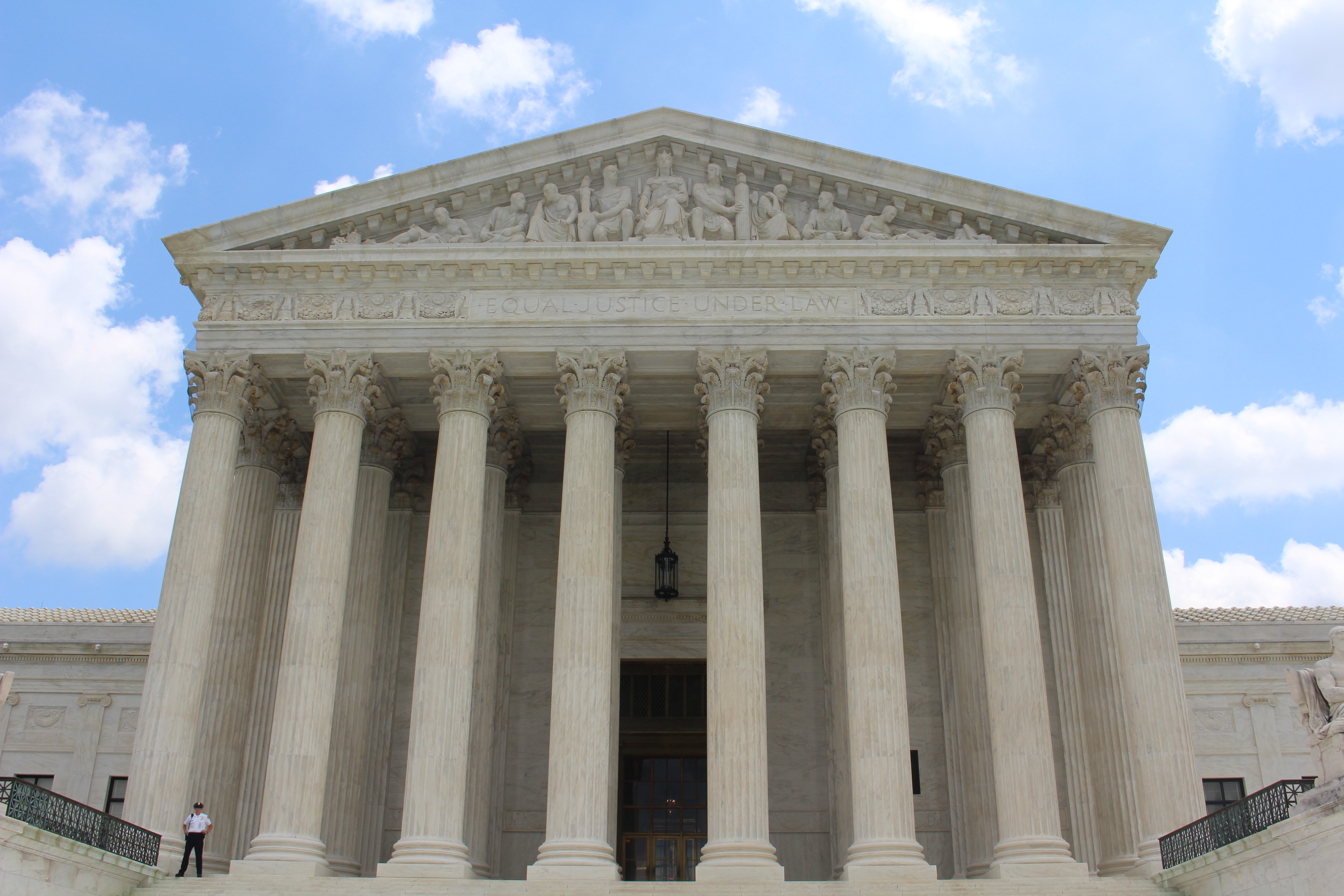
The U.S. Supreme Court struck down an executive order from President Donald Trump that sought to end birthright citizenship on June 30, 2026 [2].
This ruling preserves a long-standing interpretation of the 14th Amendment, ensuring that individuals born on U.S. soil are granted citizenship regardless of their parents' legal status. The decision prevents the executive branch from unilaterally altering citizenship eligibility through administrative orders.
In a six-three vote [1], the court determined that the order exceeded presidential authority [3]. The majority opinion said that the order conflicted with the Constitution's 14th Amendment, which guarantees citizenship to all persons born in the United States [3].
Justice Brett Kavanaugh wrote the majority opinion, which affirmed the constitutional protections of birthright citizenship [1]. The ruling clarifies that the president cannot override constitutional mandates via executive action, a move that would have fundamentally changed the legal landscape for millions of immigrants and their children.
While the executive order is now void, the ruling noted a statutory path for Congress to address the issue [1]. This distinction means that while the president lacks the power to end the practice, the legislative branch could potentially pursue different legal avenues to modify citizenship laws.
The decision was delivered at the Supreme Court of the United States in Washington, D.C. [3]. It concludes a legal battle over whether the executive branch possesses the power to restrict citizenship rights established by the 14th Amendment [3].
“The court ruled 6-3 that the executive order restricting citizenship for those born on US soil violated the 14th Amendment.”
This ruling reinforces the principle of judicial review over executive power and upholds the 14th Amendment's broad application of birthright citizenship. By ruling 6-3, the court has signaled that citizenship status is a constitutional matter rather than a policy preference. However, by mentioning a statutory path for Congress, the court has left the door open for legislative attempts to redefine citizenship, shifting the battle from the White House to Capitol Hill.


