
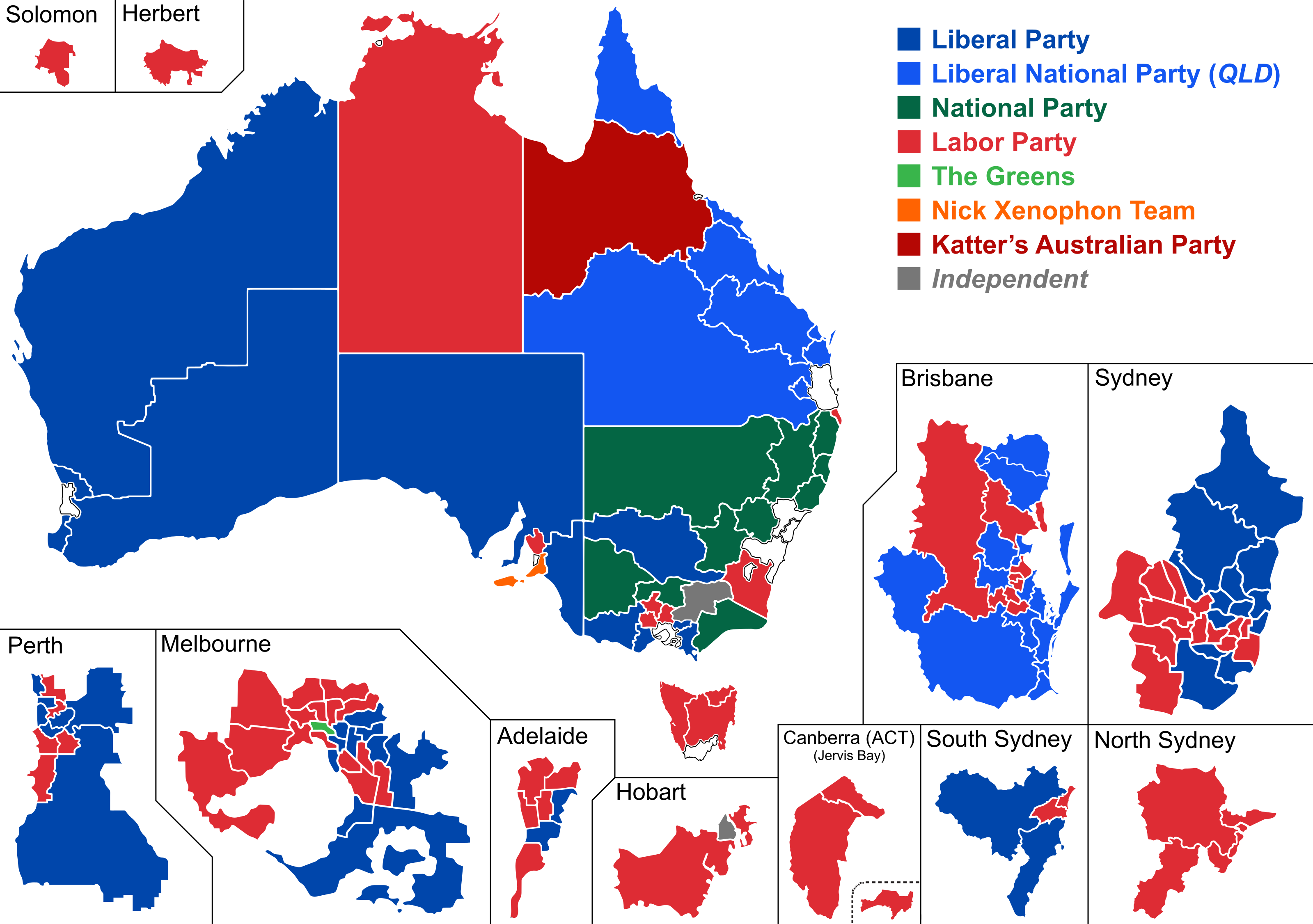
Former Prime Minister Tony Abbott was elected unopposed as president of the Liberal Party on Friday [1].
The appointment comes as the party struggles with declining membership and a series of electoral setbacks. Abbott's return to a leadership role suggests a strategic pivot toward a more traditionalist approach to rescue the organization from its current instability.
Abbott addressed the party from headquarters in Canberra, where he framed the current state of the organization as a critical turning point. "We are in an existential crisis and I am ready to serve the Liberal Party," Abbott said [1].
While the party leadership transitioned in the capital, tension mounted in Queensland. Police arrested two people [2] during a protest at the site of the proposed Brisbane Olympic stadium redevelopment.
Demonstrators at the site argued that the redevelopment plans would waste public funds, and cause harm to the local community [2]. The arrests occurred as the city continues to prepare for future Olympic infrastructure, a move that has drawn increasing scrutiny from local activists.
Abbott's unopposed election reflects a lack of competing candidates for the presidency during a period of internal turmoil. The former Prime Minister now takes the helm of the party's administrative wing, tasked with stabilizing the membership base, and redefining the party's platform for future elections [1].
“"We are in an existential crisis and I am ready to serve the Liberal Party."”
The return of Tony Abbott to a central leadership role indicates that the Liberal Party is looking toward experienced, conservative figures to navigate its current membership decline. Simultaneously, the unrest regarding the Brisbane Olympic stadium redevelopment highlights a growing public friction over the use of taxpayer funds for large-scale sporting infrastructure.


