
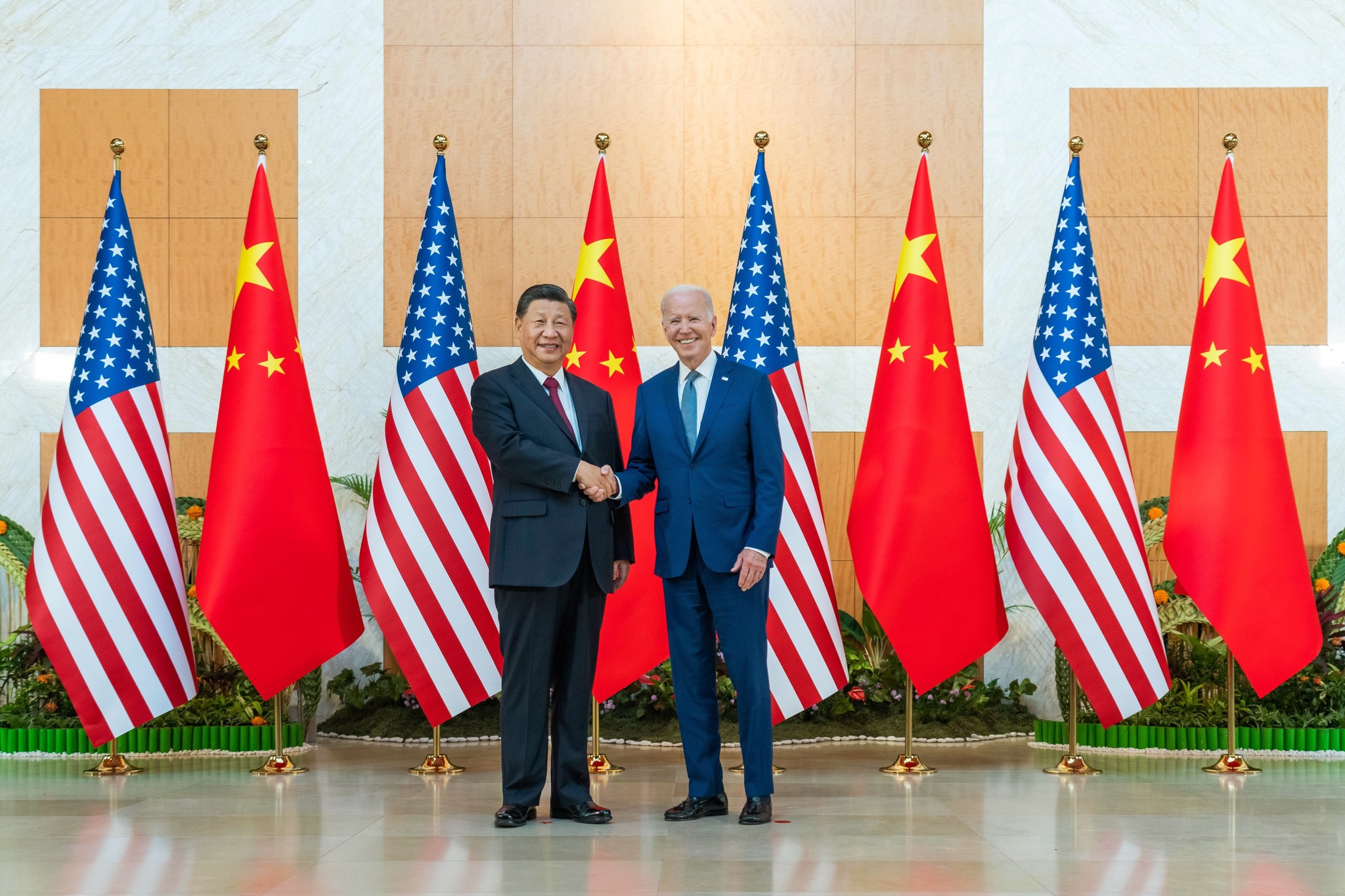
Chinese President Xi Jinping warned the United States not to fall into a "Thucydides Trap" during a summit with Donald Trump on May 15 [1].
The warning highlights the precarious nature of the current U.S.-China relationship, where a strategic clash over Taiwan could trigger a broader military conflict. By referencing an ancient historical pattern, Xi suggested that the rivalry between a rising power and an established power often leads to war.
Xi invoked the fifth-century BC Greek historian Thucydides to issue a warning to the U.S. president [2]. The concept of the Thucydides Trap describes the structural stress that occurs when a rising nation threatens to displace a ruling power, creating a volatile environment where small incidents can escalate into full-scale combat.
While the Chinese leader framed the discussion as a cautionary tale to avoid historical repetitions, the meeting also revealed friction between the two leaders. President Donald Trump said his Chinese counterpart had described the United States as a "declining nation" [3].
Taiwan remains the primary strategic flashpoint in this rivalry. Analysts note that the risk of conflict is heightened when both nations view the island as a non-negotiable security interest. Xi urged both sides to avoid the patterns that led to war in ancient Greece to ensure modern stability.
This interaction marks a rare moment where a Chinese leader explicitly used Western classical history to frame a diplomatic warning to a U.S. president. The focus on the Thucydides Trap underscores the perceived inevitability of friction unless both superpowers consciously steer away from historical precedents.
“China's Xi Jinping warned the United States not to fall into a Thucydides Trap.”
The invocation of the Thucydides Trap signals that China views the current geopolitical friction not as a series of isolated disputes, but as a systemic struggle for global primacy. By framing the risk as a historical pattern, Xi is attempting to shift the narrative from specific policy disagreements to a broader existential choice: managed coexistence or inevitable war. This suggests that while diplomacy is ongoing, China remains deeply concerned that U.S. strategic containment could inadvertently trigger the very conflict both sides claim to avoid.


