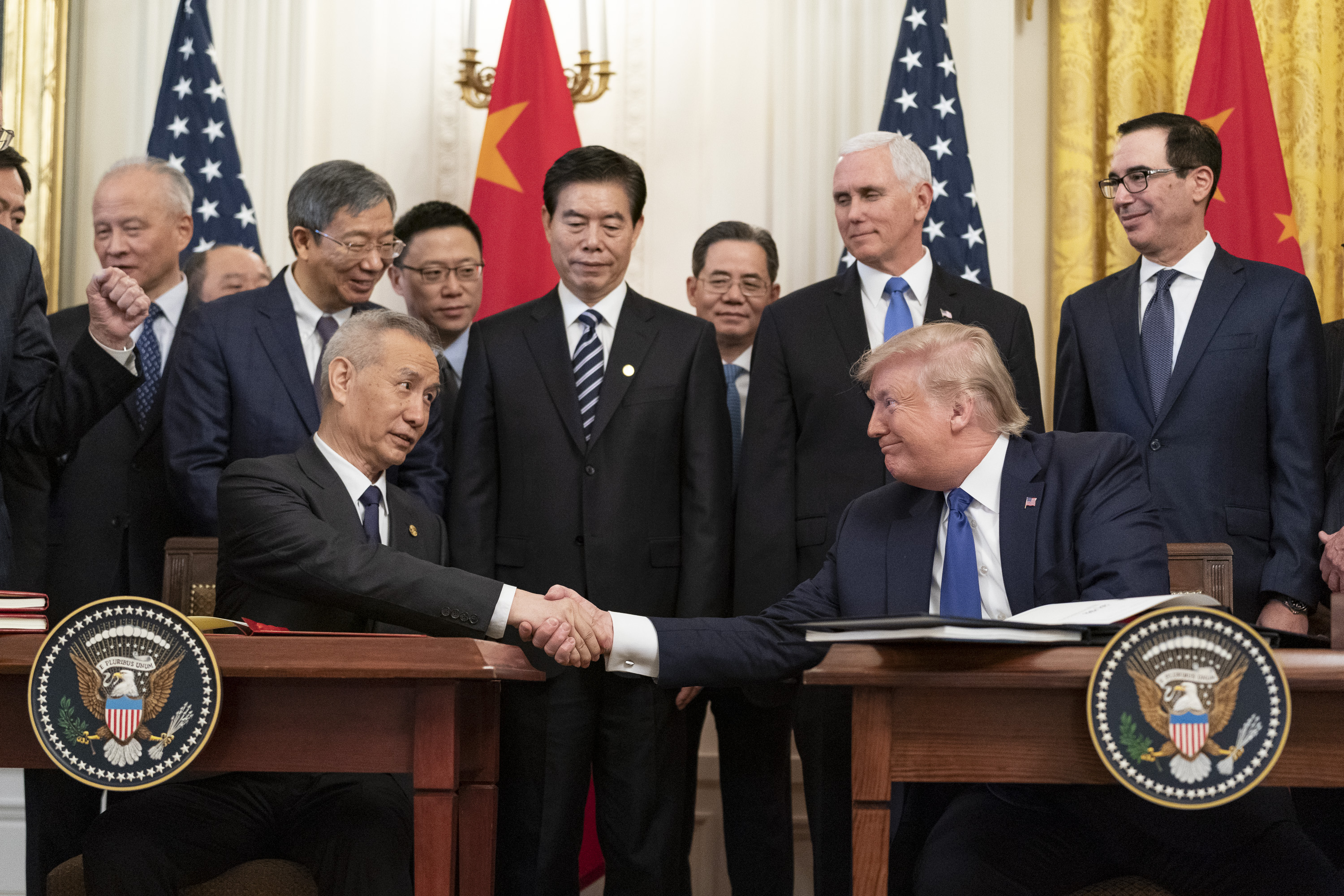
President Donald Trump signed an initial 14-point peace agreement with the government of Iran on June 18, 2026 [1].
The memorandum of understanding represents a significant shift in diplomatic relations, intended to end hostilities and establish a framework for lasting peace. If implemented, the deal could prevent further military escalation and address the risk of economic catastrophe [1, 2].
The agreement was signed in Washington, D.C. [1]. The 14 points [1] outlined in the document are designed to end the war that began following U.S. actions and to stabilize the region. The framework serves as a starting point for broader negotiations between the U.S. and Iranian governments [2, 3].
Despite the signing, the stability of the agreement remains a subject of debate. Some reports indicate that the deal is not yet final [3]. Other reports have suggested that peace talks in Geneva were called off, which could cloud the prospects for a lasting truce [4].
Trump said the deal was not final ahead of the formal signing on Friday [3]. The current memorandum functions as a preliminary step rather than a binding treaty. The U.S. administration has focused on the necessity of halting immediate military conflict to allow for further diplomatic dialogue [2].
While the 14-point plan focuses on ending hostilities, the dossier of verified facts does not mention specific provisions regarding nuclear weapons. The primary objective of the current signing is to stop the immediate cycle of escalation [1, 2].
“Trump signs initial 14-point peace deal with Iran”
This agreement marks a transition from active hostility to a tentative diplomatic framework. By utilizing a memorandum of understanding rather than a final treaty, both nations have created a low-stakes mechanism to test trust without committing to permanent concessions. The contradiction between the signing in Washington and reported failures in Geneva suggests a volatile diplomatic environment where initial agreements may face immediate implementation hurdles.


