
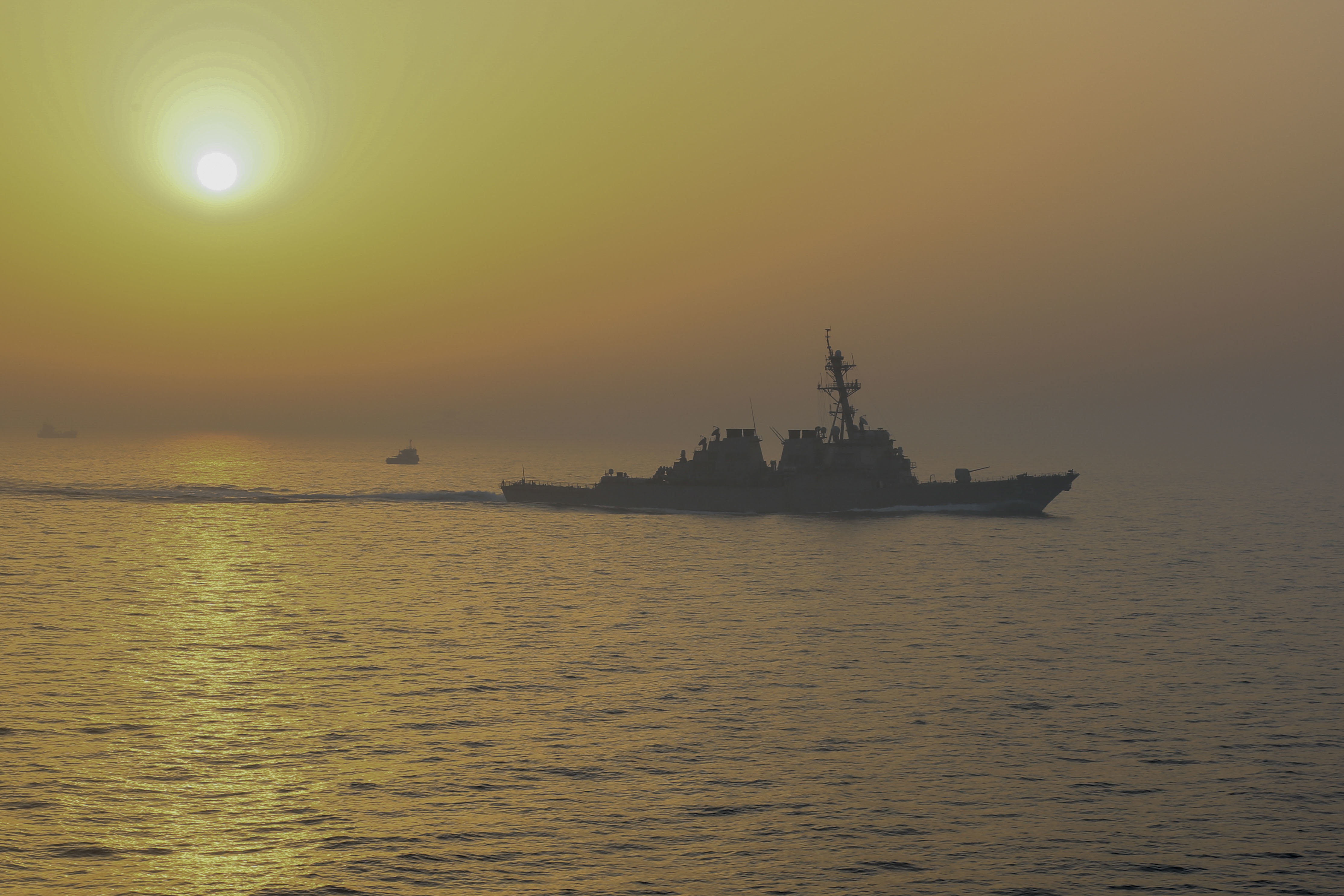
The U.S. military carried out strikes against Iranian missile launch sites and mine-laying boats near Bandar Abbas on Monday [1], [2], [3].
These operations target a critical maritime chokepoint in the Strait of Hormuz, where tensions between Washington and Tehran have escalated. The strikes signal a shift toward direct military action to secure international shipping lanes during a period of high volatility.
According to reports, the U.S. focused its efforts on infrastructure used for launching missiles and vessels capable of laying mines [1], [2]. The U.S. said the Hormuz Strait must be opened one way or other [3]. This phrasing indicates a strategy to ensure navigation in the region through force if diplomatic or tactical pressures fail.
Following the military action, President Donald Trump issued a warning regarding uranium [1], [2]. The nature of the warning was not detailed in the reports, but it links the conventional military strikes to the broader, long-standing conflict over Iran's nuclear capabilities.
Tehran has not yet responded to the strikes or the warnings from the U.S. administration [1]. The operations occurred while peace deal talks were reportedly ongoing, adding a layer of complexity to the diplomatic landscape—suggesting that military pressure is being used as leverage in negotiations.
Bandar Abbas serves as a primary port for Iran and a strategic hub for its naval operations. By targeting this specific area, the U.S. has directly challenged Iran's ability to project power and disrupt traffic in the Strait of Hormuz [1], [2].
“The U.S. said the Hormuz Strait must be opened ‘one way or other’”
The decision to strike Bandar Abbas suggests the U.S. is prioritizing the immediate physical security of the Strait of Hormuz over the stability of ongoing peace negotiations. By combining conventional strikes on naval assets with a specific warning about uranium, the administration is signaling that it views Iran's maritime aggression and nuclear ambitions as interconnected threats that justify a multi-pronged military response.


