
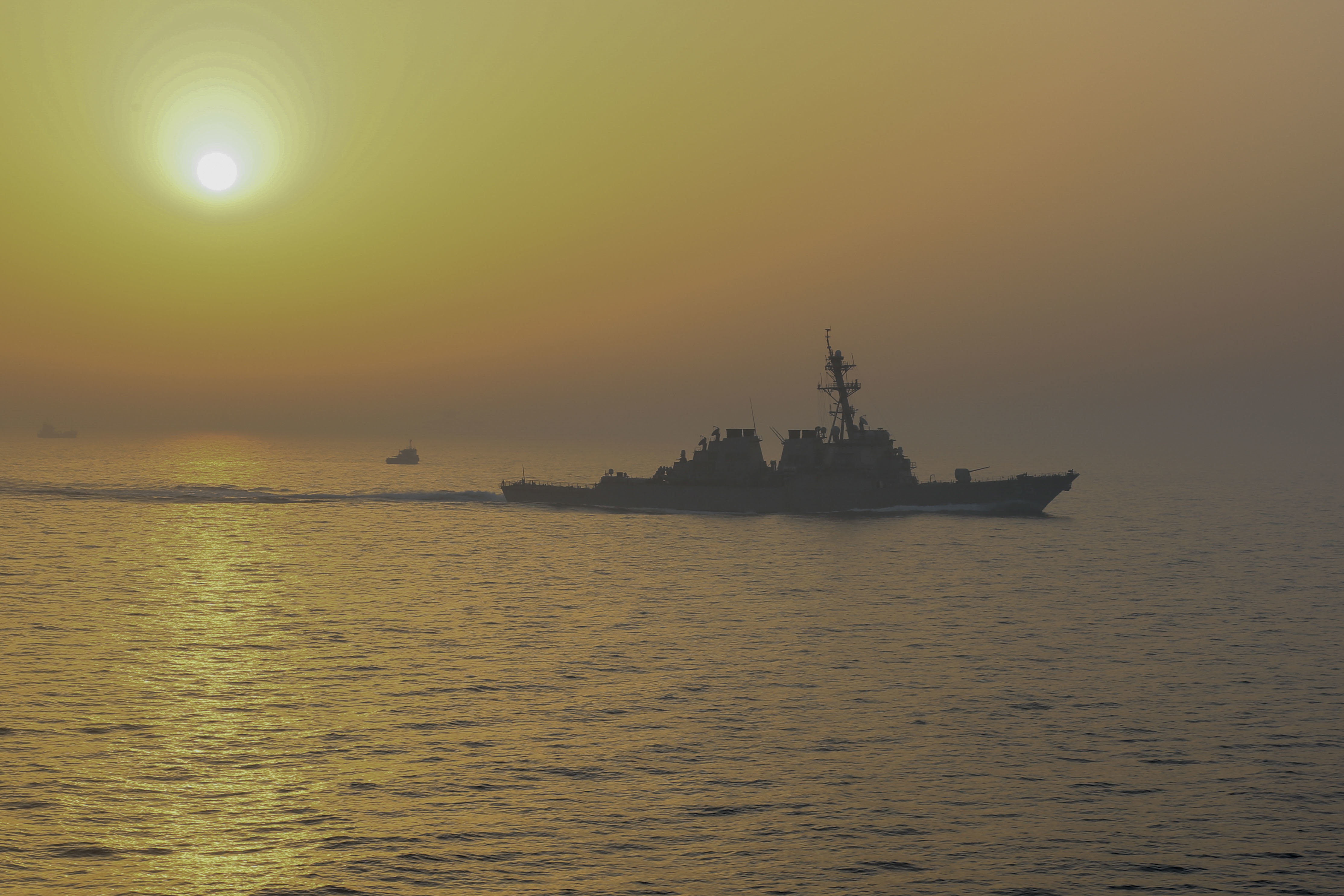
President Donald Trump announced a U.S. naval operation called “Project Freedom” to assist ships stranded in the Strait of Hormuz on Monday [1].
The move signals a sharp escalation in U.S. efforts to counter alleged Iranian blockades of commercial shipping while simultaneously applying economic pressure to global trade partners.
Project Freedom aims to secure the strategic waterway between the Persian Gulf and the Gulf of Oman [1, 2]. However, the operation has created immediate friction with Beijing. The U.S. effort to restrict Iranian activity in the strait potentially chokes a primary energy supply route for China [2]. In response, the Chinese government ordered its domestic companies to ignore U.S. sanctions [1, 3].
Beyond the Persian Gulf, the administration is leveraging trade policy to pressure European allies. President Trump threatened to raise tariffs on European Union automobiles to 25% [1]. This threat follows a period of sustained trade tension, as the U.S. continues to maintain 50% tariffs on steel and aluminium [3].
EU officials said all options remain on the table as they evaluate the U.S. trade agenda [1, 3]. The European Union is currently advancing a trade agreement to mitigate these risks, though the prospect of higher auto duties complicates negotiations [3].
Analysts suggest the timing of these moves is designed to maximize U.S. leverage before upcoming diplomatic summits. By combining naval presence in the Middle East with aggressive tariff threats in Europe and Asia, the administration is attempting to reshape energy and trade dependencies on a global scale [2].
Tiffany McGhee, CEO and CIO of Pivotal Advisors, said the implications of these shifts during a Bloomberg Brief broadcast [1]. The convergence of military action in a critical chokepoint and aggressive trade duties creates a volatile environment for international markets [1, 2].
“The US will help ships stranded in the Strait of Hormuz in an operation dubbed "Project Freedom."”
The simultaneous launch of Project Freedom and the threat of 25% auto tariffs indicate a shift toward a more aggressive, multi-theater strategy where military intervention in energy corridors is used as a complementary tool to economic warfare. By targeting both the EU and China, the U.S. is attempting to decouple global trade from Iranian influence while forcing a renegotiation of trade terms with its largest economic partners.


'%2F%3E%0A%20%20%20%20%3Crect%20width%3D'1600'%20height%3D'900'%20fill%3D'url(%23v)'%2F%3E%0A%20%20%20%20%3Cg%20opacity%3D'0.08'%20fill%3D'%23ffffff'%3E%0A%20%20%20%20%20%20%3Ccircle%20cx%3D'1420'%20cy%3D'180'%20r%3D'220'%2F%3E%0A%20%20%20%20%20%20%3Ccircle%20cx%3D'1500'%20cy%3D'760'%20r%3D'120'%2F%3E%0A%20%20%20%20%3C%2Fg%3E%0A%20%20%20%20%3Cline%20x1%3D'80'%20y1%3D'172'%20x2%3D'220'%20y2%3D'172'%20stroke%3D'%23ffffff'%20stroke-width%3D'3'%20stroke-opacity%3D'0.6'%2F%3E%0A%20%20%20%20%3Ctext%20x%3D'80'%20y%3D'140'%20font-family%3D'Inter%2C%20-apple-system%2C%20Helvetica%2C%20sans-serif'%20font-weight%3D'700'%20font-size%3D'28'%20fill%3D'%23ffffff'%20letter-spacing%3D'6'%3EHANNA%20%C2%B7%20NEWS%3C%2Ftext%3E%0A%20%20%20%20%3Ctext%20x%3D'80'%20y%3D'230'%20font-family%3D'Inter%2C%20-apple-system%2C%20Helvetica%2C%20sans-serif'%20font-weight%3D'600'%20font-size%3D'40'%20fill%3D'%23ffffffb3'%20letter-spacing%3D'4'%3EBUSINESS%3C%2Ftext%3E%0A%20%20%20%20%3Ctext%20x%3D'80'%20y%3D'622'%20font-family%3D'Playfair%20Display%2C%20Georgia%2C%20serif'%20font-weight%3D'800'%20font-size%3D'86'%20fill%3D'%23ffffff'%20letter-spacing%3D'-1'%3EValue%20Investor%20Guy%20Spier%3C%2Ftext%3E%3Ctext%20x%3D'80'%20y%3D'721'%20font-family%3D'Playfair%20Display%2C%20Georgia%2C%20serif'%20font-weight%3D'800'%20font-size%3D'86'%20fill%3D'%23ffffff'%20letter-spacing%3D'-1'%3EDiscloses%20Glioblastoma%3C%2Ftext%3E%3Ctext%20x%3D'80'%20y%3D'820'%20font-family%3D'Playfair%20Display%2C%20Georgia%2C%20serif'%20font-weight%3D'800'%20font-size%3D'86'%20fill%3D'%23ffffff'%20letter-spacing%3D'-1'%3EDiagnosis%3C%2Ftext%3E%0A%20%20%20%20%3Ctext%20x%3D'80'%20y%3D'870'%20font-family%3D'Inter%2C%20-apple-system%2C%20Helvetica%2C%20sans-serif'%20font-weight%3D'500'%20font-size%3D'22'%20fill%3D'%23ffffff66'%20letter-spacing%3D'2'%3Enews.hanna-ai.com%3C%2Ftext%3E%0A%20%20%3C%2Fsvg%3E)
