
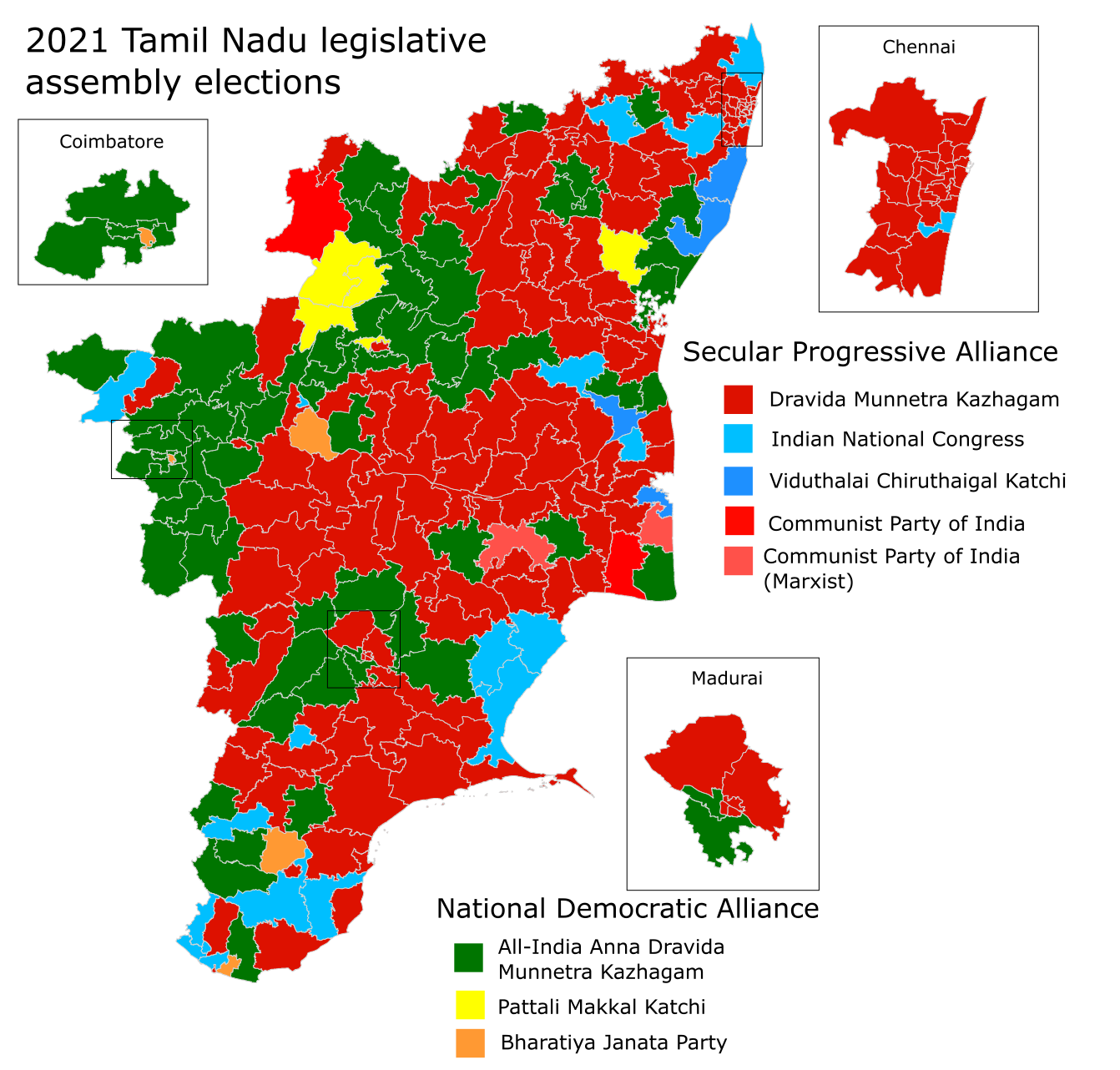
Three AIADMK legislators in Tamil Nadu resigned from their party and joined the Tamilaga Vettri Kazhagam (TVK) led by Vijay on Monday, May 25, 2024 [1].
The departures signal a potential shift in the regional political landscape as the TVK gains established legislative experience. This move places additional pressure on the leadership of Edappadi Palaniswami (EPS), who currently leads the AIADMK camp.
Maragatham Kumaravel, Jayakumar, and Sathyabama were the three MLAs who formally exited the AIADMK [1]. Their resignations followed an escalation of an internal feud within the party [2]. The legislators transitioned directly into the TVK, a party founded by the actor-turned-politician Vijay.
Reports indicate that the internal conflict within the AIADMK created a volatile environment for the representatives [2]. By joining the TVK, the three legislators have aligned themselves with a rising political force in the state. The AIADMK has faced increasing instability as internal disagreements over leadership and strategy continue to surface.
This development marks a significant blow to the EPS camp, as the loss of three members reduces the party's strength in the Tamil Nadu Legislative Assembly [2]. The resignations occurred during a period of heightened political maneuvering in the region. The TVK is now positioning itself as a viable alternative for dissatisfied members of established parties.
While the AIADMK has not issued a formal response to the specific departures, the timing suggests a growing rift between the party's rank-and-file and its top leadership [2]. The move by Kumaravel, Jayakumar, and Sathyabama highlights the difficulty the AIADMK faces in maintaining unity amid its ongoing internal struggles.
“Three AIADMK legislators in Tamil Nadu resigned from their party and joined the Tamilaga Vettri Kazhagam.”
The migration of experienced legislators from the AIADMK to Vijay's TVK suggests that the newcomer party is successfully poaching talent from established rivals. This weakens the AIADMK's legislative footprint and indicates that internal instability within the EPS camp is becoming a catalyst for the growth of alternative political movements in Tamil Nadu.


