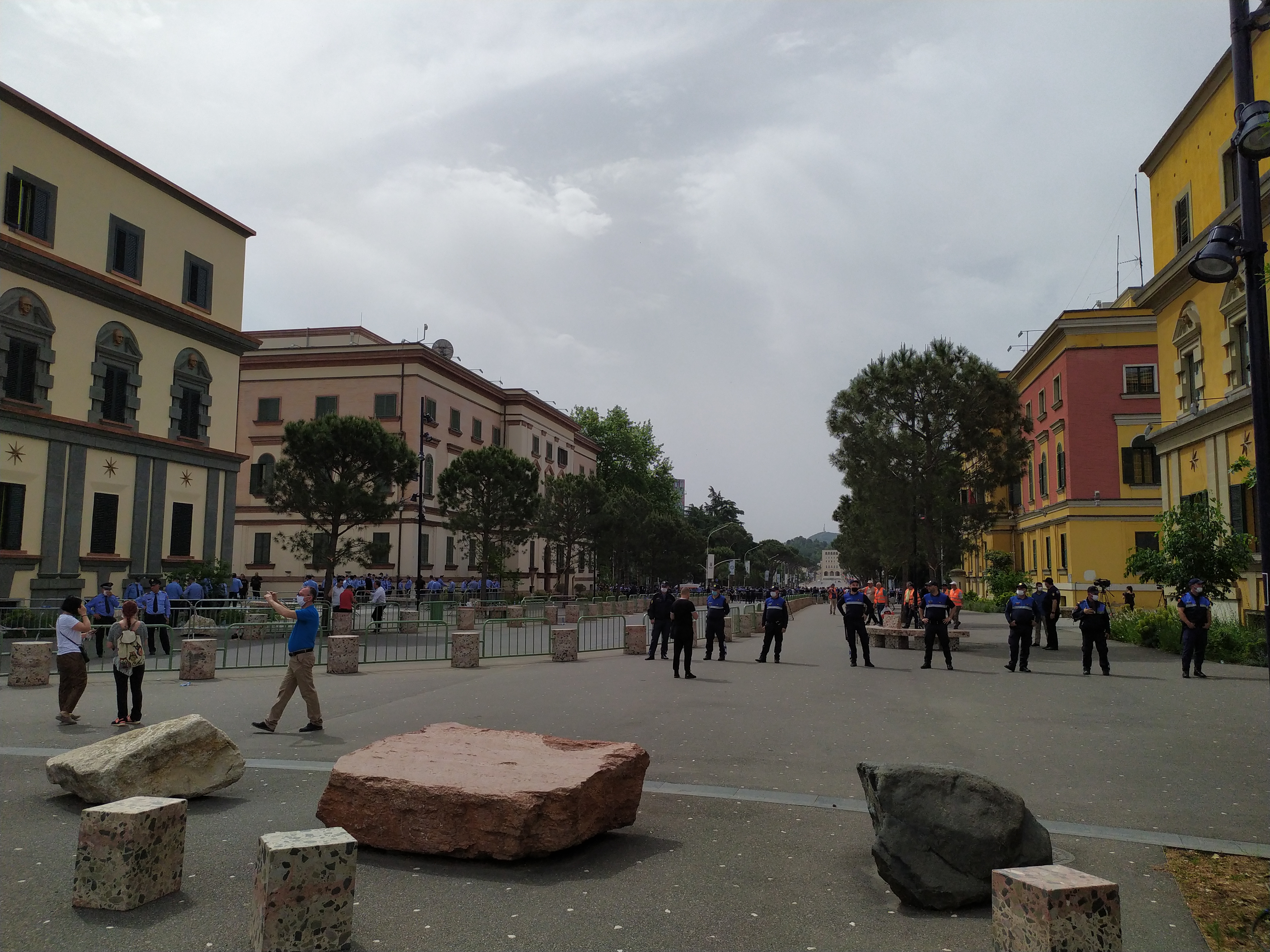
Albanian police fired water cannons at protesters in Tirana on July 2, 2026, to disperse crowds opposing a Trump-linked luxury resort development [1, 3].
The clash highlights a growing conflict between the Albanian government's push for high-end tourism and local concerns over environmental degradation and political influence. Because the project targets the Adriatic coastal wetlands, it has become a flashpoint for activists fighting to protect fragile ecosystems from commercial development [5, 6].
Police deployed water cannons, tear gas, and pepper spray against the demonstrators near government buildings [1, 2]. The unrest has persisted for some time, though reports on the duration vary. Some sources said the city is in its fourth day of unrest [1], while other reports said the protests have continued for 14 consecutive days [3].
Opponents of the resort demand the immediate cancellation of the project. They said the development threatens the biodiversity of the coastal wetlands, and reflects an undue level of foreign political influence in domestic land use [5, 6].
Conversely, the Albanian government said the luxury project will boost high-end tourism and support the nation's goals for EU membership [5]. Officials said the development is a strategic economic move to elevate the country's profile as a premier destination.
Despite these assurances, the demonstrations have remained unrelenting [6]. The use of force by police on July 2, 2026, marks a significant escalation in the state's response to the environmental movement [1].
“Albanian police fired water cannons at protesters in Tirana on July 2, 2026”
This escalation reflects a tension between Albania's economic aspirations and its environmental commitments. By linking the resort to EU membership goals, the government is framing the development as a necessity for geopolitical integration, while the protests signal a grassroots rejection of the 'luxury tourism' model when it threatens protected natural landscapes.