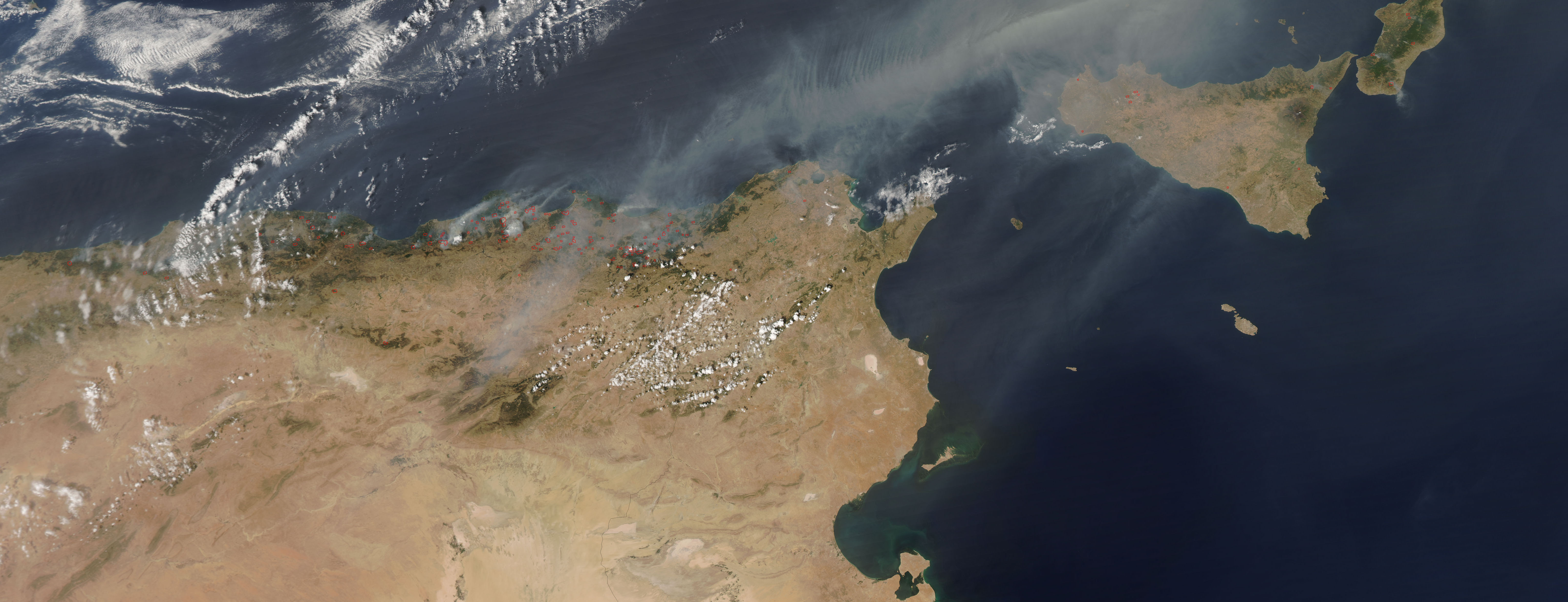
Algerian authorities have declared a state of alert after massive forest fires forced residents to evacuate several eastern provinces [1, 2].
The situation represents a critical threat to both residential zones and coastal ecosystems. The speed of the fire's spread has necessitated immediate government intervention to prevent further loss of life and property in densely populated areas.
Emergency operations are concentrated in the coastal province of Jijel [1, 2]. Local officials and the Dirección General de Protección Civil have focused efforts on the city of Ziama Mansouriah, specifically near the beach of the caves [1, 2]. The fires have pushed deep into forested areas, threatening the perimeter of nearby villages.
Residents in the affected eastern regions have been ordered to leave their homes as flames advanced toward residential structures [1, 2]. Local authorities said the evacuations were necessary to ensure the safety of families caught in the path of the blazes.
Firefighting crews are working to contain the perimeter of the fires amid difficult terrain [1, 2]. The coastal geography of Jijel has complicated some access points, though authorities continue to prioritize the evacuation of high-risk zones.
This late August surge in fire activity has left several provinces in a state of high tension [2]. While the fires continue to burn, the primary focus remains the protection of civilian populations in the east.
“Algerian authorities have declared a state of alert after massive forest fires forced residents to evacuate several eastern provinces.”
The recurring nature of forest fires in North Africa during late summer highlights the region's vulnerability to extreme heat and drought. By forcing evacuations in coastal hubs like Jijel, these fires demonstrate how environmental volatility can quickly escalate into a humanitarian crisis, straining local emergency response infrastructure.


