
Algeria began construction on its segment of the Trans-Saharan Gas Pipeline on June 5, 2026 [4].
The project establishes a strategic energy corridor to transport Nigerian gas to European markets. By diversifying energy routes, the pipeline aims to reduce reliance on existing corridors and strengthen the role of North African nations in global energy security.
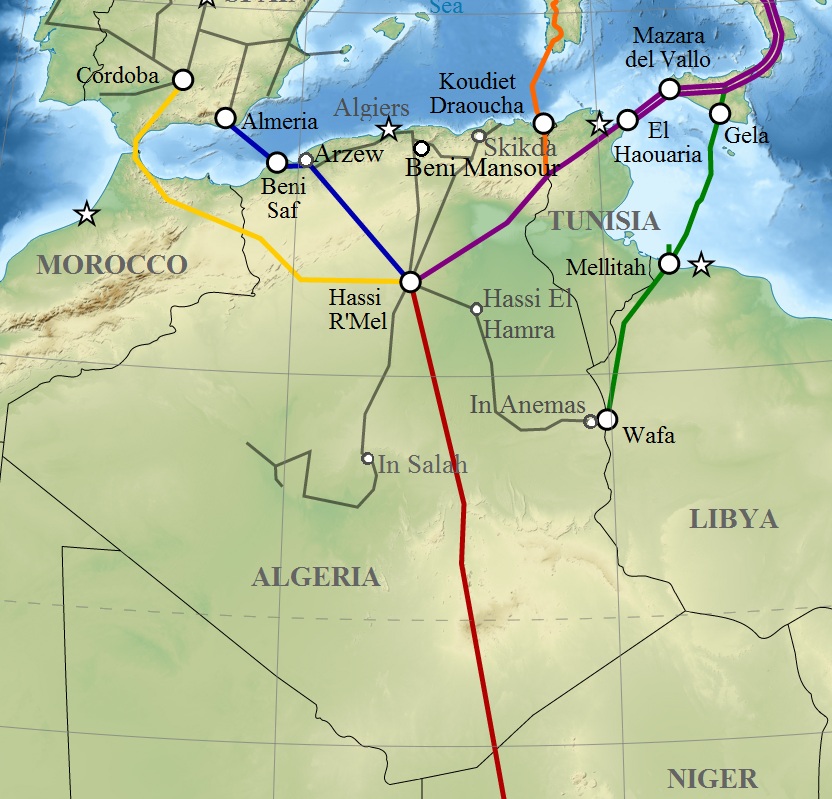
Work started in the Adrar province of Algeria [1]. The Algerian portion of the infrastructure covers approximately 1,000 km [2]. This segment is part of a larger 4,000-km line that links Nigeria and Niger to Europe [1].
Officials said the pipeline is expected to have an annual transport capacity of 30 billion cubic meters of gas [3]. The project is led by the Algerian government under President Abdelmadjid Tebboune [1].
The timeline for the project's operational phase has seen some variation. President Tebboune said in February that the project would enter its operational phase directly after Ramadan [5]. However, official construction works were launched on June 5, 2026 [4].
This infrastructure is designed to create a stable flow of natural gas from the Gulf of Guinea to the Mediterranean. The collaboration between Nigeria, Niger, and Algeria represents a significant regional effort to monetize subterranean resources, and increase the export capacity of West African gas.
“Algeria began construction on its segment of the Trans-Saharan Gas Pipeline on June 5, 2026.”
The Trans-Saharan Gas Pipeline represents a geopolitical shift in energy procurement for Europe, potentially reducing its dependence on Russian gas by opening a direct conduit to Nigerian reserves. For Algeria, the project transforms the country into a primary transit hub, increasing its diplomatic and economic leverage over European energy markets while fostering deeper infrastructure ties with Sahelian neighbors.


