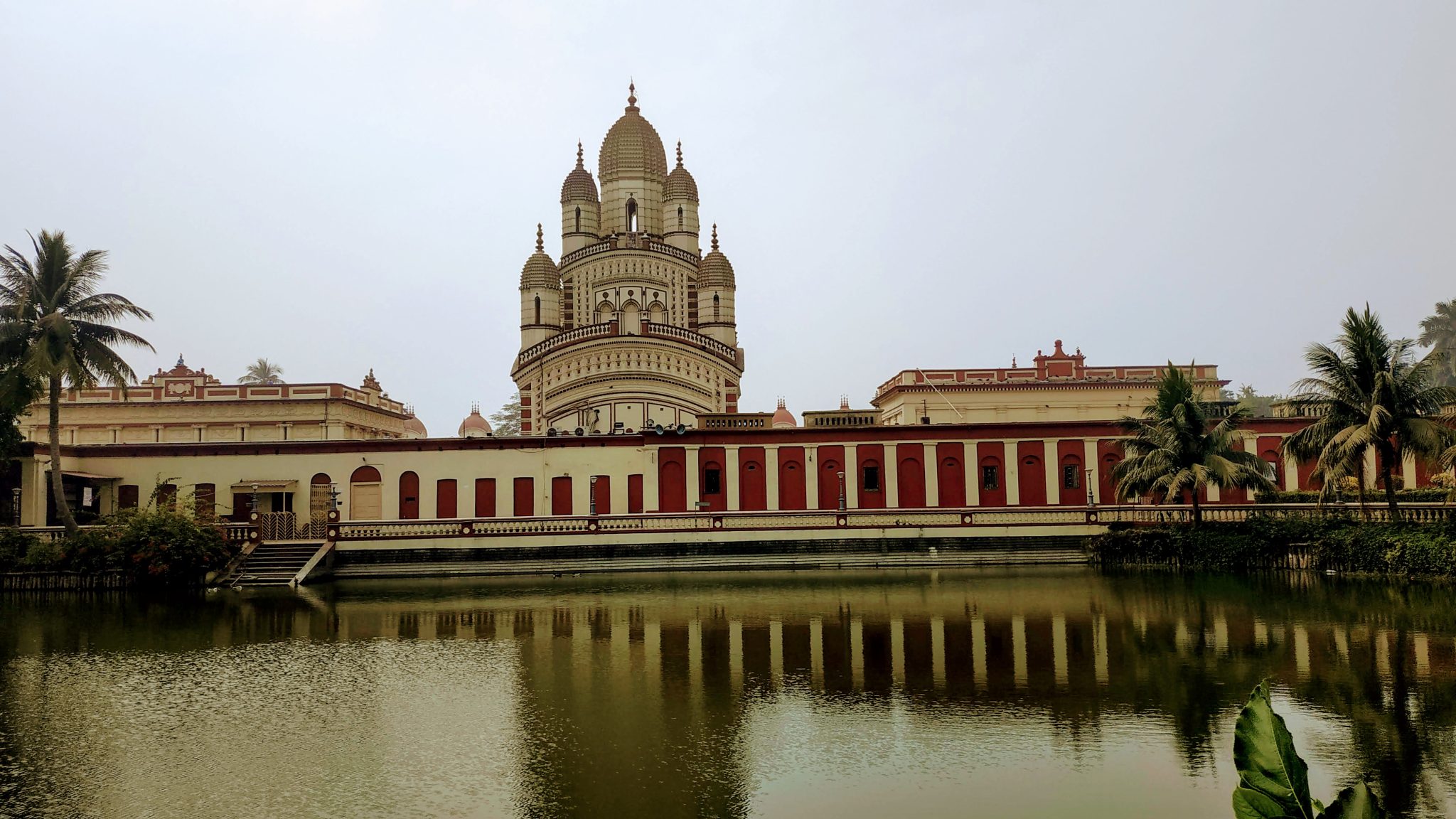
Union Home Minister Amit Shah performed aarti and offered prayers at the Dakshineswar Kali Temple in Kolkata on Friday [1, 2].
The visit occurs as the Bharatiya Janata Party (BJP) prepares for critical meetings concerning the formation of the government in West Bengal [1, 2]. These discussions are central to the party's strategy for leadership and governance in the state.
Shah arrived at the historic temple in West Bengal to seek blessings before engaging in these political deliberations [1, 2]. The Dakshineswar Kali Temple is one of the most prominent religious sites in the region, serving as a focal point for spiritual and cultural life in Kolkata.
While the specific agenda for the upcoming BJP meetings has not been detailed, the timing of the Home Minister's visit suggests a high-stakes environment for the party's regional planning [1, 2]. The process of government formation often involves complex negotiations between party leadership and local representatives.
Security was heightened around the temple complex during the visit to ensure the safety of the Union Minister [1, 2]. Local officials coordinated the movement of the delegation to minimize disruption to the public and visiting devotees.
Shah's presence in Kolkata underscores the central government's focus on the administrative transition in West Bengal [1, 2]. The BJP is seeking to solidify its position as it navigates the requirements for establishing a stable administration in the state.
“Union Home Minister Amit Shah performed aarti and offered prayers at the Dakshineswar Kali Temple”
The visit combines religious tradition with political signaling, suggesting that the BJP is prioritizing spiritual and symbolic alignment before entering the high-pressure phase of government formation. By visiting a landmark like the Dakshineswar Kali Temple, the Home Minister reinforces the party's cultural ties to the region while preparing for the administrative challenges of governing West Bengal.