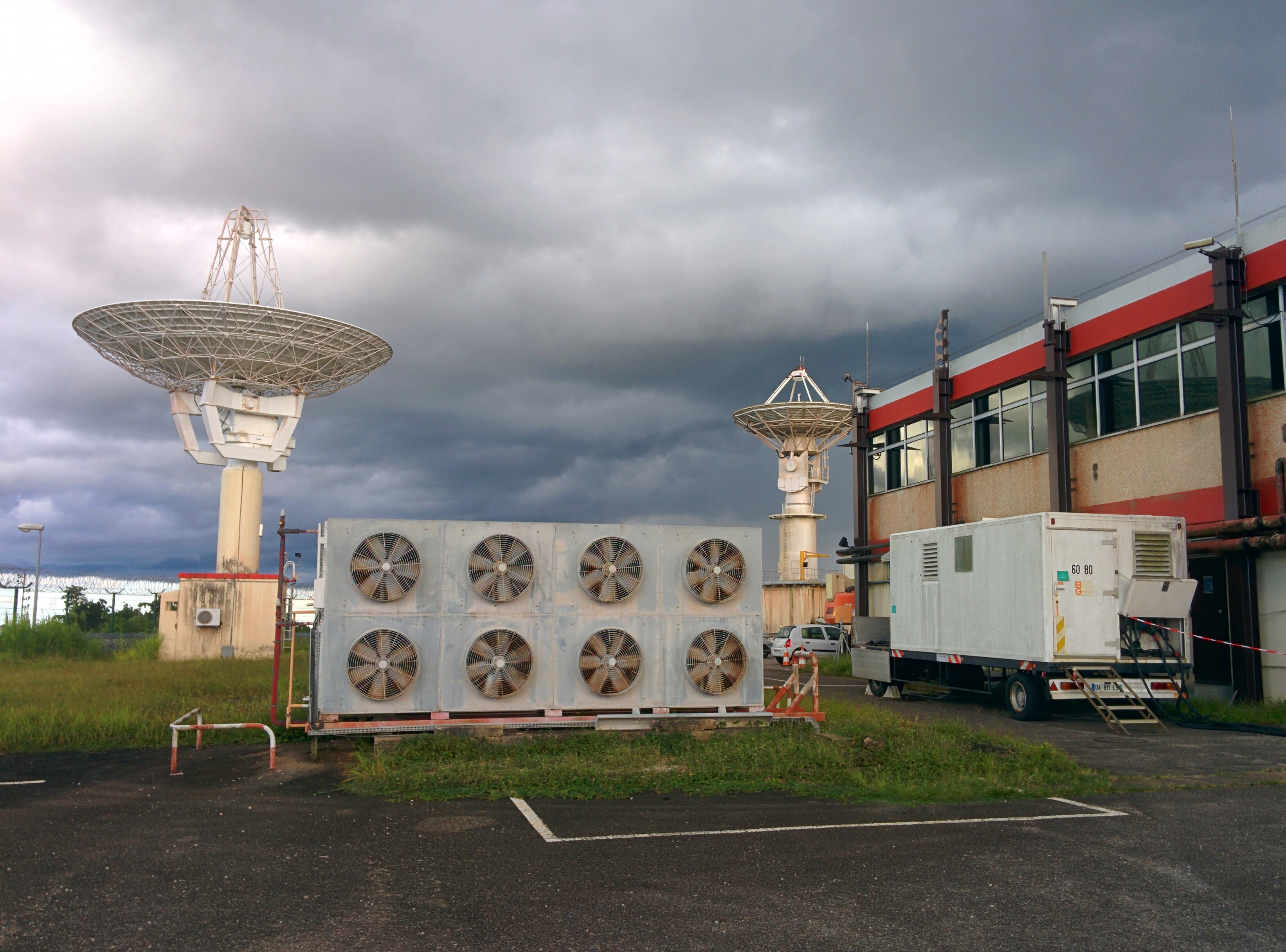
The Ariane 6 launch vehicle is scheduled to lift off on June 17, 2026, carrying Amazon broadband satellites [1].
This flight serves as a critical demonstration of the rocket's increased lifting capacity. By testing upgraded hardware, the European Space Agency (ESA) and Arianespace aim to prove they can compete in the growing market for large-scale satellite constellations.
Flight VA269 will depart from Europe’s Spaceport at the Guiana Space Centre in Kourou, French Guiana [1], [2]. The mission is slated for an earliest liftoff time of 8:53 local time [1].
The vehicle will utilize four upgraded P160C solid boosters [1]. Each of these boosters carries an additional 14 tonnes of propellant compared to previous versions [1]. This configuration is designed to maximize the payload capacity for the Amazon Kuiper/Leo satellites [1], [2].
Reports on the exact number of satellites in the payload vary. One source indicates the rocket will carry 32 satellites [2], while another reports a record 36 Amazon LEO satellites [3]. The mission's primary goal is to deploy these broadband assets while validating the performance of the enhanced propulsion system [1], [2].
The Ariane 6 program represents Europe's effort to maintain independent access to space. The integration of more powerful boosters allows the vehicle to handle heavier loads, a necessity for the massive satellite arrays now being deployed by private companies.
“The vehicle will utilize four upgraded P160C solid boosters”
The use of upgraded P160C boosters indicates a strategic shift for the Ariane 6 to accommodate the heavy-lift requirements of commercial megaconstellations. By increasing propellant capacity, ESA is attempting to reduce the number of launches required to deploy large networks, directly challenging the market dominance of U.S.-based launch providers.
'%2F%3E%0A%20%20%20%20%3Crect%20width%3D'1600'%20height%3D'900'%20fill%3D'url(%23v)'%2F%3E%0A%20%20%20%20%3Cg%20opacity%3D'0.08'%20fill%3D'%23ffffff'%3E%0A%20%20%20%20%20%20%3Ccircle%20cx%3D'1420'%20cy%3D'180'%20r%3D'220'%2F%3E%0A%20%20%20%20%20%20%3Ccircle%20cx%3D'1500'%20cy%3D'760'%20r%3D'120'%2F%3E%0A%20%20%20%20%3C%2Fg%3E%0A%20%20%20%20%3Cline%20x1%3D'80'%20y1%3D'172'%20x2%3D'220'%20y2%3D'172'%20stroke%3D'%23ffffff'%20stroke-width%3D'3'%20stroke-opacity%3D'0.6'%2F%3E%0A%20%20%20%20%3Ctext%20x%3D'80'%20y%3D'140'%20font-family%3D'Inter%2C%20-apple-system%2C%20Helvetica%2C%20sans-serif'%20font-weight%3D'700'%20font-size%3D'28'%20fill%3D'%23ffffff'%20letter-spacing%3D'6'%3EHANNA%20%C2%B7%20NEWS%3C%2Ftext%3E%0A%20%20%20%20%3Ctext%20x%3D'80'%20y%3D'230'%20font-family%3D'Inter%2C%20-apple-system%2C%20Helvetica%2C%20sans-serif'%20font-weight%3D'600'%20font-size%3D'40'%20fill%3D'%23ffffffb3'%20letter-spacing%3D'4'%3ESCIENCE%3C%2Ftext%3E%0A%20%20%20%20%3Ctext%20x%3D'80'%20y%3D'694'%20font-family%3D'Playfair%20Display%2C%20Georgia%2C%20serif'%20font-weight%3D'800'%20font-size%3D'110'%20fill%3D'%23ffffff'%20letter-spacing%3D'-1'%3EPhysics%20Community%20Debates%3C%2Ftext%3E%3Ctext%20x%3D'80'%20y%3D'820'%20font-family%3D'Playfair%20Display%2C%20Georgia%2C%20serif'%20font-weight%3D'800'%20font-size%3D'110'%20fill%3D'%23ffffff'%20letter-spacing%3D'-1'%3EValidity%20of%20ER%3DEPR%20Theory%3C%2Ftext%3E%0A%20%20%20%20%3Ctext%20x%3D'80'%20y%3D'870'%20font-family%3D'Inter%2C%20-apple-system%2C%20Helvetica%2C%20sans-serif'%20font-weight%3D'500'%20font-size%3D'22'%20fill%3D'%23ffffff66'%20letter-spacing%3D'2'%3Enews.hanna-ai.com%3C%2Ftext%3E%0A%20%20%3C%2Fsvg%3E)

