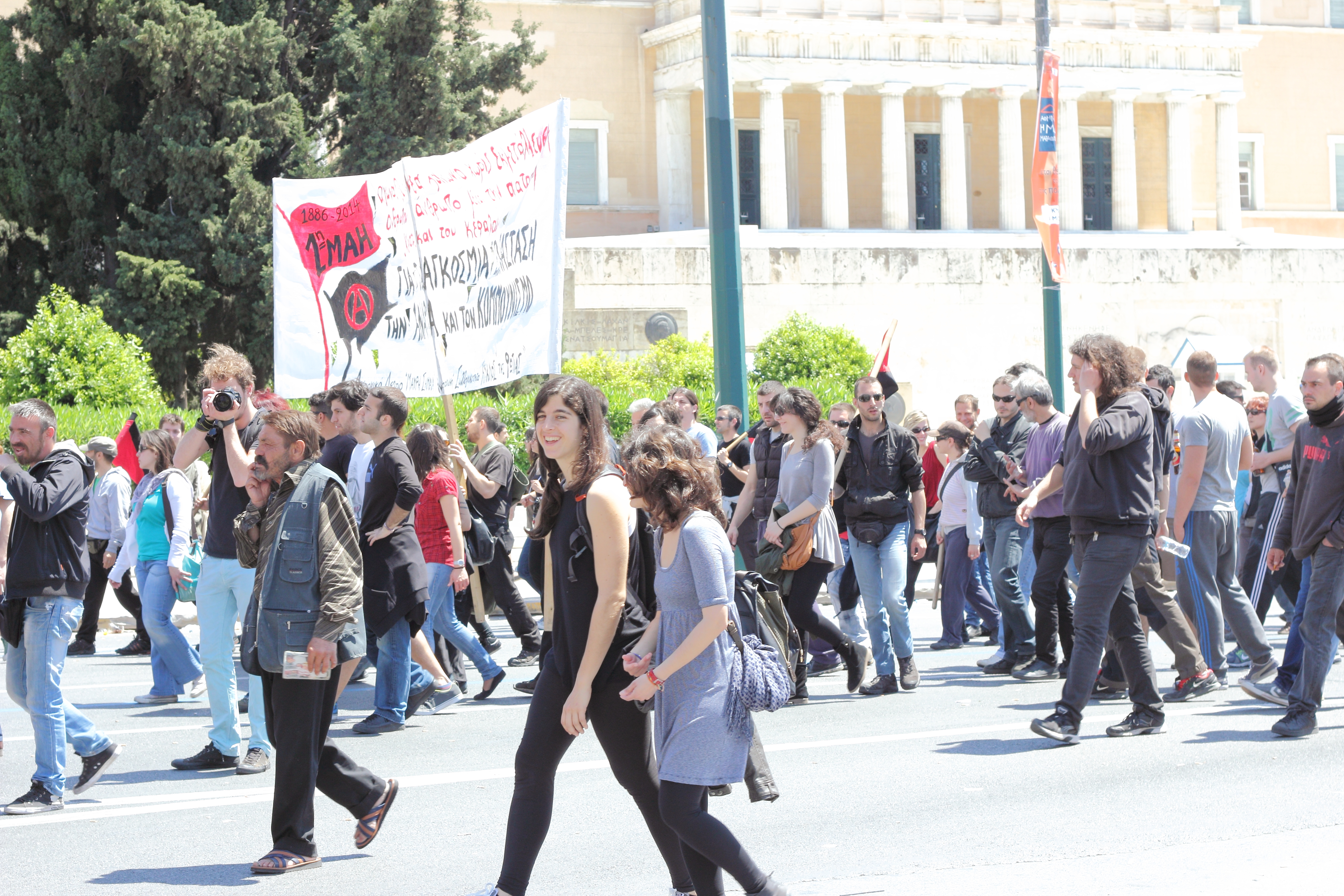
The documentary "Tracks," produced by ARTE, examines alternative lifestyles and thinking that oppose traditional state structures [1, 2].
By highlighting communities that operate outside conventional governance, the film challenges the perceived permanence of national borders and administrative control. This exploration suggests that the rigidities of modern power can be softened through practical, autonomous alternatives.
The film focuses on two primary locations: the Sunseed community in Spain and the Exarchia neighborhood in Athens, Greece [1, 2]. In these settings, the production documents how individuals organize their lives without relying on the state's bureaucratic framework.
According to the documentary, the modern state has existed for only four centuries [1]. This historical perspective is used to frame the state not as an inevitable human condition, but as a relatively recent development in social organization.
ARTE said in its description that "Tracks" opens its archives to provide an unprecedented look into alternative modes of life and thought that rub against the rigidities of state structures to better soften them [1]. The production encourages a reconsideration of how society is structured, using the phrase "Wake up, utopians!" to call for a reimagining of social possibilities [1].
The footage captures the daily operations of the Sunseed community and the political environment of Exarchia. These examples serve as case studies for those seeking to live independently of centralized government authority [1, 2].
“The modern state has existed for only four centuries.”
The documentary frames the modern state as a historical anomaly rather than a permanent necessity. By contrasting the Sunseed community and Exarchia against the backdrop of a 400-year-old state model, the film argues that decentralized, autonomous living is a viable challenge to the current global political status quo.
'%2F%3E%0A%20%20%20%20%3Crect%20width%3D'1600'%20height%3D'900'%20fill%3D'url(%23v)'%2F%3E%0A%20%20%20%20%3Cg%20opacity%3D'0.08'%20fill%3D'%23ffffff'%3E%0A%20%20%20%20%20%20%3Ccircle%20cx%3D'1420'%20cy%3D'180'%20r%3D'220'%2F%3E%0A%20%20%20%20%20%20%3Ccircle%20cx%3D'1500'%20cy%3D'760'%20r%3D'120'%2F%3E%0A%20%20%20%20%3C%2Fg%3E%0A%20%20%20%20%3Cline%20x1%3D'80'%20y1%3D'172'%20x2%3D'220'%20y2%3D'172'%20stroke%3D'%23ffffff'%20stroke-width%3D'3'%20stroke-opacity%3D'0.6'%2F%3E%0A%20%20%20%20%3Ctext%20x%3D'80'%20y%3D'140'%20font-family%3D'Inter%2C%20-apple-system%2C%20Helvetica%2C%20sans-serif'%20font-weight%3D'700'%20font-size%3D'28'%20fill%3D'%23ffffff'%20letter-spacing%3D'6'%3EHANNA%20%C2%B7%20NEWS%3C%2Ftext%3E%0A%20%20%20%20%3Ctext%20x%3D'80'%20y%3D'230'%20font-family%3D'Inter%2C%20-apple-system%2C%20Helvetica%2C%20sans-serif'%20font-weight%3D'600'%20font-size%3D'40'%20fill%3D'%23ffffffb3'%20letter-spacing%3D'4'%3ECULTURE%3C%2Ftext%3E%0A%20%20%20%20%3Ctext%20x%3D'80'%20y%3D'622'%20font-family%3D'Playfair%20Display%2C%20Georgia%2C%20serif'%20font-weight%3D'800'%20font-size%3D'86'%20fill%3D'%23ffffff'%20letter-spacing%3D'-1'%3ET-Series%20Releases%20Lyrical%3C%2Ftext%3E%3Ctext%20x%3D'80'%20y%3D'721'%20font-family%3D'Playfair%20Display%2C%20Georgia%2C%20serif'%20font-weight%3D'800'%20font-size%3D'86'%20fill%3D'%23ffffff'%20letter-spacing%3D'-1'%3EVideo%20for%20%26quot%3BYe%20Kutumb%3C%2Ftext%3E%3Ctext%20x%3D'80'%20y%3D'820'%20font-family%3D'Playfair%20Display%2C%20Georgia%2C%20serif'%20font-weight%3D'800'%20font-size%3D'86'%20fill%3D'%23ffffff'%20letter-spacing%3D'-1'%3E(Sad%20Version)%26quot%3B%3C%2Ftext%3E%0A%20%20%20%20%3Ctext%20x%3D'80'%20y%3D'870'%20font-family%3D'Inter%2C%20-apple-system%2C%20Helvetica%2C%20sans-serif'%20font-weight%3D'500'%20font-size%3D'22'%20fill%3D'%23ffffff66'%20letter-spacing%3D'2'%3Enews.hanna-ai.com%3C%2Ftext%3E%0A%20%20%3C%2Fsvg%3E)