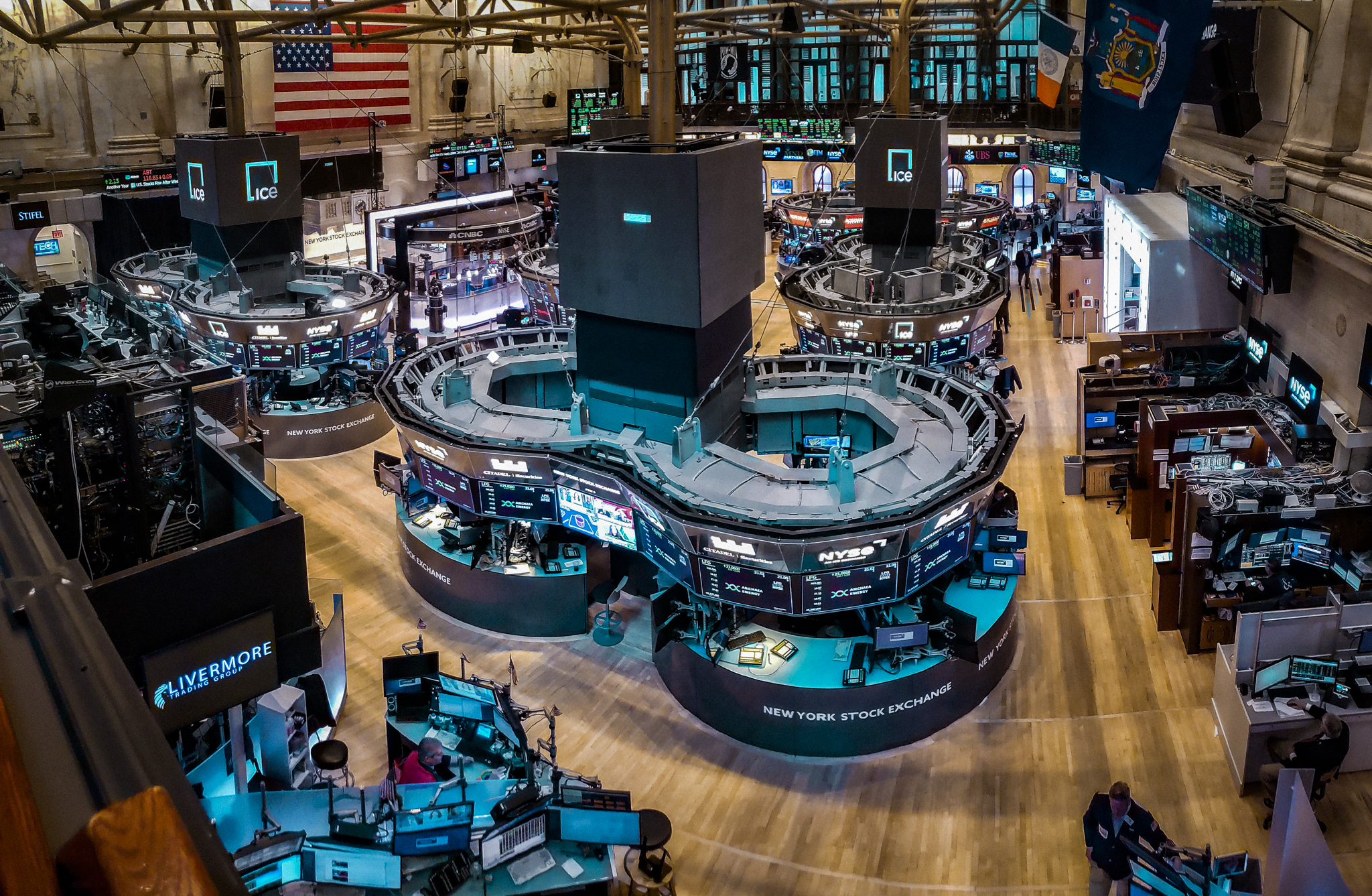
Asia-Pacific equity markets traded mixed on Wednesday, mirroring a volatile close on Wall Street [1, 2, 3].
This divergence reflects growing investor uncertainty as global markets react to geopolitical tensions and energy sector instability. The lack of a unified trend suggests that traders are struggling to price in competing risks involving both diplomatic relations and economic shocks.
In Japan, markets showed strength. The Nikkei 225 rose 0.68% [1], while the Topix index gained 1.16% [1]. In India, the GIFT Nifty rose 0.43% [1]. The Dow Jones Industrial Average in the U.S. had previously gained 159.95 points, or 0.32% [1].
Other regional markets faced contradictory movements. Reports on South Korea's Kospi vary, with some data indicating the index slipped 1.06% [1], while other reports said it added 0.75% to end at 6,690.9 [2]. The Nasdaq-linked Kosdaq remained largely flat [1].
Australian markets also showed conflicting results. Some data indicated the ASX 200 advanced 1.08% [1], whereas other reports said the index declined 0.27% to 8,687 [2].
Several factors drove this instability. Investor sentiment was influenced by an OPEC-related shock and jitters within the technology sector [2]. Additionally, traders weighed warnings from the U.S. regarding a fragile ceasefire with Iran [3]. These overlapping pressures created a fragmented trading environment across the Asia-Pacific region, leading to the mixed results observed across major exchanges.
“Asia-Pacific equity markets traded mixed on Wednesday, mirroring a volatile close on Wall Street”
The fragmented performance of Asian indices indicates that regional markets are currently hypersensitive to external shocks. The contradiction in reported figures for the Kospi and ASX 200 highlights the high volatility of the trading session. By mirroring Wall Street's mixed close, these markets demonstrate that geopolitical risks—specifically U.S. foreign policy and OPEC stability—now outweigh local economic indicators in driving short-term investor behavior.


