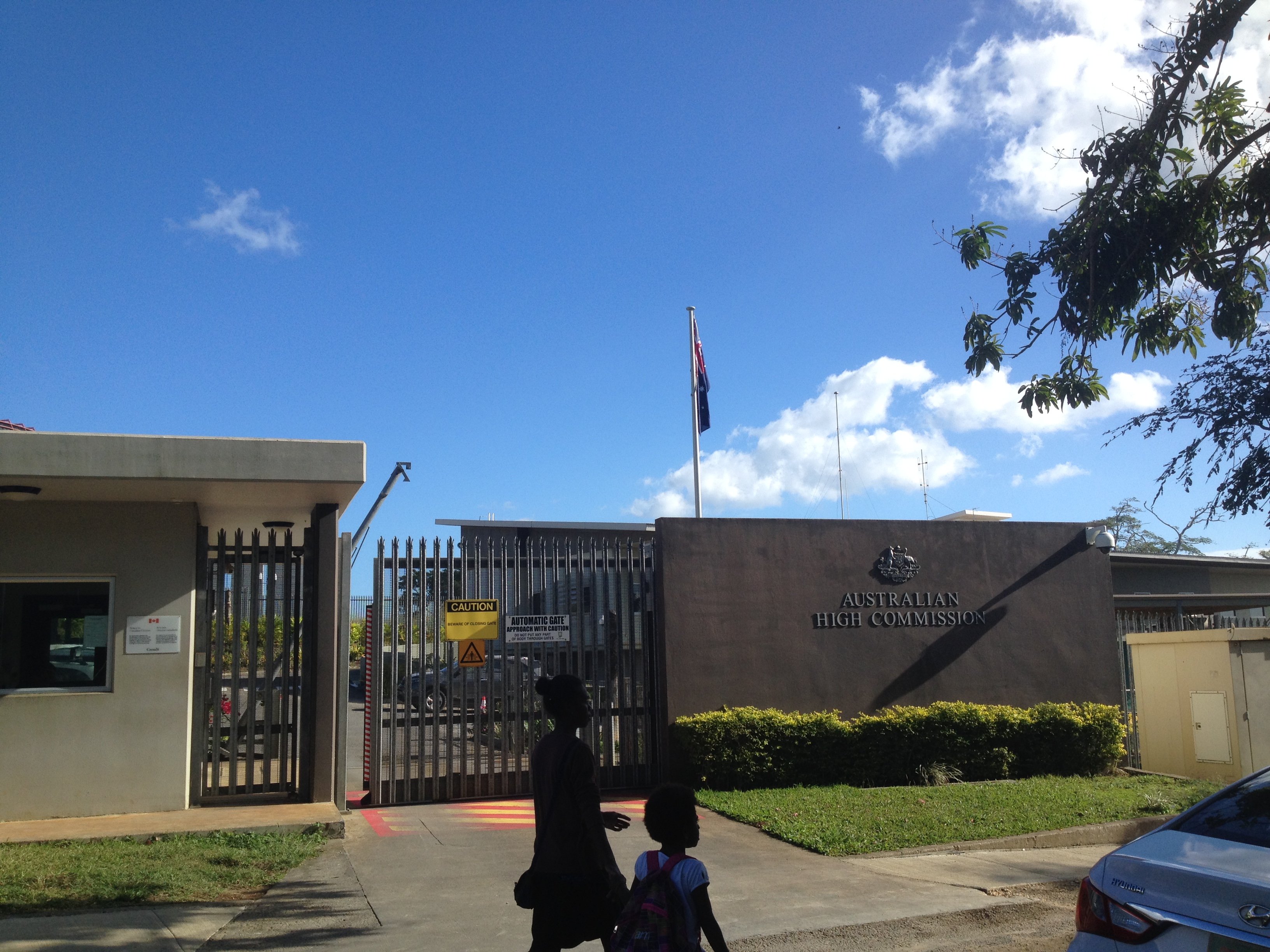
Vanuatu Prime Minister Jotham Napat and Australian Prime Minister Anthony Albanese signed the Nakamal Agreement in Port Vila on Monday [1].
The bilateral development and security pact is designed to prevent the establishment of foreign military bases on Vanuatu's soil. By keeping critical infrastructure free from militarisation, the agreement seeks to limit the strategic footprint of China in the Pacific region [1, 2, 3].
Stephen Dziedzic said the revised Nakamal Agreement includes clear provisions that prevent any foreign military base from being established on Vanuatu's soil [1]. The signing follows a period of diplomatic tension; the event occurred almost 10 months after Prime Minister Napat withdrew from a previously planned ceremony due to sovereignty concerns [1].
Australia intends for the pact to deepen security and economic ties while ensuring the region remains open [1, 2]. Prime Minister Anthony Albanese said, "This agreement strengthens our partnership and ensures a free and open Pacific for all our peoples" [1].
Despite the new pact with Australia, Vanuatu maintains a relationship with Beijing. China began establishing policing ties with Vanuatu in 2023, which included the donation of patrol boats, vehicles, and drones [2]. Prime Minister Napat addressed these ongoing interactions during the signing.
"We have nothing to hide — the details of our negotiations with China will be shared with Australia once the agreement is signed," Napat said [1].
The agreement serves as a strategic buffer for Australia, which has expressed concerns over China's growing influence in the South Pacific. By securing a formal commitment against foreign bases, Australia aims to maintain regional stability and protect the sovereignty of Pacific island nations [1, 2].
“The revised Nakamal Agreement includes clear provisions that prevent any foreign military base from being established on Vanuatu's soil.”
The Nakamal Agreement represents a significant diplomatic victory for Australia in its effort to counter Chinese strategic expansion in the Pacific. By formalizing a ban on foreign military bases, Vanuatu limits Beijing's ability to establish a permanent security presence in the region, while Australia secures a key partner in maintaining its regional security architecture.