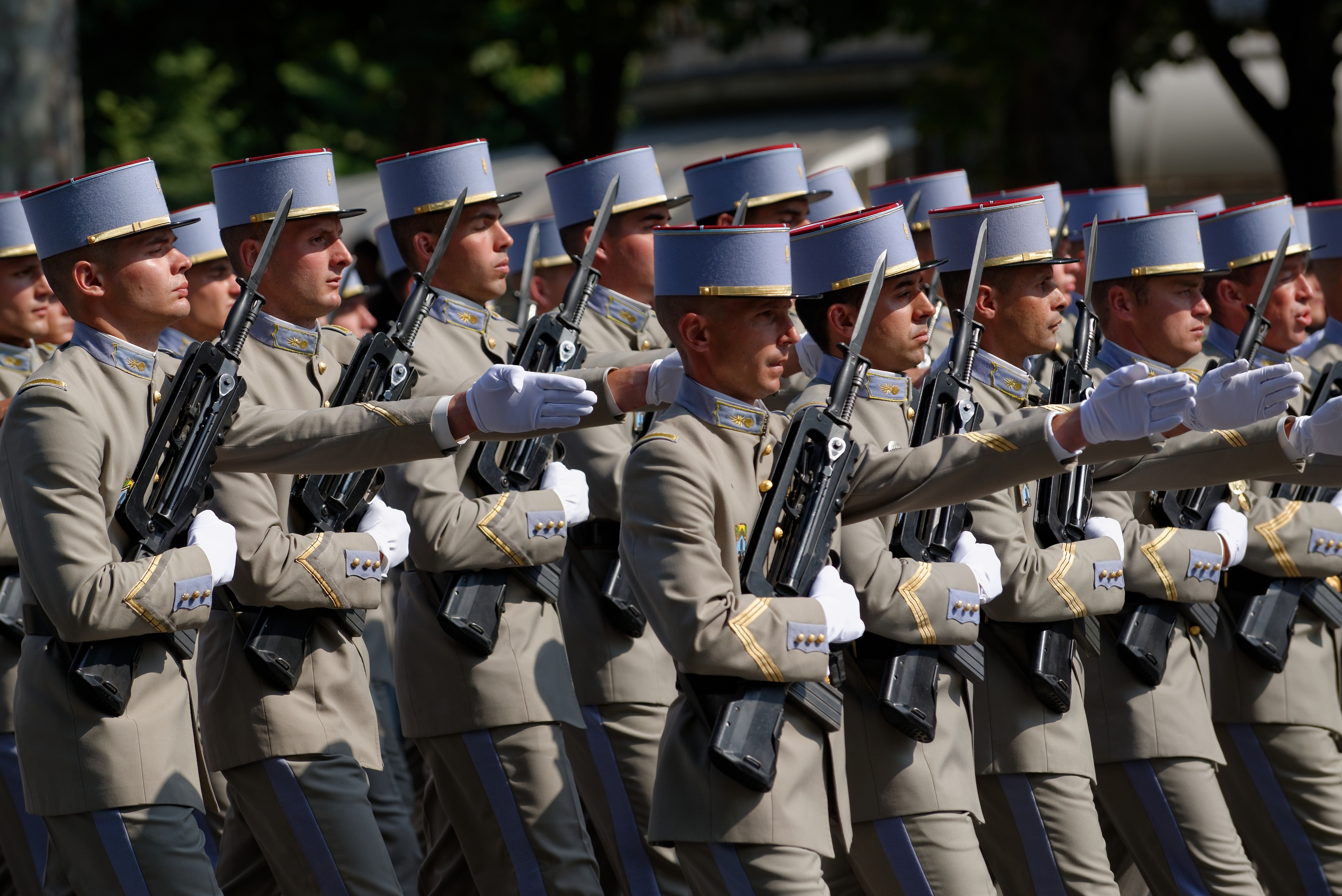
European troops and warplanes, including Ukrainian fighter pilots, marched and flew in the Bastille Day parade in Paris on Tuesday [1].
The event serves as a strategic display of European unity and collective military strength as Russia's full-scale invasion of Ukraine enters its fifth year [2].
The traditional military procession along the Champs-Élysées featured a multinational coalition of forces. Alongside French troops, the parade included military personnel and aircraft from various European nations, including Irish troops, to signal a unified front against Moscow [3, 4].
Ukrainian pilots and soldiers participated in the event, marking a high-profile moment of visibility for the war-torn nation. The inclusion of these forces was designed to demonstrate that European support for Kyiv remains steadfast despite the prolonged nature of the conflict [1, 5].
President Emmanuel Macron used the occasion to showcase what some described as "Europe's awakening" regarding its own security and defense capabilities [4]. The presence of diverse European military assets on the streets of Paris was intended to send a clear political message to the Kremlin regarding the continent's resolve [5].
This year's celebration differed from previous iterations by centering the narrative on the ongoing struggle in Eastern Europe. The integration of Ukrainian forces into the heart of France's national holiday underscores the shift in how European powers view the security of their eastern neighbors [5].
“European troops and warplanes, including Ukrainian fighter pilots, marched and flew in the Bastille Day parade.”
The integration of Ukrainian military personnel into a sovereign national celebration like Bastille Day signals a transition from purely logistical and financial support to a deeper symbolic and political integration of Ukraine into European security architecture. By coordinating a multinational parade, France is positioning itself as a leader in the push for strategic autonomy and a unified European defense posture.