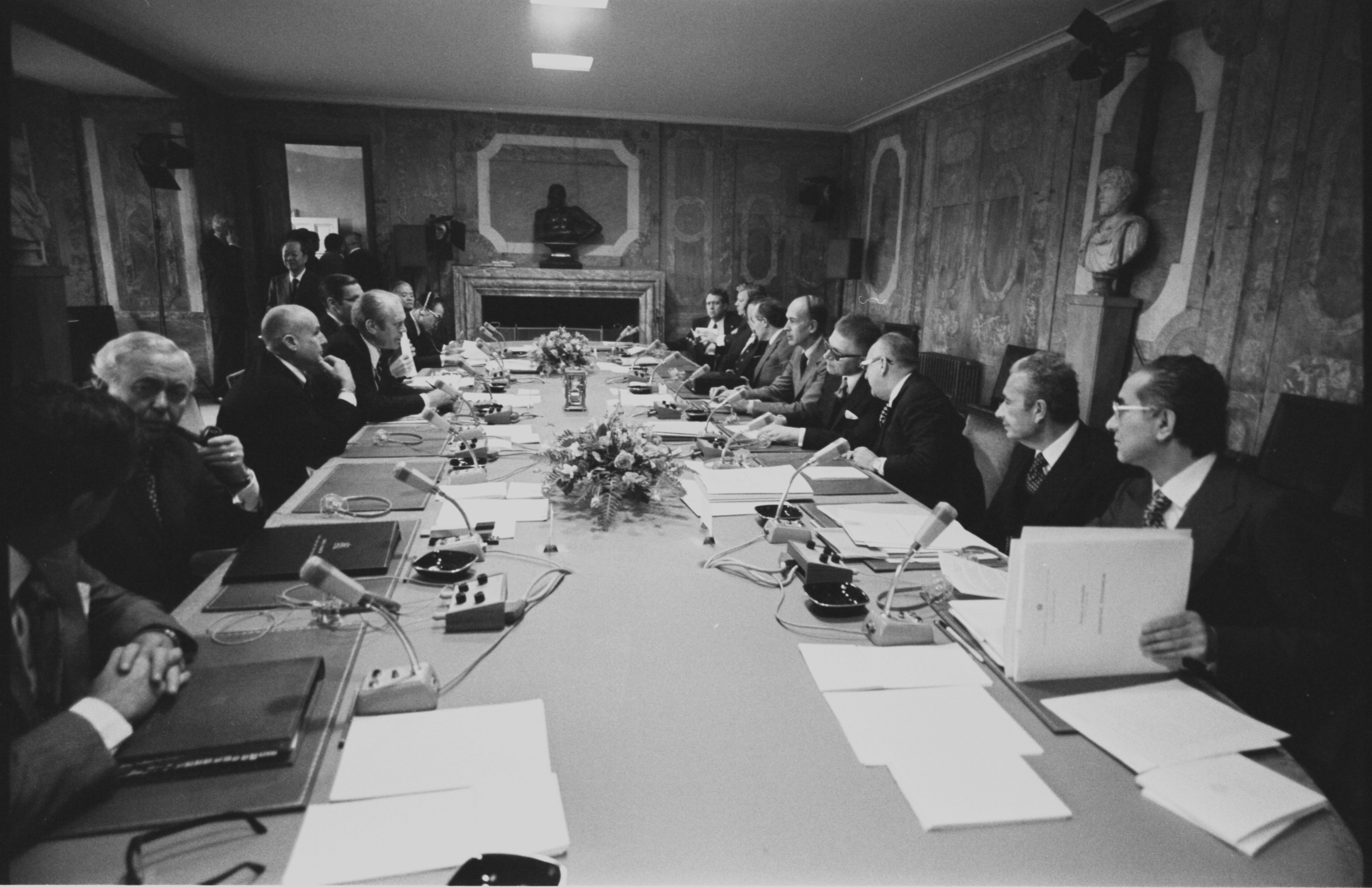
The U.S., United Kingdom, Soviet Union, and France convened a summit in Geneva, Switzerland, in 1955 [1].
The meeting represents a critical effort to maintain global stability following the devastation of World War II. By fostering cooperation among the great powers, the "Big Four" aimed to avoid the outbreak of a third world war through diplomatic engagement.
Delegates focused their discussions on three primary pillars: trade relations, peace talks, and arms-control measures [1]. These negotiations sought to create a framework for coexistence during a period of intense geopolitical tension. The summit occurred as the nations attempted to navigate the complexities of a post-war landscape while managing the growing divide between East and West.
Nikole Killion of CBS News Radio said, "The year is 1955, and the world is a decade removed from the Allied victory in World War II, a monstrous conflict of never‑before‑seen carnage and slaughter" [1].
This timeframe is significant as the world was exactly 10 years removed from the end of the 1945 conflict [1]. The memory of that violence served as a primary driver for the 1955 [1] gathering in Geneva. The leaders sought to ensure that the scale of previous casualties would not be repeated in a new global conflict.
Throughout the proceedings, the Big Four attempted to balance national security interests with the collective need for peace. The summit served as a venue to test the willingness of the Soviet Union and Western powers to compromise on military spending and territorial disputes. While the atmosphere remained cautious, the act of convening in Switzerland marked a strategic shift toward formal dialogue over direct confrontation.
“The "Big Four" aimed to avoid the outbreak of a third world war through diplomatic engagement.”
The 1955 Geneva Summit illustrates the early Cold War transition from total war to a managed rivalry. By prioritizing arms control and trade, the participating powers established a precedent for high-level diplomacy that aimed to prevent nuclear or conventional escalation through structured communication.


