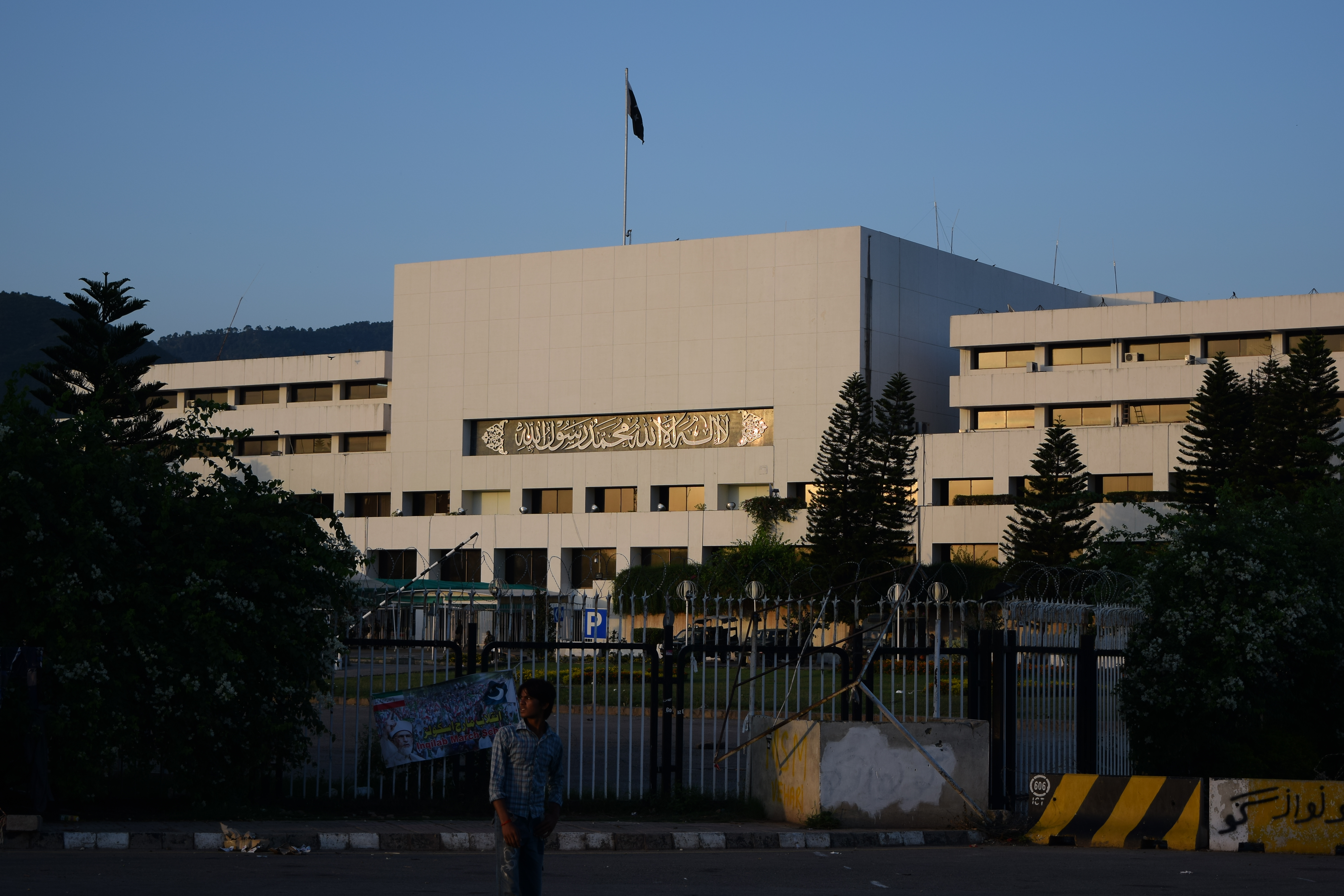
Bilawal Bhutto Zardari warned Tuesday that Pakistan will defend its water rights under the Indus Waters Treaty to ensure national survival [1].
Water security is a critical pillar of Pakistan's stability. Because the Indus Waters Treaty governs the distribution of river waters between India and Pakistan, any disruption to these rights could threaten the country's agricultural viability and long-term peace in South Asia.
Speaking during an international seminar in Islamabad on June 30, 2026 [1], the Chairman of the Pakistan Peoples Party and former Foreign Minister said that any attempt to block or undermine these water rights would trigger a national response. He said that the treaty is not merely a legal agreement but a necessity for the country's existence.
"Pakistan will continue to defend its water rights under the Indus Waters Treaty," Bhutto Zardari said [1].
Bhutto Zardari linked the restoration and upholding of the treaty directly to the geopolitical climate of the region. He said that lasting peace in South Asia cannot be achieved without restoring the Indus Waters Treaty [2]. The treaty serves as a mechanism to prevent conflict over shared natural resources, a tension that has historically strained relations between the two nuclear-armed neighbors.
This warning follows recent tensions regarding water management. A spokesperson for the Pakistan Foreign Office said that any act to block water would have far-reaching consequences [3].
Bhutto Zardari said that safeguarding water security is essential for the stability of the state [2]. He said for the international community to recognize the treaty as a foundation for sustainable peace [4].
“"Pakistan will continue to defend its water rights under the Indus Waters Treaty."”
The emphasis on a 'national response' signals that Pakistan views water security as a matter of national security rather than a mere diplomatic dispute. By framing the Indus Waters Treaty as the only path to regional peace, the Pakistan Peoples Party is highlighting the fragility of the current water-sharing arrangement and the potential for escalation if treaty obligations are perceived as compromised.


'%2F%3E%0A%20%20%20%20%3Crect%20width%3D'1600'%20height%3D'900'%20fill%3D'url(%23v)'%2F%3E%0A%20%20%20%20%3Cg%20opacity%3D'0.08'%20fill%3D'%23ffffff'%3E%0A%20%20%20%20%20%20%3Ccircle%20cx%3D'1420'%20cy%3D'180'%20r%3D'220'%2F%3E%0A%20%20%20%20%20%20%3Ccircle%20cx%3D'1500'%20cy%3D'760'%20r%3D'120'%2F%3E%0A%20%20%20%20%3C%2Fg%3E%0A%20%20%20%20%3Cline%20x1%3D'80'%20y1%3D'172'%20x2%3D'220'%20y2%3D'172'%20stroke%3D'%23ffffff'%20stroke-width%3D'3'%20stroke-opacity%3D'0.6'%2F%3E%0A%20%20%20%20%3Ctext%20x%3D'80'%20y%3D'140'%20font-family%3D'Inter%2C%20-apple-system%2C%20Helvetica%2C%20sans-serif'%20font-weight%3D'700'%20font-size%3D'28'%20fill%3D'%23ffffff'%20letter-spacing%3D'6'%3EHANNA%20%C2%B7%20NEWS%3C%2Ftext%3E%0A%20%20%20%20%3Ctext%20x%3D'80'%20y%3D'230'%20font-family%3D'Inter%2C%20-apple-system%2C%20Helvetica%2C%20sans-serif'%20font-weight%3D'600'%20font-size%3D'40'%20fill%3D'%23ffffffb3'%20letter-spacing%3D'4'%3EWORLD%3C%2Ftext%3E%0A%20%20%20%20%3Ctext%20x%3D'80'%20y%3D'622'%20font-family%3D'Playfair%20Display%2C%20Georgia%2C%20serif'%20font-weight%3D'800'%20font-size%3D'86'%20fill%3D'%23ffffff'%20letter-spacing%3D'-1'%3ERescue%20Operation%20Underway%3C%2Ftext%3E%3Ctext%20x%3D'80'%20y%3D'721'%20font-family%3D'Playfair%20Display%2C%20Georgia%2C%20serif'%20font-weight%3D'800'%20font-size%3D'86'%20fill%3D'%23ffffff'%20letter-spacing%3D'-1'%3EAfter%20Boy%20Falls%20Into%3C%2Ftext%3E%3Ctext%20x%3D'80'%20y%3D'820'%20font-family%3D'Playfair%20Display%2C%20Georgia%2C%20serif'%20font-weight%3D'800'%20font-size%3D'86'%20fill%3D'%23ffffff'%20letter-spacing%3D'-1'%3EBorewell%20in%20Haryana%3C%2Ftext%3E%0A%20%20%20%20%3Ctext%20x%3D'80'%20y%3D'870'%20font-family%3D'Inter%2C%20-apple-system%2C%20Helvetica%2C%20sans-serif'%20font-weight%3D'500'%20font-size%3D'22'%20fill%3D'%23ffffff66'%20letter-spacing%3D'2'%3Enews.hanna-ai.com%3C%2Ftext%3E%0A%20%20%3C%2Fsvg%3E)