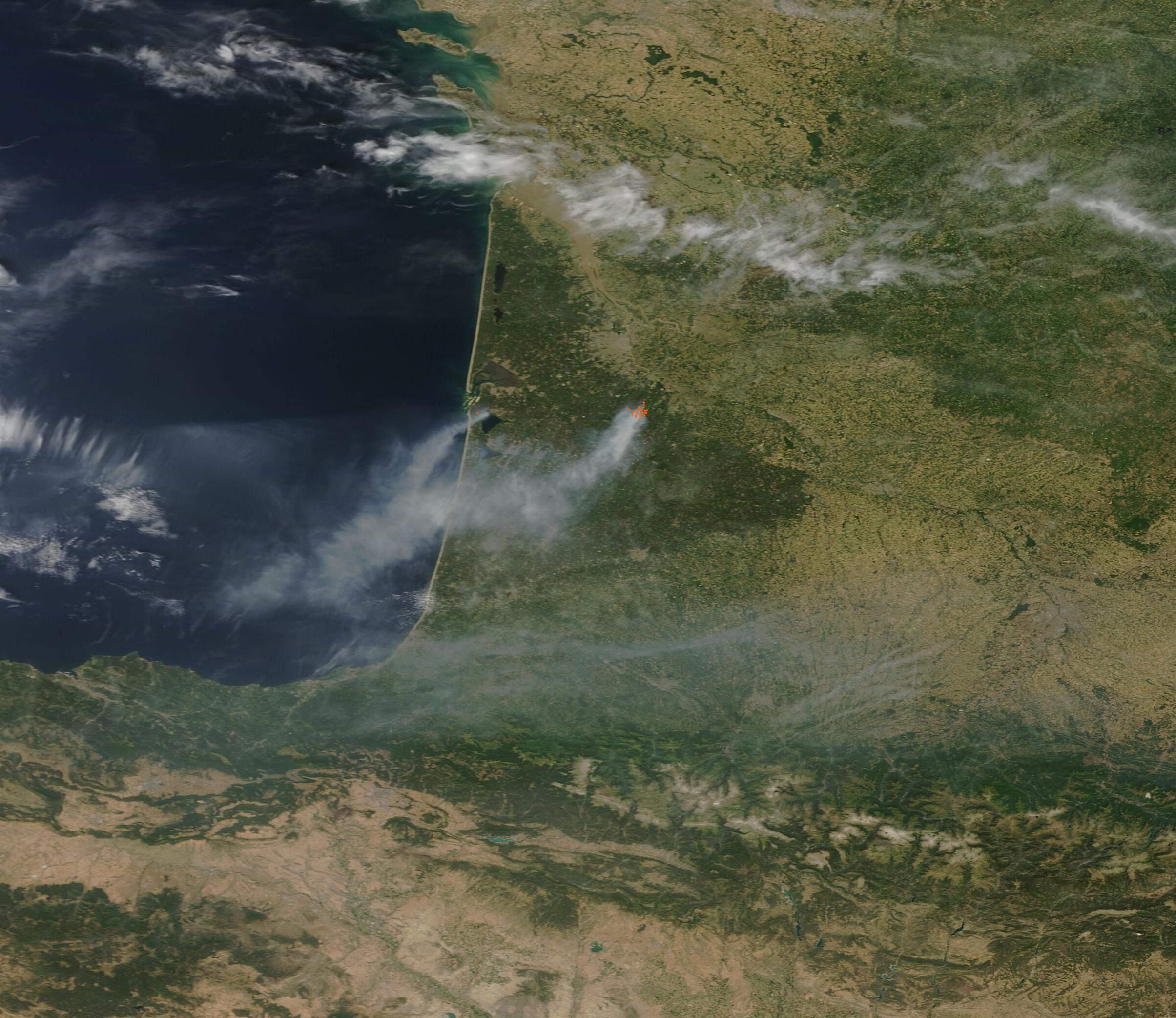
French authorities evacuated parts of the Bordeaux suburbs on Saturday, July 25, 2026, as a large wildfire threatened the region [1, 2].
The evacuations highlight the volatile nature of the current fire season in southwestern France. The proximity of the blaze to densely populated suburbs and critical infrastructure near Arcachon Bay has forced a rapid emergency response to prevent further loss of life or property [1, 2].
Firefighters spent the day battling smaller fires that broke out as a result of the primary, shifting wildfire [1, 2]. These secondary blazes often occur when embers are carried by wind, creating new ignition points that can trap residents or outflank containment lines. Emergency crews have remained on high alert to ensure these smaller spots do not merge into a larger front [1].
The wildfire originated near Arcachon Bay, where the terrain and wind conditions contributed to its unpredictable movement [1, 2]. Local officials ordered the protective evacuations to ensure a safety buffer between the advancing flames and residential areas in the Bordeaux suburbs [1, 2].
Authorities have not yet released a final tally of damaged structures, but the focus remains on active fire suppression and the safety of displaced residents [1, 2]. Firefighting teams are utilizing a combination of ground crews and aerial support to douse the remaining hotspots and stabilize the perimeter [1].
“French authorities evacuated parts of the Bordeaux suburbs on Saturday, July 25, 2026.”
The necessity of evacuations in the Bordeaux suburbs demonstrates the increasing risk that shifting wildfires pose to urban-wildland interfaces. As fires become more unpredictable near coastal areas like Arcachon Bay, the reliance on rapid, protective evacuations becomes the primary tool for preventing mass casualties when containment efforts are challenged by wind and terrain.


