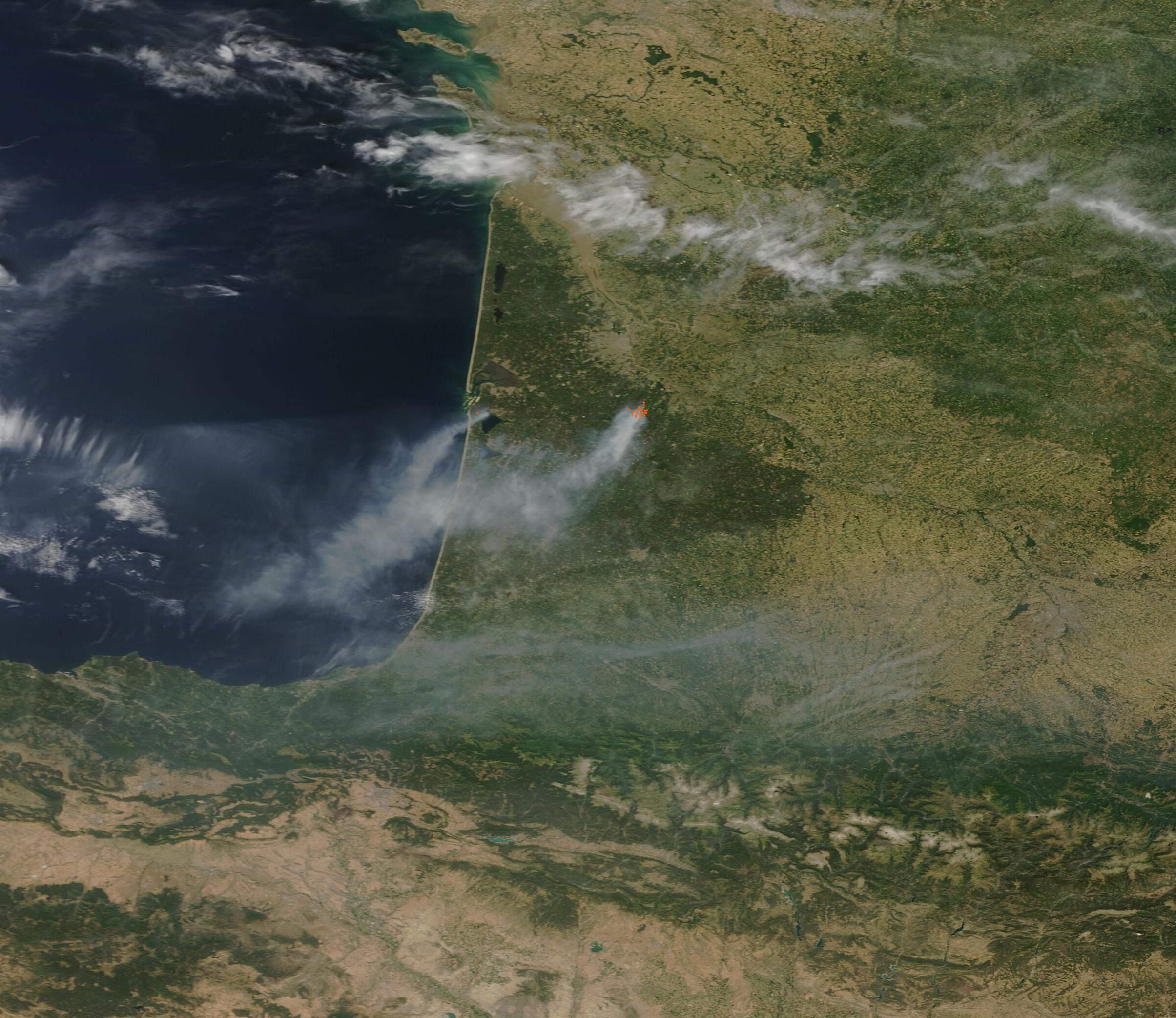
Wildfires in southwest France have reached the outskirts of Bordeaux, prompting authorities to evacuate approximately 300,000 people [1].
The scale of the displacement and the proximity of the flames to a major urban center signal a critical escalation in the region's fire season. Such widespread evacuations strain emergency infrastructure and threaten the residential and agricultural hubs of the Gironde department.
French authorities and fire-fighting teams are working to contain the perimeter as the blaze continues to spread. The fire has already consumed a vast expanse of land, with officials reporting that the burned area is more than three times the size of Paris [1].
Emergency crews are prioritizing the protection of the city's outskirts to prevent the fire from entering densely populated urban zones. The rapid advancement of the flames has forced thousands of residents to flee their homes on short notice, leaving behind livestock and property in the path of the fire.
Coordination between local and national agencies remains focused on the evacuation of the remaining at-risk populations. While fire-fighting teams continue to battle the blaze, the sheer size of the affected area has complicated containment efforts across the southwest region.
“Wildfires in southwest France have reached the outskirts of Bordeaux”
The magnitude of this event—evacuating nearly 300,000 people and destroying an area significantly larger than the capital city—highlights the increasing vulnerability of southwest France to extreme fire weather. The proximity of the fires to Bordeaux demonstrates that urban-wildland interfaces are becoming high-risk zones, requiring more aggressive evacuation protocols and land-management strategies to prevent catastrophic loss of life and infrastructure.