
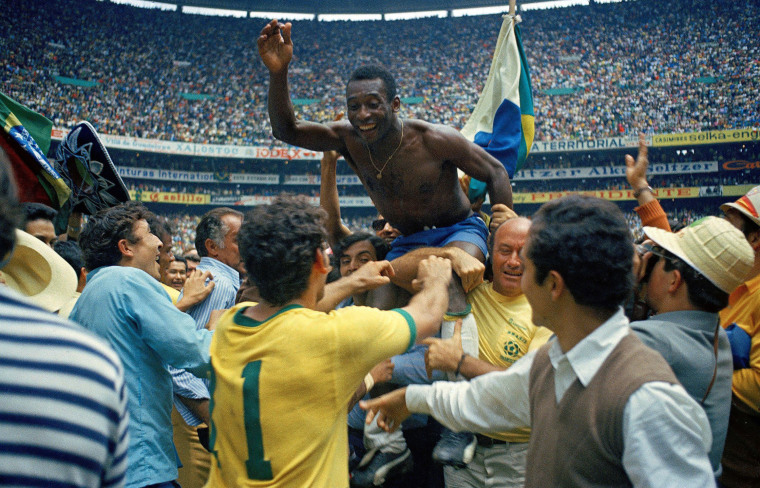
Brazil captured its third FIFA World Cup title during the 1970 tournament hosted in Mexico [1].
The victory is regarded as a high point in football history because it showcased a level of skillful play and dominance that defined an era. The tournament solidified the legacy of several global icons and established Brazil as a premier force in the sport.
Pelé served as the centerpiece of the Brazil national team, delivering iconic performances that helped lead the squad to the championship [1]. The tournament also featured other legendary figures, including England goalkeeper Gordon Banks and West Germany defender Franz Beckenbauer [1]. These athletes contributed to the spectacle of the event, which is remembered for its high technical quality and memorable individual moments [1].
Brazil's path to the trophy culminated in a decisive final match against Italy. Brazil defeated Italy with a final score of 4–1 [2]. This victory allowed Brazil to secure its third title [2], a milestone that cemented its status as a global powerhouse in football.
The tournament in Mexico [2] is celebrated not only for the final result but for the style of play exhibited by the Brazilian squad. Their ability to combine athletic prowess with creative skill made the 1970 event a benchmark for future World Cups [1]. The synergy between Pelé and his teammates created a dominant offensive force that few teams could withstand during the competition.
“Brazil captured their third FIFA World Cup title during the 1970 tournament hosted in Mexico.”
The 1970 World Cup victory was more than a trophy for Brazil; it represented the peak of a specific era of footballing artistry. By securing its third title, Brazil established a historical dominance that pressured other nations to evolve their tactical approaches to the game.


