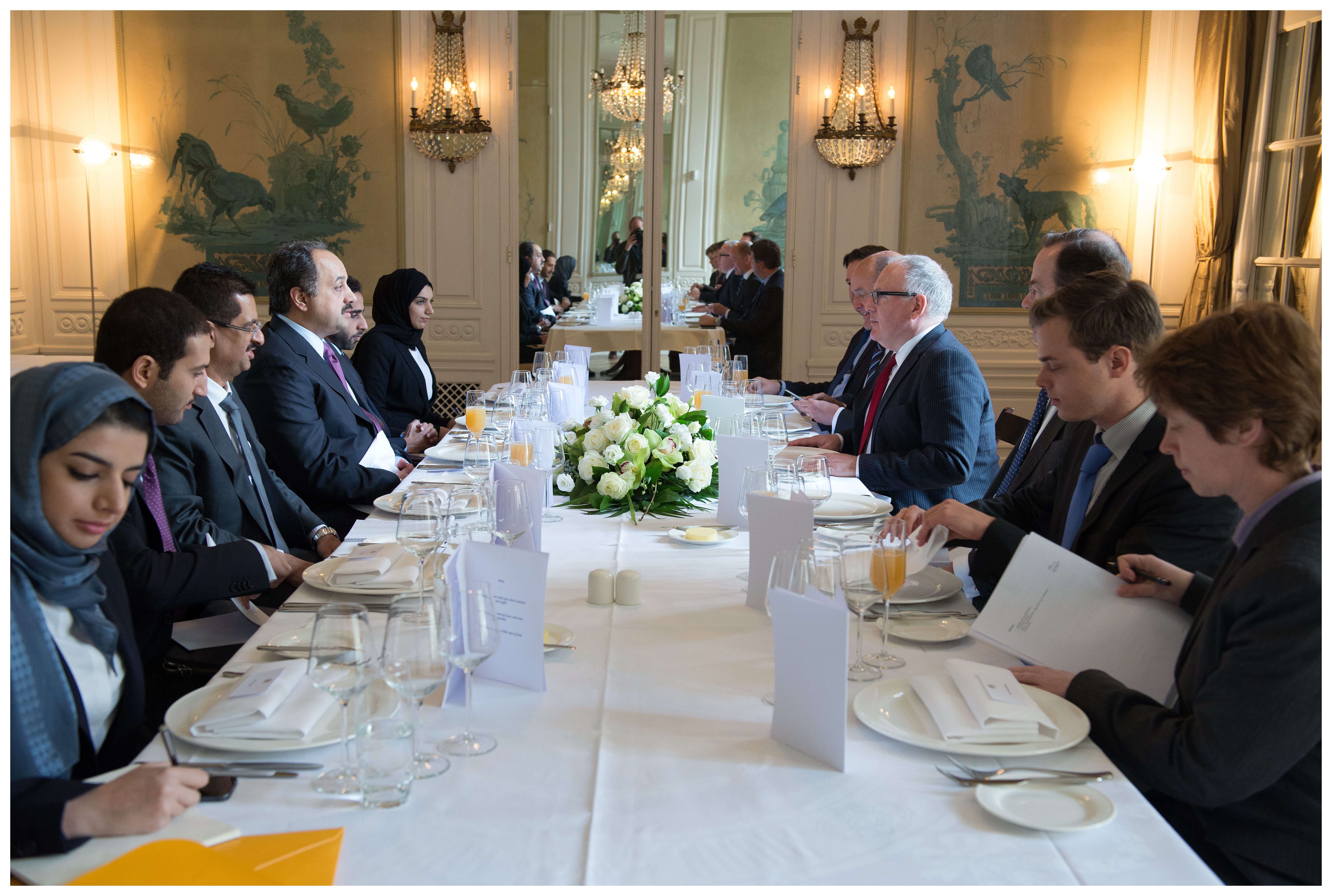
BRICS foreign ministers began a two-day meeting [1] in New Delhi on Thursday to discuss the conflict between Iran, the U.S., and Israel.
The gathering arrives at a critical moment as the bloc faces internal divisions over how to respond to the war. These tensions threaten the unity of the group while global energy security remains precarious due to pressures on the Strait of Hormuz [2].
Iran's Foreign Minister Abbas Araghchi is currently on a three-day visit to India [3]. During the proceedings, Araghchi urged the member nations to stop the West Asian conflict and call for an end to the war.
"The United States and Israel have launched unlawful attacks on Iran," Araghchi said [4].
Araghchi said that there is no military solution to issues involving Iran and that Tehran will not surrender to pressure or threats [5]. He called on the BRICS members to condemn what he described as unlawful aggression by the U.S. and Israel [6].
While Iran sought a collective stance, the bloc's response remains fragmented. Some reports indicate that India sidestepped condemning the U.S. and Israel during the meeting [7]. This hesitation highlights the difficulty the bloc faces in maintaining a unified diplomatic front when member interests diverge.
Beyond the immediate conflict, the ministers are addressing oil prices and the stability of energy corridors. Experts have noted that the bloc's ability to mediate is essential for regional stability. Prof. Hamed Mousavi said that BRICS must step up as a mediator in the Iran-U.S. war [8].
The meeting serves as a test of whether the expanded BRICS alliance can move beyond economic cooperation to exert meaningful geopolitical influence in the Middle East [2].
“"The United States and Israel have launched unlawful attacks on Iran."”
The meeting underscores a fundamental tension within BRICS between members who seek a neutral, economic-first alliance and those who want the bloc to serve as a geopolitical counterweight to Western influence. India's reluctance to condemn the U.S. suggests that the group may struggle to produce a unified resolution on the Iran conflict, potentially limiting its effectiveness as a global mediator.