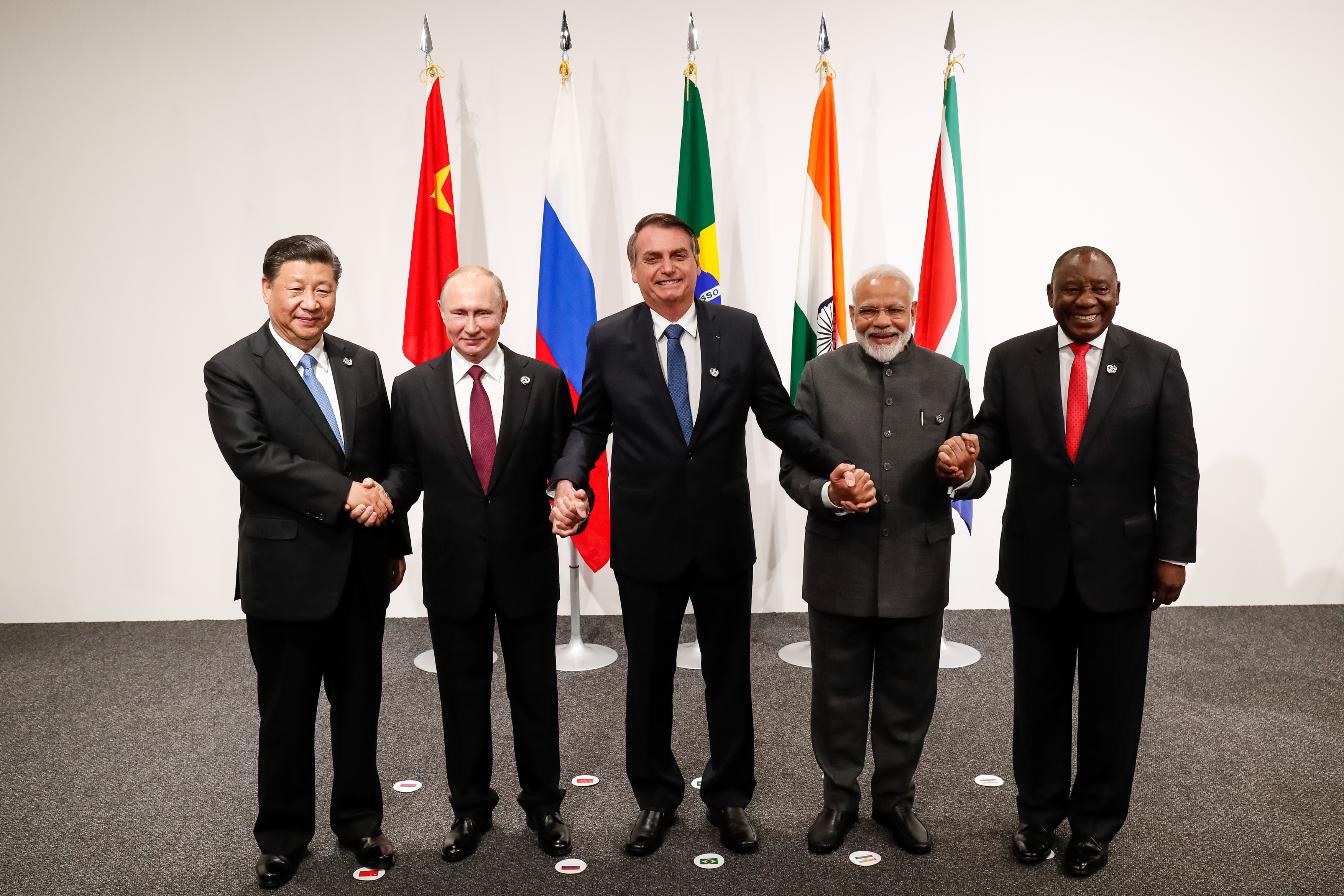
A meeting of BRICS Deputy Foreign Ministers and Special Envoys in New Delhi concluded without a joint statement due to diplomatic deadlock [1].
The failure to reach a consensus underscores the deep geopolitical fractures within the expanded bloc, specifically regarding the volatile security situation in West Asia. As BRICS attempts to project a unified alternative to Western-led diplomacy, internal disputes over the Israel-Palestine conflict threaten to undermine its collective influence.
The meeting, which involved 11 member nations [4], was derailed by sharp differences between Iran and the United Arab Emirates [2]. According to the Ministry of External Affairs, the group could not agree on a final document because of the opposing positions held by these two nations regarding the West Asia conflict [2].
Reports indicate that the deadlock was further complicated by India's own diplomatic strategy. India reportedly attempted to dilute the language concerning Israel and Palestine to maintain a balanced position [4]. While a senior official from the Ministry of External Affairs said Iran welcomed a constructive role from New Delhi, the UAE's stance made a joint document impossible [3].
Former Indian diplomat Kanwal Sibal noted that the outcome was not surprising. "The lack of a joint statement was expected given the deep differences between Iran and the UAE," Sibal said [5].
The meeting concluded on Friday, April 26, 2026 [4]. The inability to produce a shared communiqué highlights the difficulty of maintaining a consensus-based decision-making process as the bloc grows in size and ideological diversity. The Ministry of External Affairs spokesperson said the group could not reach a consensus due to the differing positions of Iran and the UAE [2].
“The lack of a joint statement was expected given the deep differences between Iran and the UAE.”
The absence of a joint statement reveals the fragility of the BRICS coalition when facing regional conflicts. While the bloc seeks to expand its global footprint, the friction between Iran and the UAE demonstrates that national interests in West Asia can override the collective desire for a unified diplomatic front. This suggests that future BRICS summits may struggle to produce actionable policies on security issues unless a more flexible framework for disagreement is adopted.


