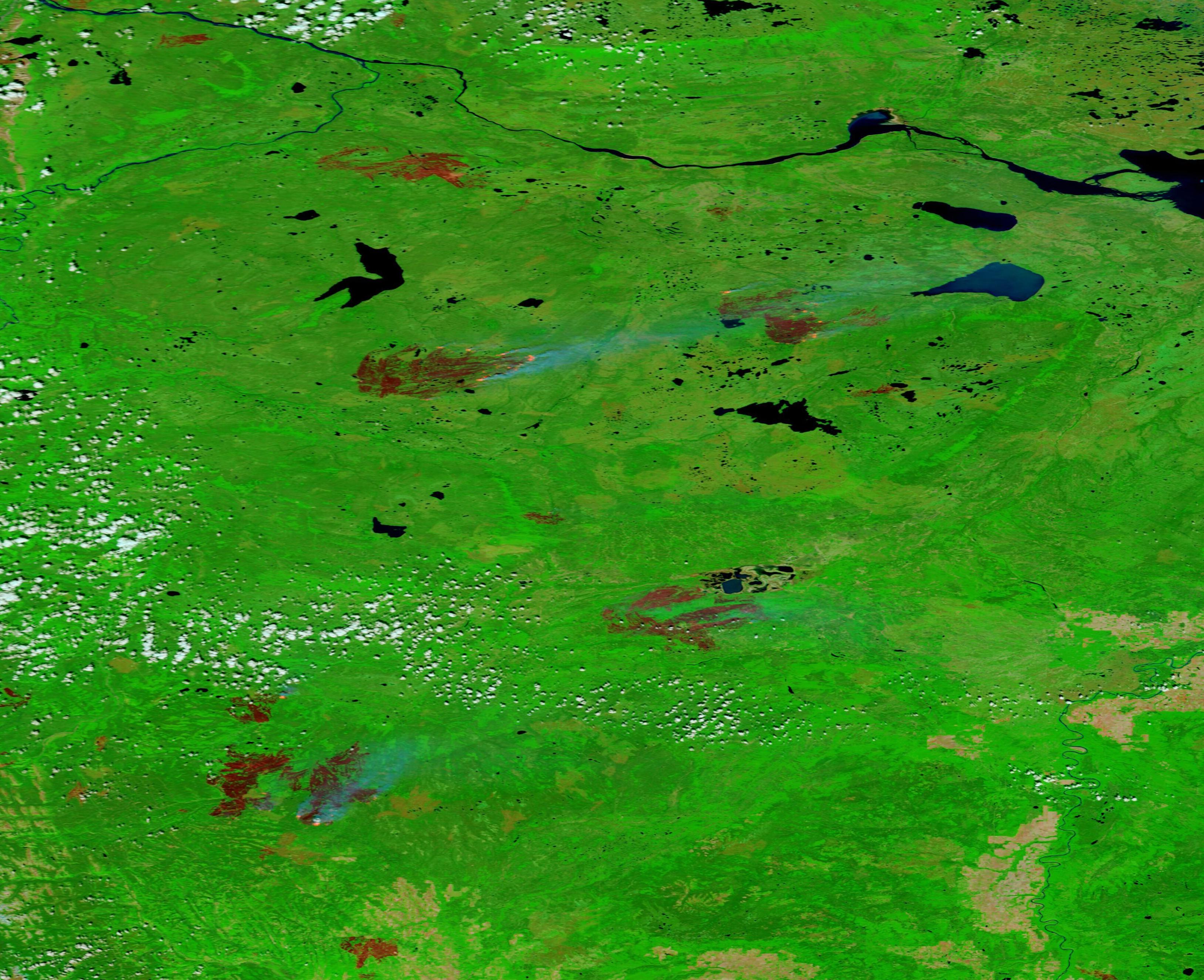
More than 900 wildfires are currently burning across Canada, forcing thousands of residents in several provinces to flee their homes [1, 3].
The scale of the blazes has created a public health crisis extending beyond the fire zones, as smoke reaches major cities across North America. This widespread atmospheric impact affects millions of people [4], complicating air quality and urban safety throughout the continent.
Emergency officials said 122 of the active fires are listed as out-of-control [2]. These blazes are stretching from the west coast to the east coast, creating a national emergency that requires coordinated provincial and federal responses.
The displacement of thousands of citizens has strained local resources [3]. Many residents have been forced to evacuate quickly as fire fronts move toward residential areas, leaving families in temporary shelters while crews battle the flames.
While the total number of active fires is just over 900 [1], the intensity of the out-of-control blazes remains the primary concern for firefighting agencies. The geographical spread of the fires means that resources are being diverted across multiple provinces to manage the crisis.
“More than 900 wildfires are currently burning across Canada”
The simultaneous occurrence of hundreds of fires from coast to coast indicates a severe environmental stressor affecting the entire Canadian landscape. When smoke reaches millions of people in distant urban centers, it transforms a regional disaster into a continental public health issue, highlighting the interconnectedness of North American air quality and forest management.

