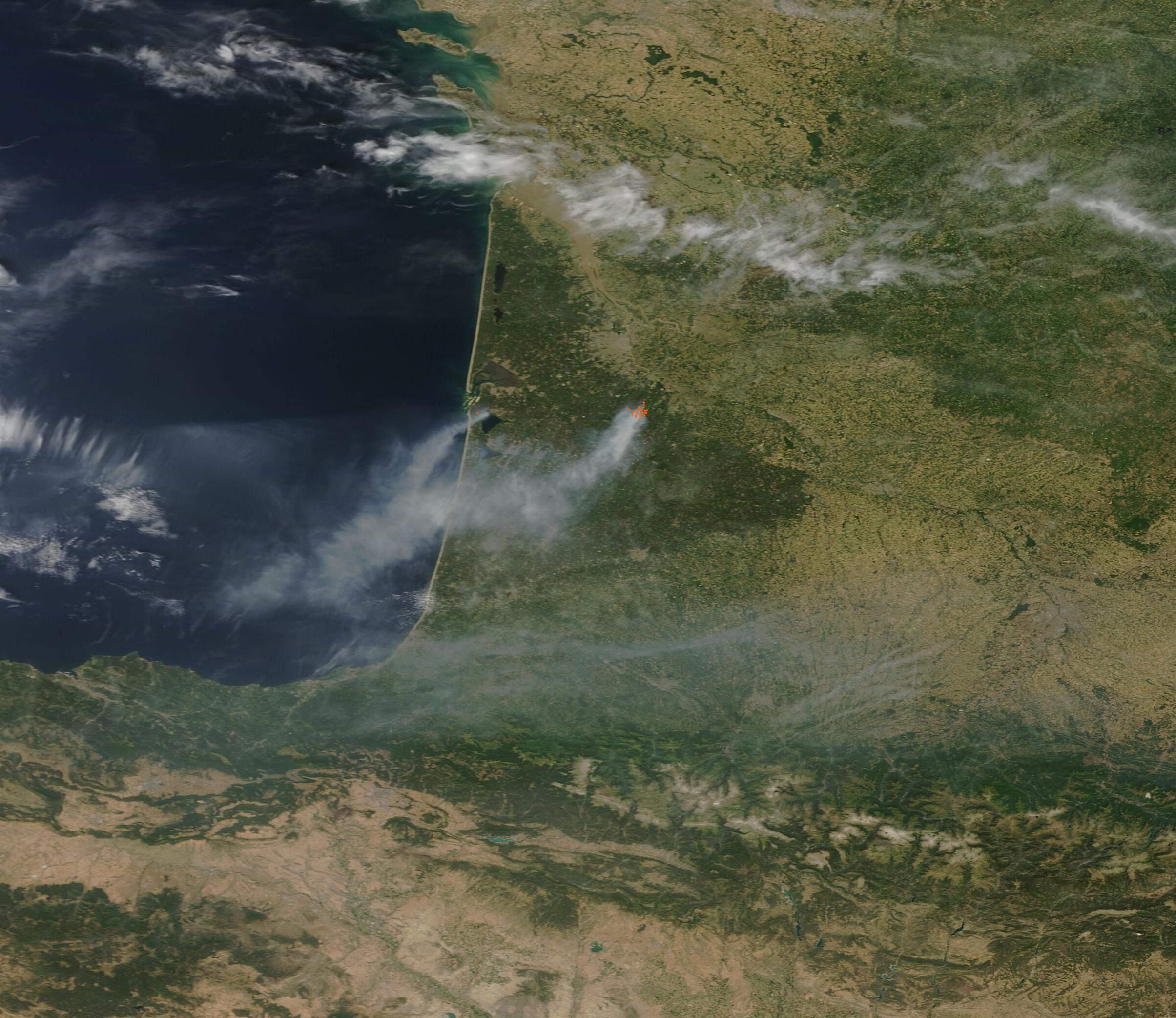
French authorities ordered the full evacuation of the Cap-Ferret peninsula on Friday after a massive wildfire swept through the Gironde department [1].
The scale of the evacuation highlights the extreme vulnerability of the Arcachon basin during the summer peak, when thousands of tourists congregate in densely forested coastal areas [2].
The fire began on Wednesday and progressed rapidly through the region [3]. Prefect Laurent Nuñez said the blaze has destroyed approximately 50 houses [4]. To ensure public safety, officials ordered a total evacuation of the peninsula by both road and sea [5].
Reports on the total area burned vary between sources. Some reports indicate 4,800 hectares have been devoured by the flames [6], while Prefect Nuñez said the figure is more than 10,000 hectares [4].
Emergency services have deployed significant aerial resources to combat the spread. These include water-drop kits with a capacity of 20 tonnes, which is equivalent to the output of three Canadair aircraft [7]. Despite these efforts, the fire continued to progress through the forest throughout Friday [3].
Approximately 20,000 people, including local residents and vacationers, have been forced to leave their homes and hotels [6]. The rapid spread of the fire has turned holiday destinations into emergency zones, forcing families to flee with little notice [8].
Local authorities continue to monitor the wind and weather conditions to determine if the fire can be contained. The evacuation remains in place as firefighting teams work to prevent the flames from reaching further residential clusters in the southwestern region [1].
“The fire has destroyed approximately 50 houses”
The discrepancy in burn area reports and the necessity of a sea-based evacuation underscore the volatility of the terrain and the speed of the fire's progression. Because this event occurred during the height of the tourist season, the logistical challenge of moving 20,000 people from a peninsula creates a high-risk bottleneck, emphasizing the need for improved emergency egress planning in France's coastal forest zones.


