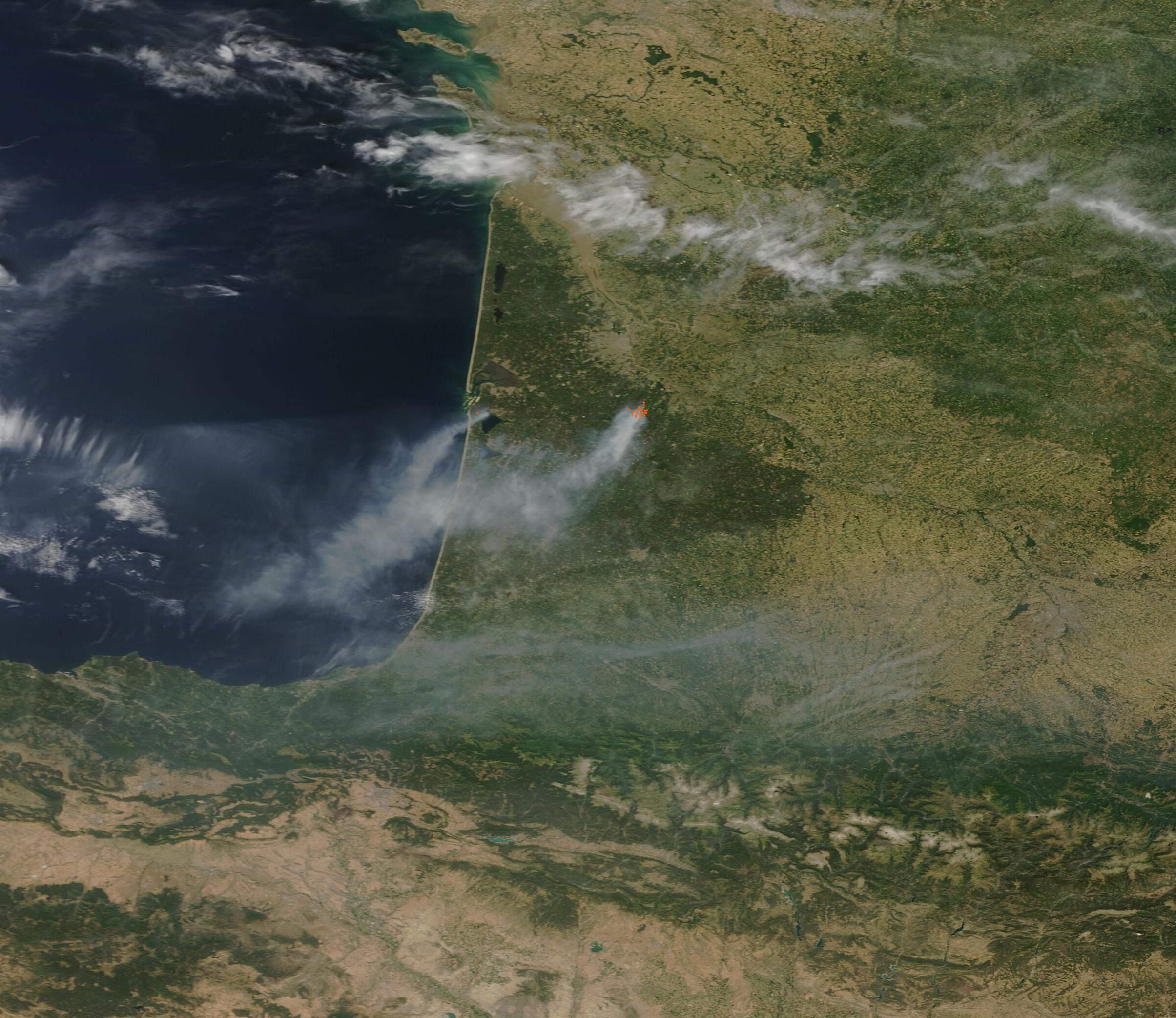
A massive wildfire has burned more than 10,000 hectares in the Gironde department, forcing the evacuation of the Cap-Ferret peninsula this week [1].
The scale of the blaze represents a critical threat to one of France's most popular coastal regions, endangering both permanent residents and thousands of summer tourists.
The fire broke out during the night of July 23–24 and started near Saumos [2, 3]. From there, the flames spread toward the peninsula, threatening local villages, campsites, and protected natural areas [4, 5]. Prefect Sophie Brocas said a full evacuation of the peninsula was ordered on Friday to ensure public safety [2].
Minister of the Interior Laurent Nuñez said, "C’est le plus gros feu de la saison" — it is the biggest fire of the season [1].
Emergency operations have focused on moving people off the peninsula via the water. Many evacuees were funneled to the jetée Thiers in Arcachon [5]. While reports on the number of people reaching the jetty vary, one source said 1,400 people had already disembarked [6], while another cited more than 400 [7]. A firefighter said a boat arrives every half hour to transport those fleeing the flames [6].
The overall scale of the displacement is significant. Reports indicate that between 35,000 [2] and nearly 40,000 people [4] are in the process of being evacuated.
Damage assessments continue as authorities battle the blaze. While some reports placed the burned area at more than 8,700 hectares [7], the Interior Ministry's figure of more than 10,000 hectares reflects the most recent estimate of the destruction [1].
“"C’est le plus gros feu de la saison"”
The rapid spread of this fire and the necessity of sea-based evacuations highlight the extreme vulnerability of the Cap-Ferret peninsula's geography. Because the area is constrained by water and dense forest, traditional land escape routes can be quickly compromised, making maritime coordination essential for preventing mass casualties during peak tourism months.


