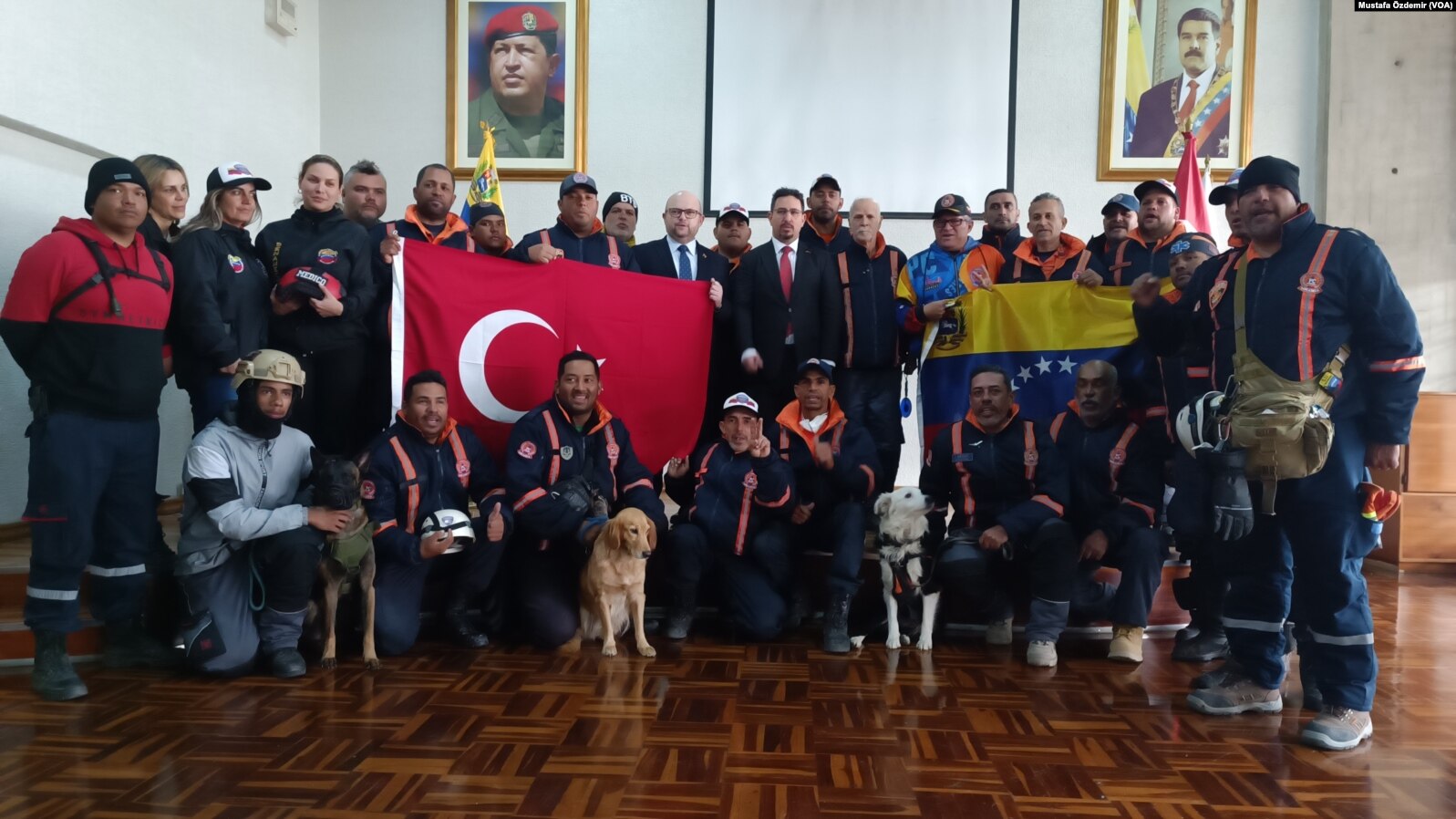
Rescue workers are searching through rubble in Caracas for survivors three days after twin earthquakes struck Venezuela [1, 2, 3].
The ongoing efforts highlight a critical race against time as the window for finding live survivors closes in the wake of massive structural failure.
The disasters occurred late June 24, 2026 [7]. The earthquakes registered magnitudes of 7.2 and 7.5 [6]. These seismic events caused extensive damage to buildings in the capital, trapping residents and visitors beneath collapsed concrete and debris [1, 2, 3].
Casualty reports vary significantly across sources. Some reports indicate at least 32 people died [1] and more than 700 were injured [2]. Other reports suggest the toll is much higher, with 235 people dead, including foreign victims [3]. Further reports place the death toll at 920 people [4] and the number of injured at over 3,300 [5].
Rescue teams in Caracas continue to operate despite the deteriorating odds. Experts said that the 72-hour "golden window" for finding survivors has now elapsed [8]. This period is typically the most critical timeframe for locating people alive under rubble, after which the likelihood of survival drops sharply.
International aid has begun to arrive as the city reels from the impact [7]. Teams are utilizing specialized equipment to penetrate collapsed structures, though the scale of the destruction has complicated the process [1, 2].
“The 72-hour "golden window" for finding survivors has now elapsed”
The wide discrepancy in casualty figures suggests a chaotic reporting environment and significant difficulty in accessing all affected areas. With the 72-hour survival window closed, the mission in Caracas is likely shifting from a rescue operation to a recovery effort, while the magnitude of the twin quakes indicates a long-term infrastructure crisis for the Venezuelan capital.


