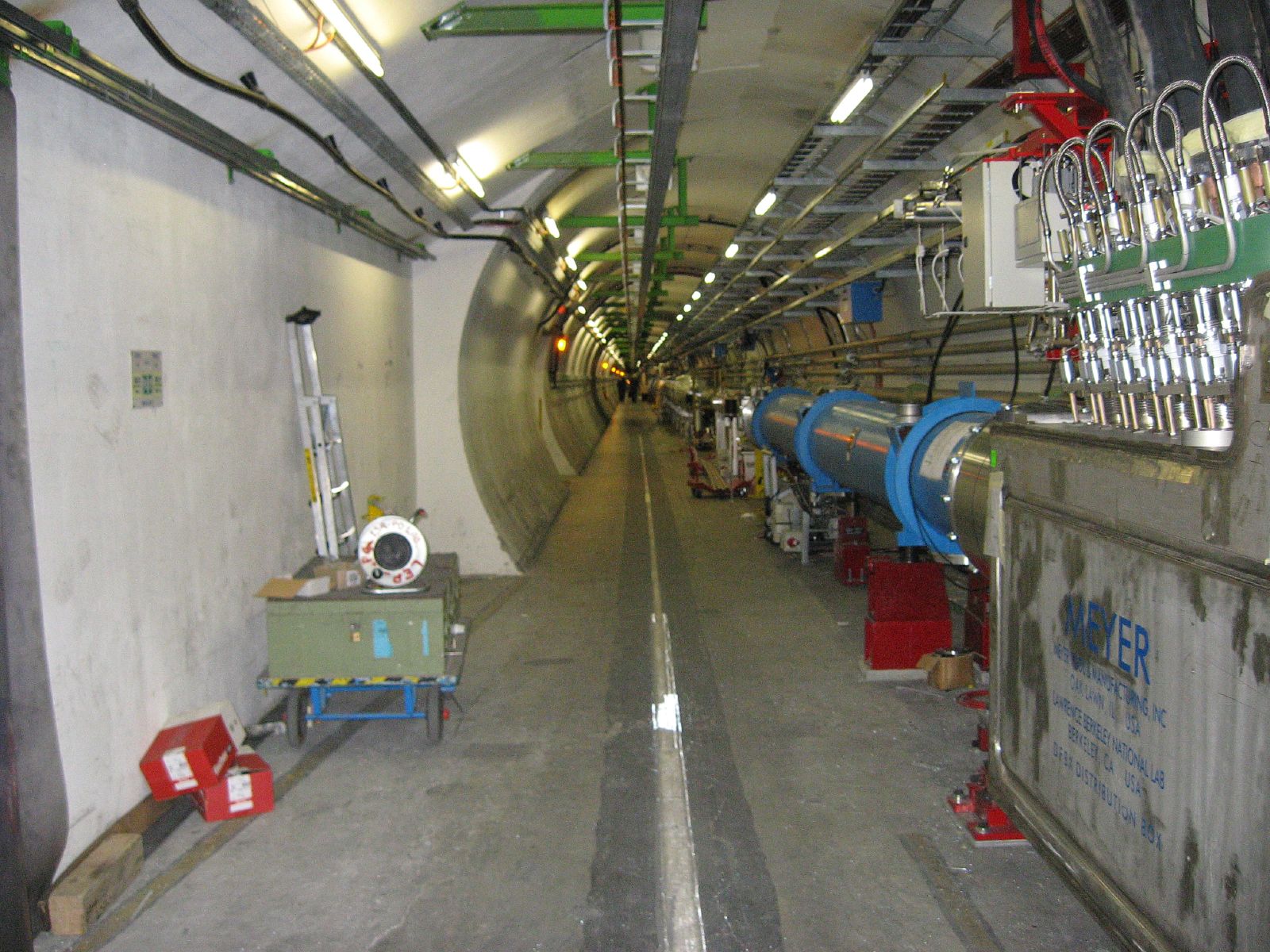
The Large Hadron Collider at CERN is being shut down to make room for a more powerful experiment [1].
This transition is critical for the field of particle physics because current data limits prevent scientists from observing rare phenomena with sufficient frequency. A more powerful machine will allow researchers to probe the fundamental laws of the universe with greater precision.
Located near Geneva, Switzerland, the collider is operated by the European Organization for Nuclear Research, known as CERN [1]. The decision to shut down the current facility stems from the need for a higher volume of particle collisions to unlock new discoveries [1].
Precision in these experiments requires an immense amount of data. For example, the Higgs boson is observed in only about one in a billion collisions [2]. To study such rare events more effectively, the next generation of experiments must be capable of generating significantly more collisions than the current infrastructure allows.
While the facility has provided groundbreaking insights into the nature of matter, the limitations of the existing hardware have become a bottleneck for theoretical physics. The new experiment is designed to overcome these constraints, providing the energy and collision rates necessary to test new hypotheses about dark matter and quantum gravity.
CERN has not yet released a specific timeline for the decommissioning process or the construction of the successor. However, the goal remains to expand the capabilities of the site to ensure the continued evolution of high-energy physics [1].
“The Large Hadron Collider at CERN is being shut down to make room for a more powerful experiment.”
The move signals a shift from the era of the Higgs boson discovery toward a new phase of high-luminosity physics. By replacing the current collider with a more powerful iteration, CERN aims to move beyond confirming existing theories and begin searching for physics beyond the Standard Model, which requires a statistical sample of collisions far larger than what is currently possible.


