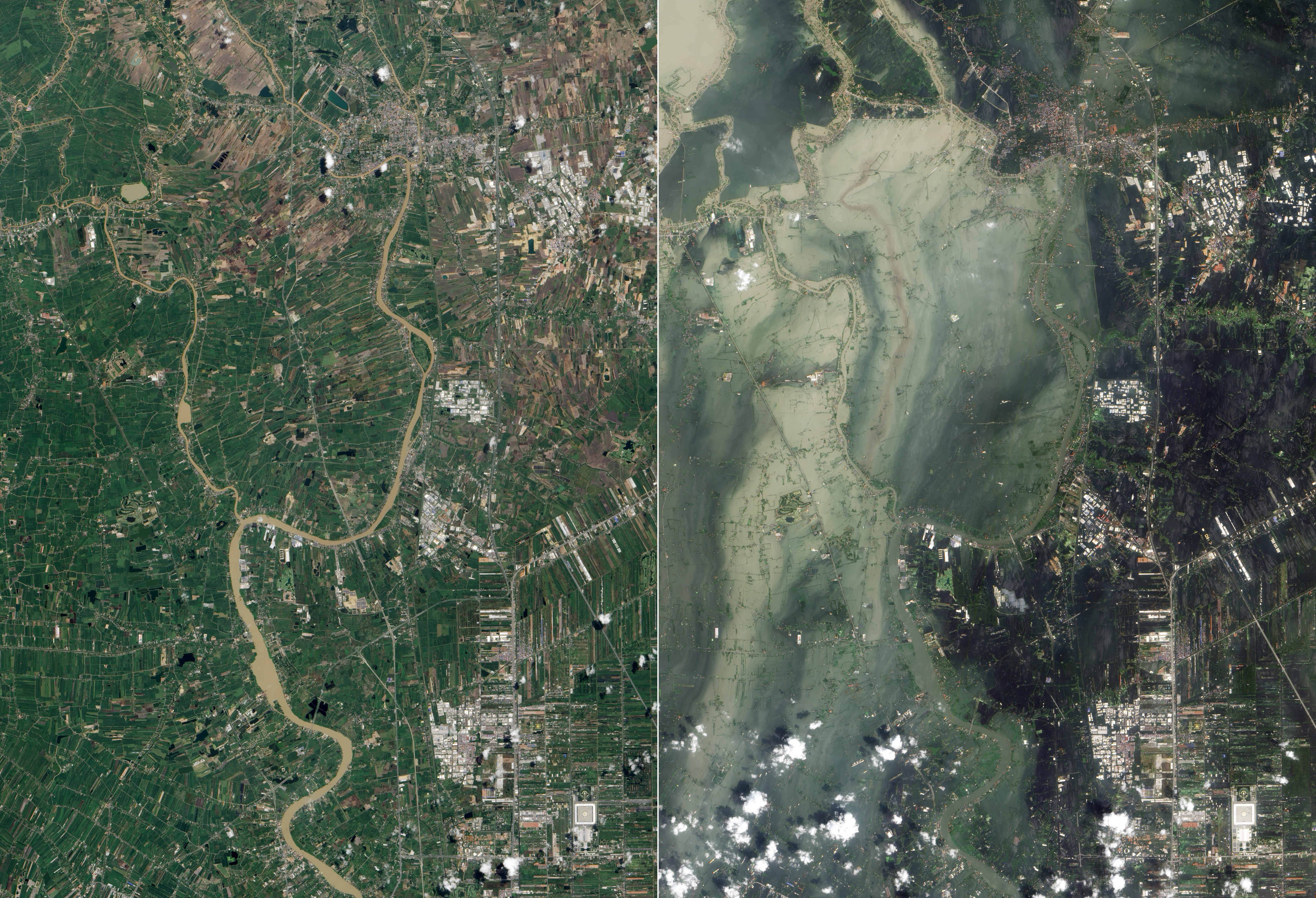
Hundreds of snakes escaped from a breeding farm in South China after floodwaters from Typhoon Maysak breached the facility's enclosures [1, 2].
The incident has created a secondary crisis for residents already struggling with storm damage, as venomous reptiles now roam flooded residential areas.
The escape occurred in a village in Hengzhou, located within the Guangxi region [1, 3]. Floodwaters inundated the farm, allowing the snakes, including cobras, to enter nearby villages [1, 2]. Local residents reported panic as snakes were spotted in the water and reports of snakebites surfaced [3].
Estimates of the number of escaped animals vary. One report said more than 800 snakes escaped [4], while another estimate placed the number at approximately 900 [3].
The escape is part of a larger weather catastrophe caused by Typhoon Maysak in September 2024 [4, 1]. The associated storms resulted in the deaths of 15 people [5]. Thousands of residents were evacuated from the region as the storms devastated the area [5].
Emergency responses in the affected villages have focused on both flood rescue and the containment of the escaped wildlife. The breach of the farm's enclosures was attributed directly to the volume and force of the floodwaters [4, 5].
“approximately 900 snakes escaped”
This event highlights the compounding risks of extreme weather, where natural disasters trigger secondary biological hazards. The escape of breeding-farm livestock into human settlements demonstrates how infrastructure failure during climate events can transform a localized flood into a public health emergency.