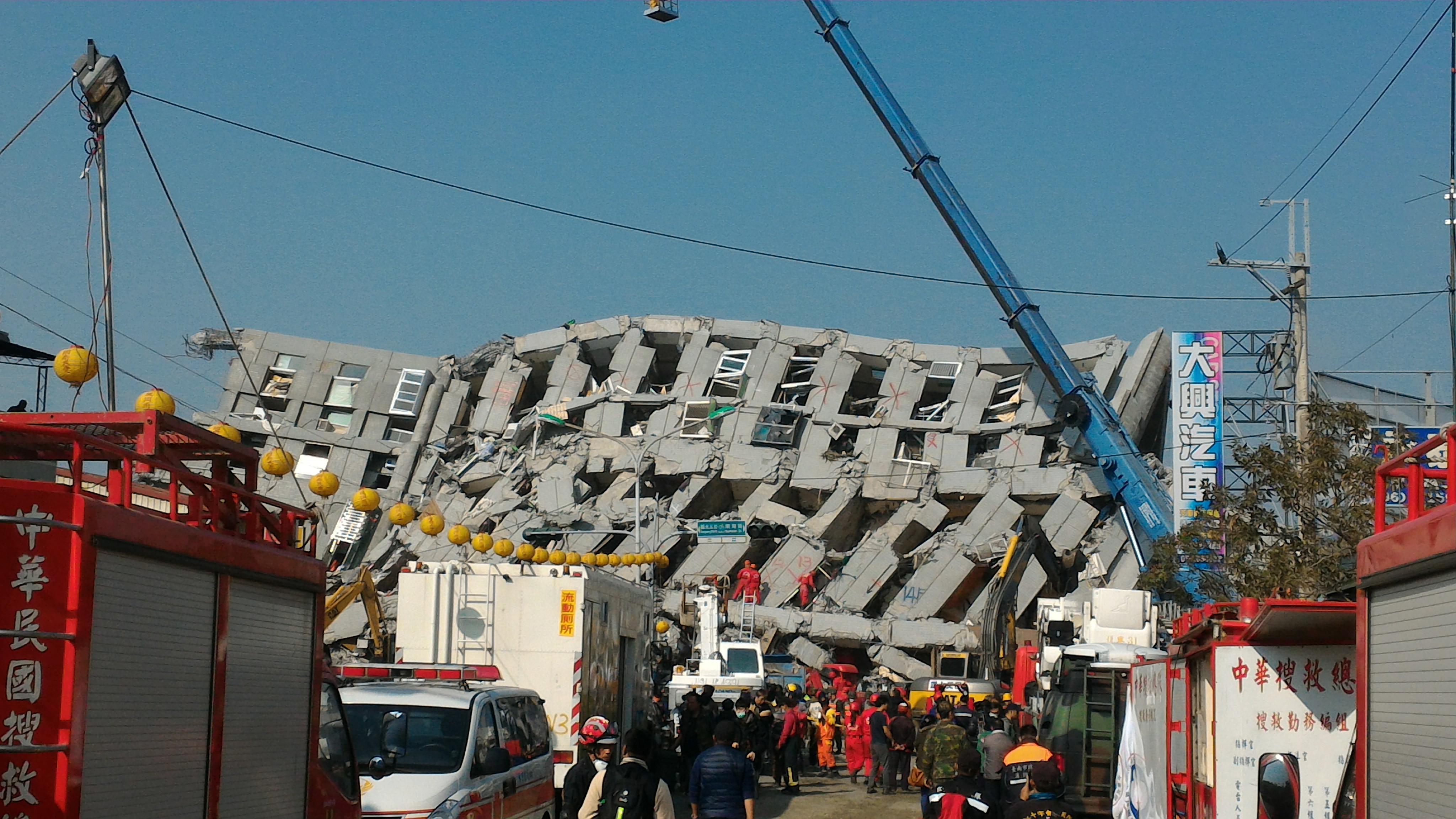
A landslide in Chongqing's Pengshui County collapsed residential buildings and buried residents on July 17, 2026 [1].
The disaster highlights the ongoing vulnerability of residential areas in southwestern China to sudden geological failures, which can lead to rapid loss of life and infrastructure.
The collapse occurred in the Hanjia subdistrict of the Chongqing municipality [2]. Emergency responders have been working to locate survivors among the debris of more than 10 residential buildings that were buried [1].
Rescue efforts have seen varying levels of success as teams navigate the unstable terrain. The Global Times said at least 10 people have been rescued from the site [4]. Earlier reports from the same outlet said the number of rescued individuals was eight [3].
Authorities have moved residents out of the affected area to prevent further casualties. There are significant discrepancies in the reported scale of these evacuations. The Global Times said more than 60 people were evacuated [2], while the Free Press Journal said over 1,100 people were moved [1].
Local officials have not yet released a final count of the number of people buried or the total number of casualties. The focus remains on the search and rescue operation in the Hanjia subdistrict as teams attempt to clear the rubble and secure the slope to prevent secondary slides.
“A landslide in Chongqing's Pengshui County collapsed residential buildings and buried residents.”
This event underscores the critical risk posed by landslides in the mountainous regions of Chongqing, where steep terrain and residential expansion often overlap. The wide gap in evacuation numbers—ranging from 60 to over 1,100 people—suggests either a rapidly evolving situation on the ground or significant challenges in real-time data coordination during the initial emergency response.

![Defaced and decaying fresco formerly depicting Guru Gobind Singh (left) and Guru Tegh Bahadur (right) together, located underneath the dome of Gurdwara Rori Sahib [Gurdwārā Roṛī Sāhib Pātshāhī I] in J](https://upload.wikimedia.org/wikipedia/commons/c/c9/Defaced_and_decaying_fresco_formerly_depicting_Guru_Gobind_Singh%2C_located_underneath_the_dome_of_Gurdwara_Rori_Sahib_in_Jahman_village%2C_Lahore_district%2C_Punjab%2C_Pakistan.jpg)
