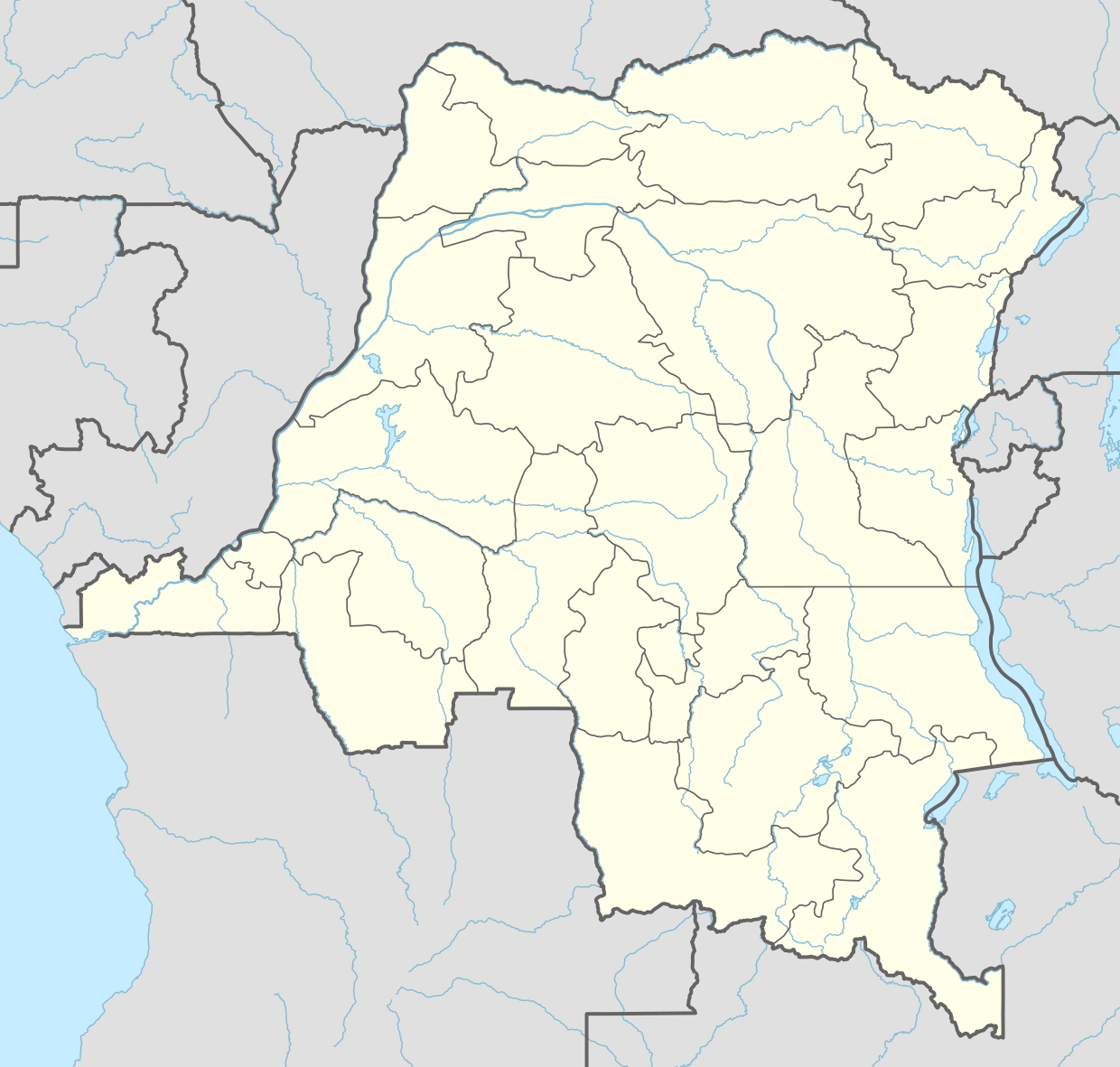
Congo's health minister and health authorities are opening three Ebola treatment centers in Ituri province to combat a rare viral strain [1].
The mobilization is critical because the Bundibugyo strain of Ebola currently has no approved vaccine or specific treatment [3, 4]. Without these medical interventions, health officials face a growing risk of regional spread in the eastern Democratic Republic of Congo [3, 4].
Reports on the human cost of the outbreak vary across sources. Some records indicate more than 110 deaths [2], while other reports place the toll at at least 80 [5] or as low as 65 [6]. The disparity in numbers reflects the difficulty of tracking cases in the affected region. Additionally, there have been 246 suspected cases reported [6].
The decision to expand facilities in Ituri province comes as the government attempts to contain the pathogen before it reaches neighboring areas [1]. Because the virus is rare, the healthcare system is struggling to adapt its protocols to this specific variation of the disease.
"We are playing catch-up against a very dangerous pathogen," an expert said [2].
The new centers are intended to provide supportive care to those infected, as the lack of a vaccine leaves clinicians with few options beyond symptom management, and isolation to prevent further transmission [3, 4].
“"We are playing catch-up against a very dangerous pathogen."”
The emergence of the Bundibugyo strain highlights a significant gap in global health security. While vaccines exist for the more common Zaire ebolavirus, the lack of a targeted pharmaceutical response for this rare strain forces health authorities to rely on containment and supportive care. The conflicting death tolls suggest a volatile situation where surveillance is struggling to keep pace with the virus's spread.


