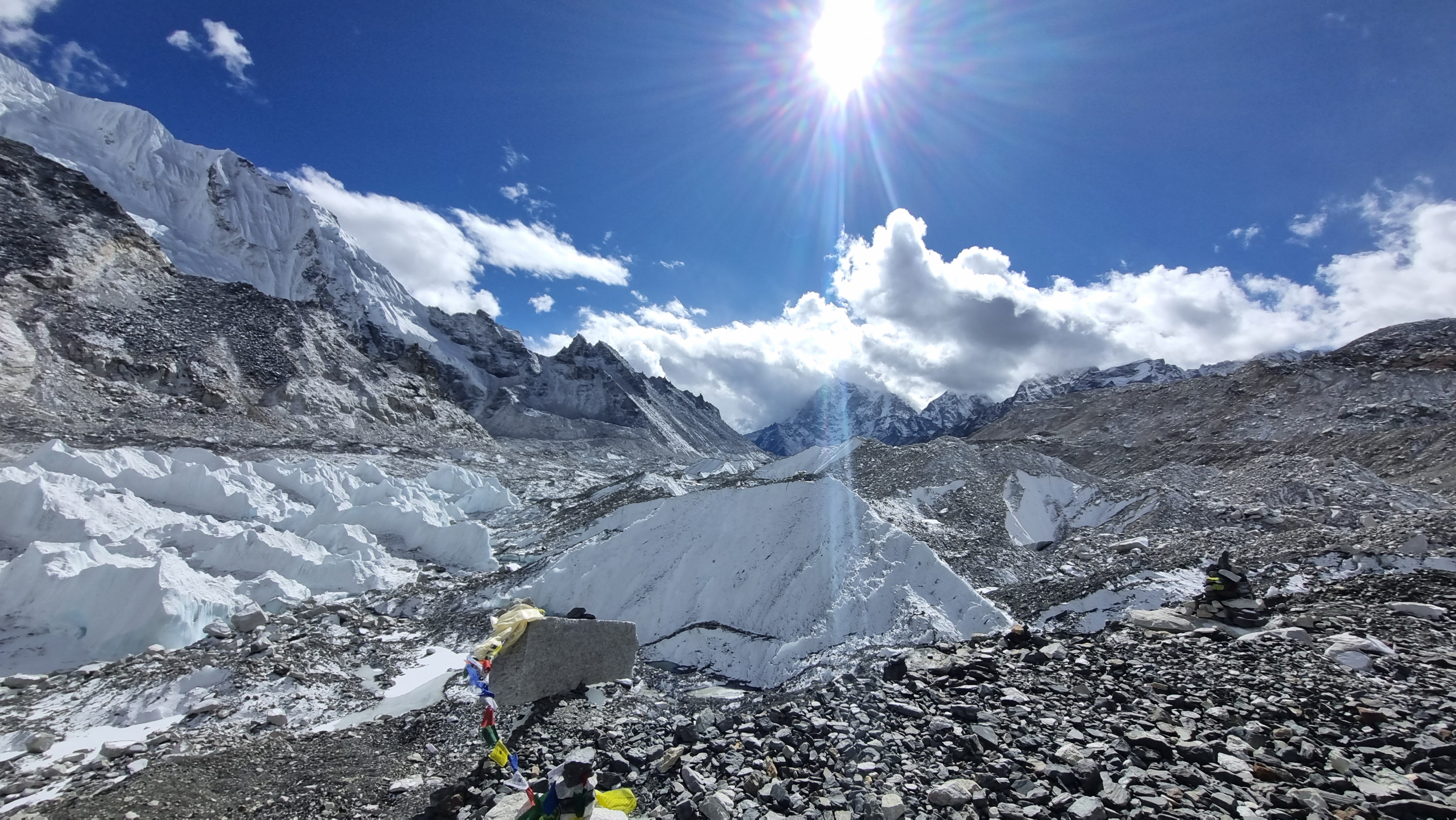
Nepali climbing guide Dawa Sherpa was found alive on June 5, 2026, after being missing for six days on Mount Everest [1], [2].
The rescue is considered a rare feat of survival given the extreme conditions of the mountain's "death zone," where oxygen levels are insufficient to sustain human life indefinitely. Sherpa's survival underscores the extreme physical resilience of high-altitude guides and the unpredictable nature of mountain rescues.
Sherpa had been presumed dead by rescue teams and colleagues after disappearing during his descent [1], [3]. He was eventually discovered crawling across the ice toward Base Camp [1], [3].
According to reports, Sherpa survived the six-day ordeal [1] without any food or bottled oxygen [3]. He had been alone in one of the most hostile environments on Earth, facing freezing temperatures and thin air that typically lead to rapid cognitive decline and organ failure.
Rescue teams located him as he made his way down from the high-altitude regions of the peak [1], [3]. The discovery occurred on Friday, June 5, 2026 [3].
While the specific circumstances leading to his disappearance were not detailed, the duration of his survival without supplies is noted as extraordinary [2], [3]. He was found in a state of exhaustion but alive, marking a successful end to a search that had largely shifted toward recovery efforts [1].
“Dawa Sherpa was found alive on June 5, 2026, after being missing for six days on Mount Everest.”
This incident highlights the critical role of physiological adaptation among Sherpas, whose bodies are often more efficient at processing oxygen at high altitudes than those of non-native climbers. Surviving six days in the death zone without supplemental oxygen is an anomaly that provides a rare case study in human endurance and the limits of survival in extreme alpine environments.