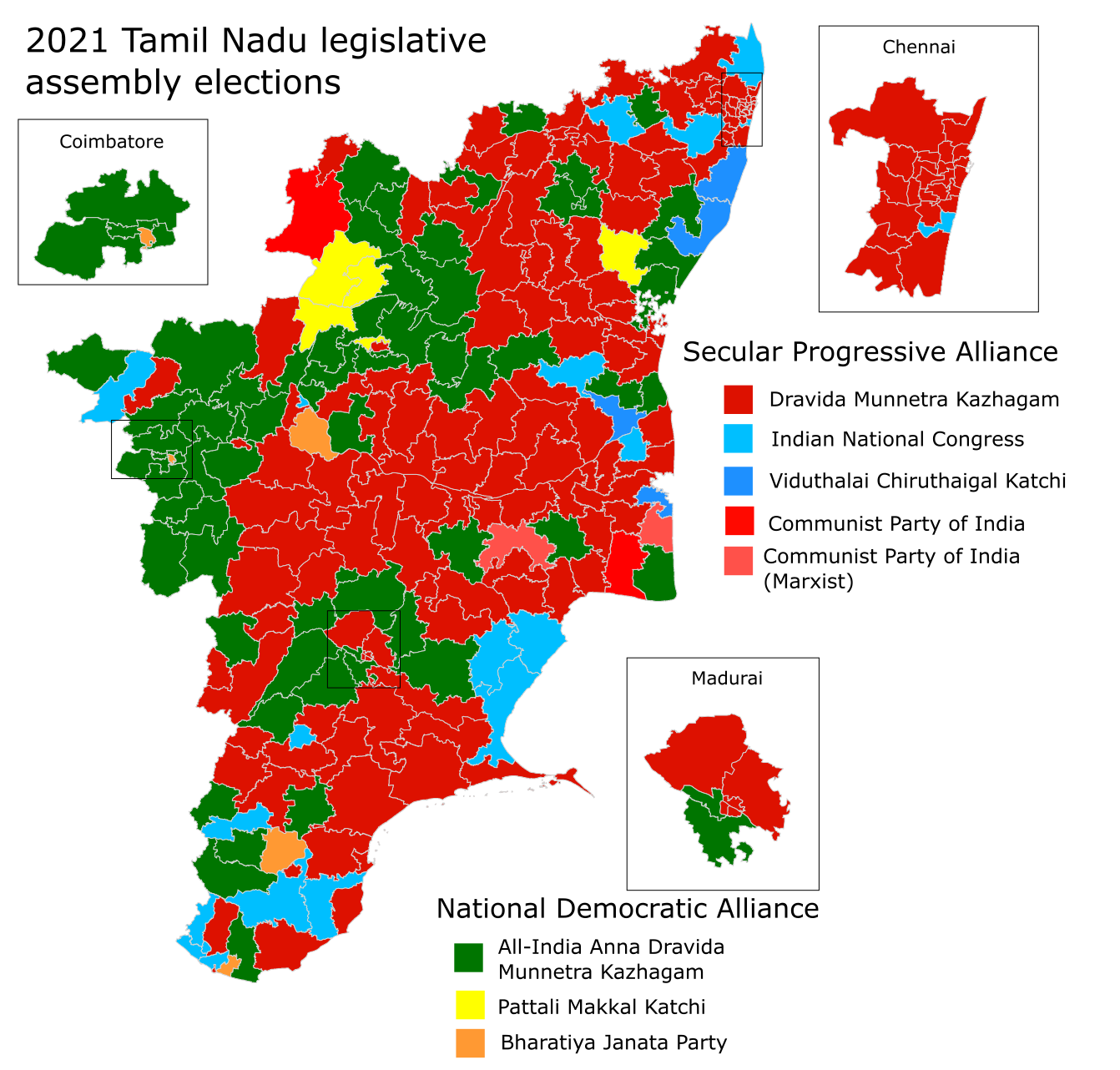
Left political parties confirmed that the Dravida Munnetra Kazhagam (DMK) and All India Anna Dravida Munnetra Kazhagam (AIADMK) held back-channel talks [1, 2].
These negotiations between long-term political rivals represent a significant shift in the state's political landscape. The attempt to bridge the gap between the two parties sought to secure a stable government in Tamil Nadu following the election [1, 2].
According to reports from the Left, the DMK explored options to provide outside support to the AIADMK [1, 2]. The parties engaged in secret discussions to determine if a coalition, or a support agreement, could prevent a political deadlock in the state [1, 2]. This strategic move would have aligned two parties that have historically remained arch-rivals in the region [2].
However, the proposed alliance did not materialize. The Left parties rejected the proposal to join or support this arrangement [1, 2]. Instead of aligning with the DMK-AIADMK framework, the Left chose to back the Tamilaga Vettri Kazhagam (TVK) [1, 2].
This decision by the Left parties effectively blocked the path for the DMK and AIADMK to form a joint government. The shift in support toward the TVK suggests a realignment of power dynamics within the state, as the Left seeks a different alternative to the traditional Dravidian party hegemony [1, 2].
The confirmation of these talks highlights the volatility of post-election negotiations in Tamil Nadu. While the DMK and AIADMK attempted to find a pragmatic path to power, the refusal of the Left parties ensured that the TVK became the primary beneficiary of their support [1, 2].
“The Left confirmed that DMK and AIADMK engaged in back-channel talks to try to form a Tamil Nadu government.”
The failure of these back-channel talks indicates a breakdown in the traditional bipolarity of Tamil Nadu politics. By rejecting a deal between the DMK and AIADMK in favor of the TVK, the Left parties are signaling a move away from the established Dravidian giants, potentially elevating the TVK as a significant third-pole force in the state's governance.


