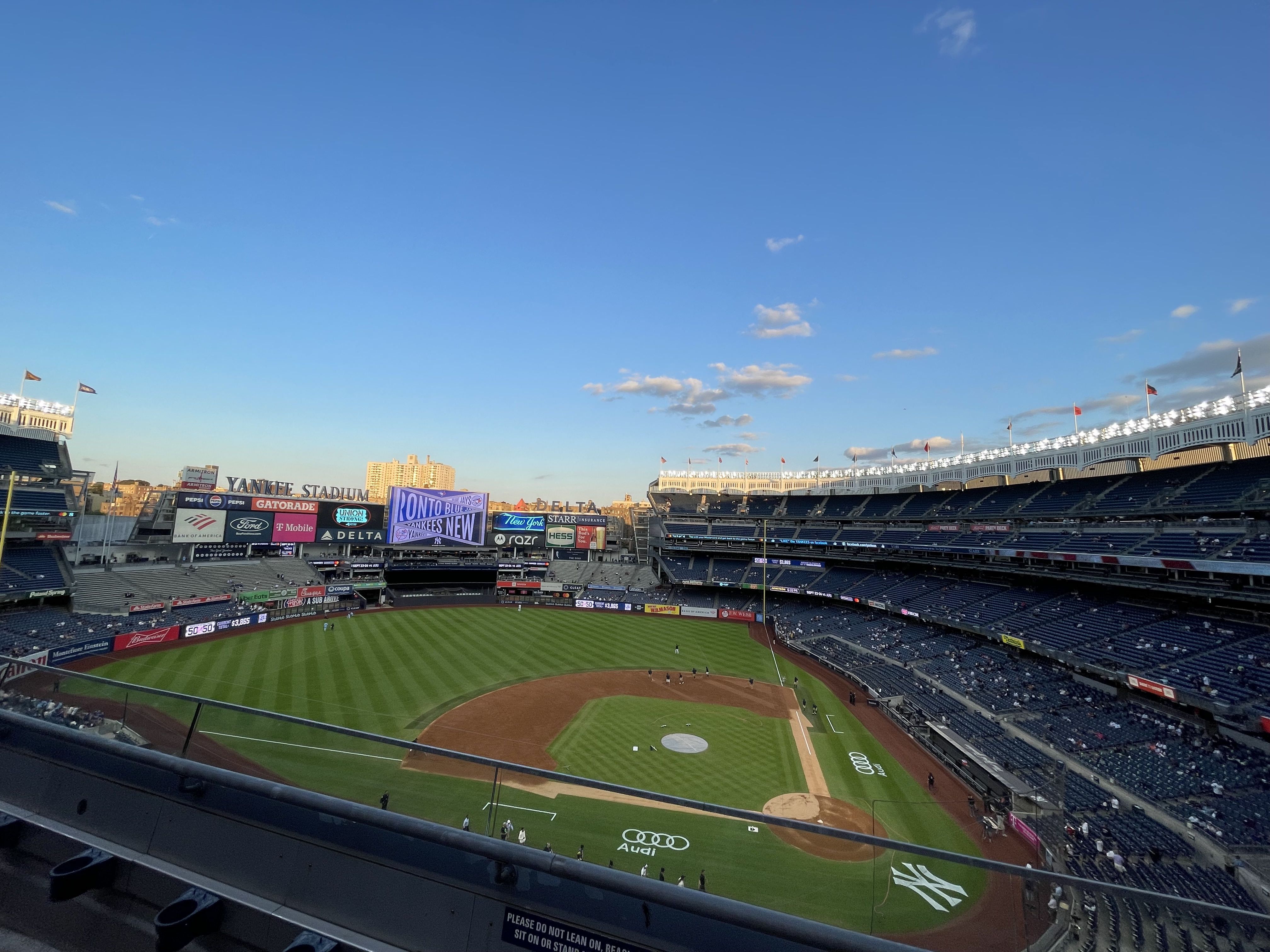
The Los Angeles Dodgers and New York Yankees split a day-night doubleheader on July 19, 2026 [1], at Yankee Stadium in the Bronx [4].
The split outcome highlights the volatile nature of mid-season scheduling and the impact of elite pitching versus late-game power. While the Dodgers demonstrated early dominance, the Yankees' ability to recover in the nightcap prevents a significant momentum shift in the series.
In the first game, the Dodgers secured an 8-2 victory [2]. The win was anchored by Yoshinobu Yamamoto, who threw a complete game [3] to stifle the New York offense. Yamamoto's performance allowed the Dodgers to control the pace of the afternoon and keep the Yankee bullpen rested for the subsequent matchup.
The second game proved to be a much tighter contest, ending in a 2-1 win for the Yankees [3]. The game remained deadlocked until the eighth inning, when Jazz Chisholm Jr. hit a tiebreaking home run [4]. This late-game surge allowed the Yankees to salvage the day after the heavy loss in the opener.
New York's relief pitchers played a critical role in the nightcap victory. The bullpen quieted the Dodgers' lineup to prevent a second consecutive loss [5]. This defensive effort mirrored the early-game dominance shown by Yamamoto in the first half of the day.
The two teams faced a long day of baseball in the Bronx, alternating between a high-scoring blowout and a low-scoring pitcher's duel [4]. The result leaves both teams with a balanced record for the day's festivities.
“The Dodgers won the first game 8-2 with a complete game by Yoshinobu Yamamoto.”
This split reflects a clash of strengths: the Dodgers' top-tier starting pitching and the Yankees' ability to produce clutch hits in high-leverage situations. By splitting the games, neither team gains a psychological edge, but the Yankees' recovery in the second game demonstrates the resilience of their bullpen and late-inning offense.


