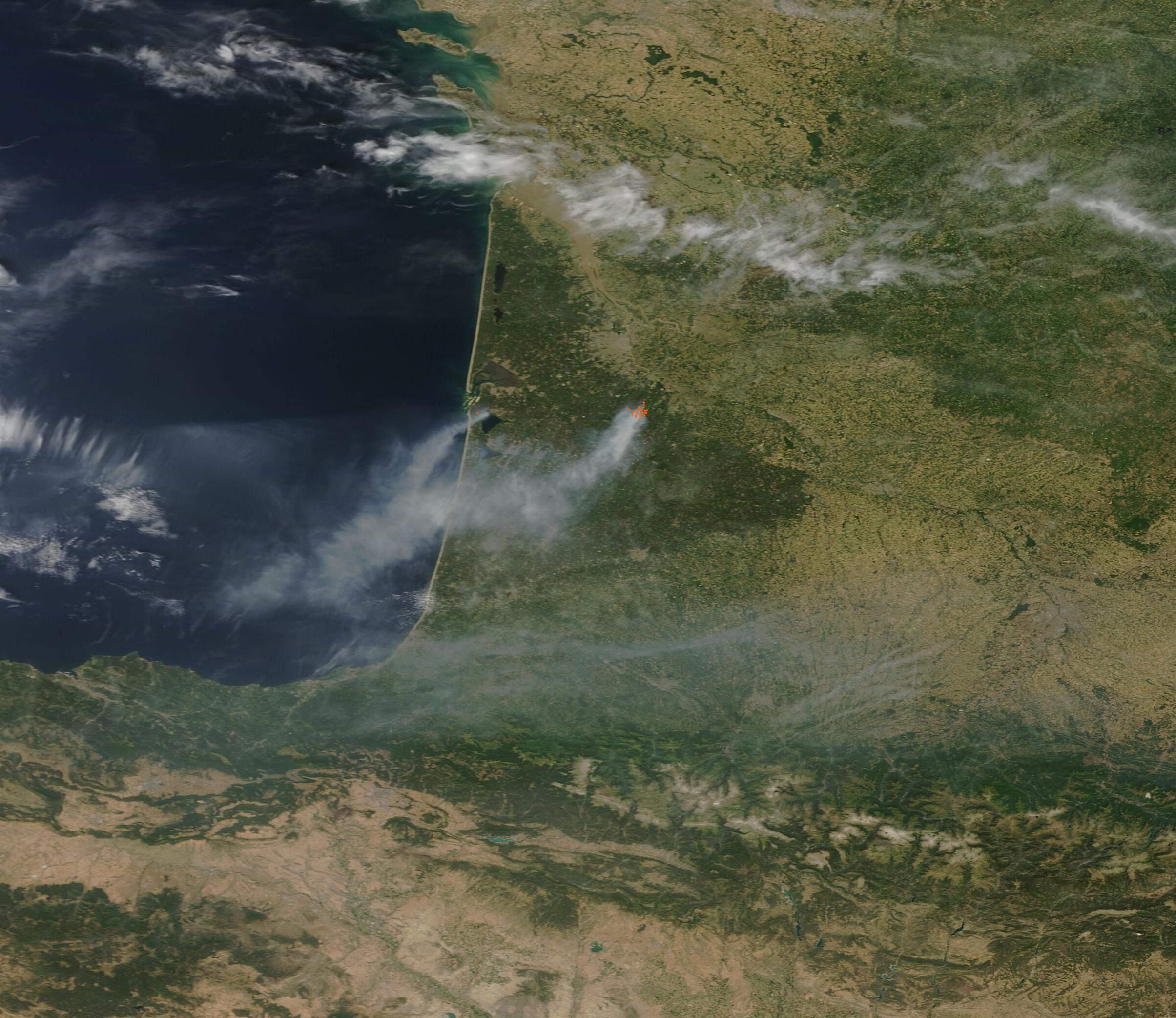
Farmers from the Dordogne department have mobilized to assist firefighters battling massive forest fires across the Gironde region this week [1, 2].
This cross-departmental support is critical as emergency services struggle to contain blazes that threaten residential homes and vital infrastructure. The scale of the disaster has necessitated civilian reinforcements to prevent further loss of life and property.
Organized by the Gironde Chamber of Agriculture and the Coordination Rurale, the volunteers arrived with water tankers and tractors [1, 3]. These resources are being used to transport water to the front lines and create firebreaks to stop the flames from spreading [2, 3].
Reinforcements began arriving on Friday, July 24 [4], with additional convoys of firebreak equipment scheduled for Saturday, July 25 [5]. The mobilization comes as the fires have already burned more than 8,700 hectares in Gironde [6] and 2,500 hectares in the Landes region [6].
In the Arcachon Bay area, the situation has reached a critical point, with nearly 40,000 people evacuated or in the process of being evacuated [7]. The intensity of the heat and the volume of the fires have pushed local civil security to its limits.
"If it were our place, we would be happy for them to come and help us," one Dordogne farmer said [8].
A representative from the FDSEA, a farmers' union in Dordogne, said the situation was urgent. "We must go," the representative said [9].
The collaboration between the agricultural sector and the state's fire services aims to stabilize the perimeter of the fires. By using heavy machinery to strip vegetation and provide a constant supply of water, the farmers are filling gaps in the official firefighting response during a period of exceptional environmental stress.
“"If it were our place, we would be happy for them to come and help us,"”
The mobilization of farmers in Gironde highlights a growing reliance on civilian agricultural infrastructure to manage climate-driven disasters in France. As forest fires increase in scale and frequency, the ability to rapidly deploy non-governmental heavy machinery and water transport becomes a necessary supplement to official civil security protocols.

