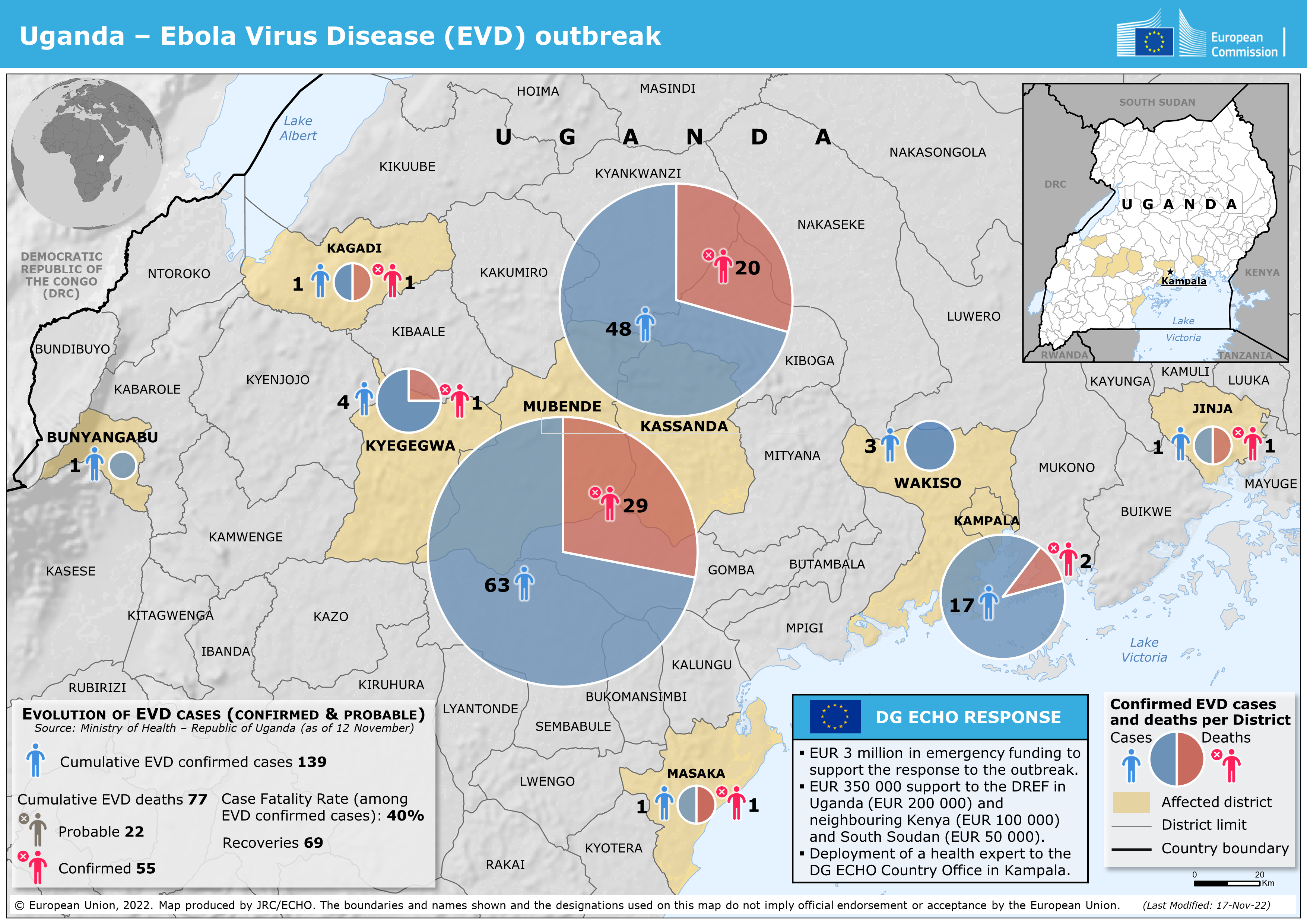
The World Health Organization has declared a public health emergency of international concern following an Ebola outbreak in the Democratic Republic of Congo and Uganda [1, 2, 3].
This emergency is critical because the current outbreak involves the Bundibugyo strain, for which there are no approved vaccines or therapeutics [2]. The lack of medical countermeasures, combined with the virus's transmissibility, increases the risk of a wider regional or global spread.
Health officials have reported more than 300 suspected cases [3]. Death toll estimates vary across reports, with some sources citing at least 80 suspected deaths [4] or 88 suspected deaths [3], while others state about 100 people have died [1].
This is the third recorded outbreak of the Bundibugyo virus [2]. The current situation is exacerbated by funding cuts and a lack of preventative medicine. Epidemiologist Eric Feigl-Ding said, "These factors could set up the perfect storm" [1].
International efforts are underway to contain the virus. The U.S. is working to relocate affected individuals to ensure proper treatment and isolation [3]. However, the absence of a specific vaccine for this strain means containment relies heavily on traditional public health measures, and rapid isolation.
Local authorities in the Democratic Republic of Congo and Uganda continue to monitor the border regions to prevent further transmission. The WHO declaration aims to mobilize international funding and resources to stabilize the affected areas before the virus reaches more densely populated urban centers [3, 5].
“"These factors could set up the perfect storm."”
The declaration of a global health emergency highlights a significant gap in pandemic preparedness regarding specific viral strains. While the world has developed vaccines for other Ebola variants, the Bundibugyo strain's lack of medical countermeasures makes it a high-risk pathogen. The combination of funding shortages and high transmissibility suggests that the international community is currently reacting to the outbreak rather than operating from a position of readiness.


