
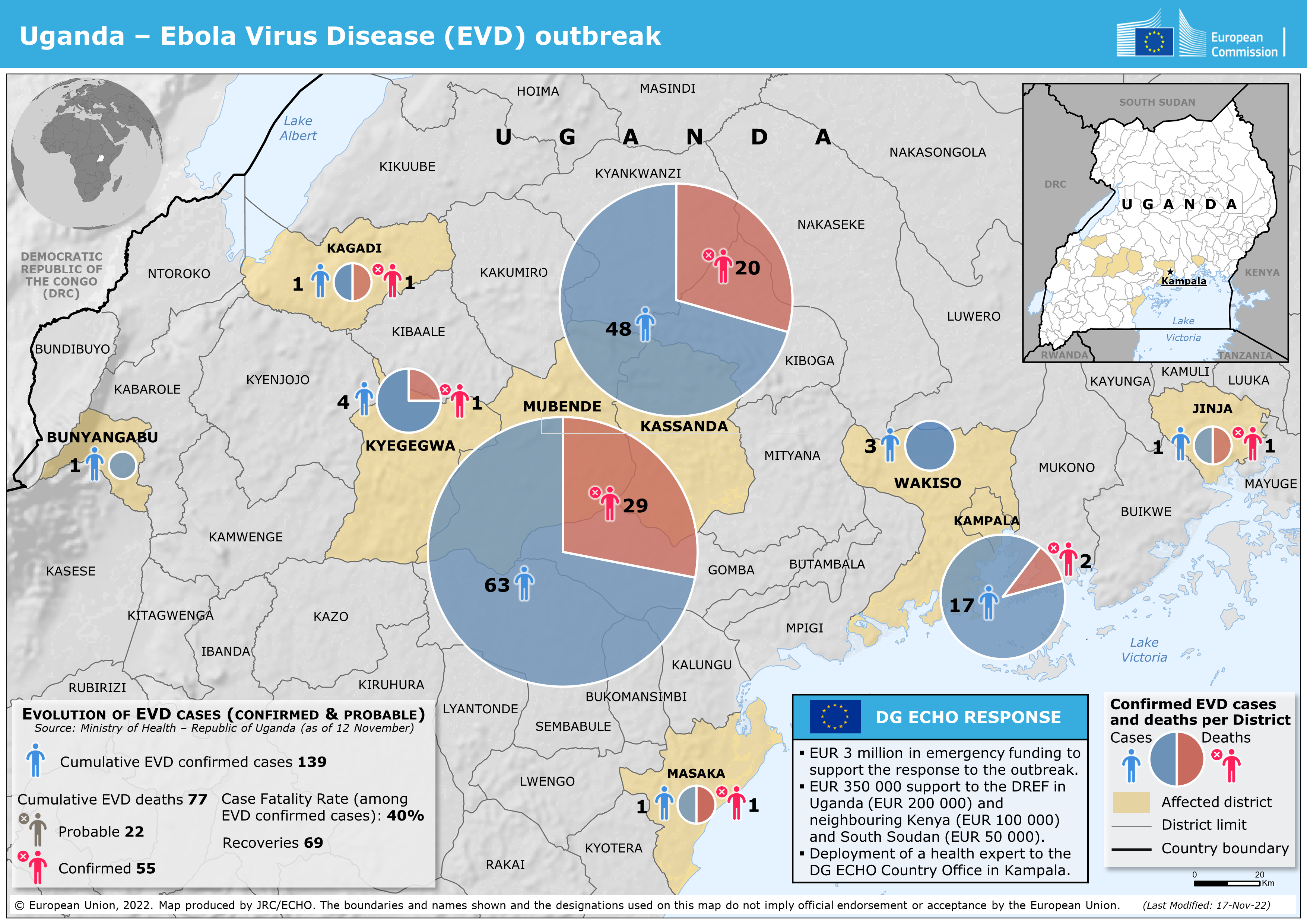
Health officials are working to contain an Ebola outbreak in the Democratic Republic of the Congo and Uganda as cases approach or exceed 1,000 [1, 2].
The rapid expansion of the virus threatens to overwhelm local health systems and necessitates an urgent international response to prevent a wider regional epidemic.
Africa CDC said the outbreak is centered in the Democratic Republic of the Congo [3]. The virus has since spread into neighboring Uganda, where new cases have been reported [4, 5]. The outbreak was officially declared on May 15, 2026 [6].
Data on the scale of the infection varies by reporting agency. Some reports indicate confirmed cases are approaching 1,000 [1], while other data suggests suspected cases have already risen to over 1,000 [2]. The WHO chief said there have been 220 suspected deaths in the ongoing outbreak [7].
Medical teams from the World Health Organization, Africa CDC, and local health authorities are coordinating containment measures. These teams are struggling to slow the spread as the virus moves quickly through the region [8].
International health agencies are prioritizing the deployment of resources to the epicenter in the Democratic Republic of the Congo. The goal is to stabilize the infection rate before the virus reaches more densely populated areas, a move critical to stopping the current surge.
“There have been 220 suspected deaths in the ongoing Ebola outbreak.”
The crossing of the 1,000-case threshold, whether confirmed or suspected, signals a transition from a localized cluster to a significant public health emergency. Because the virus has moved across borders from the Democratic Republic of the Congo into Uganda, the outbreak now requires a multilateral diplomatic and medical response rather than a single-nation strategy.


