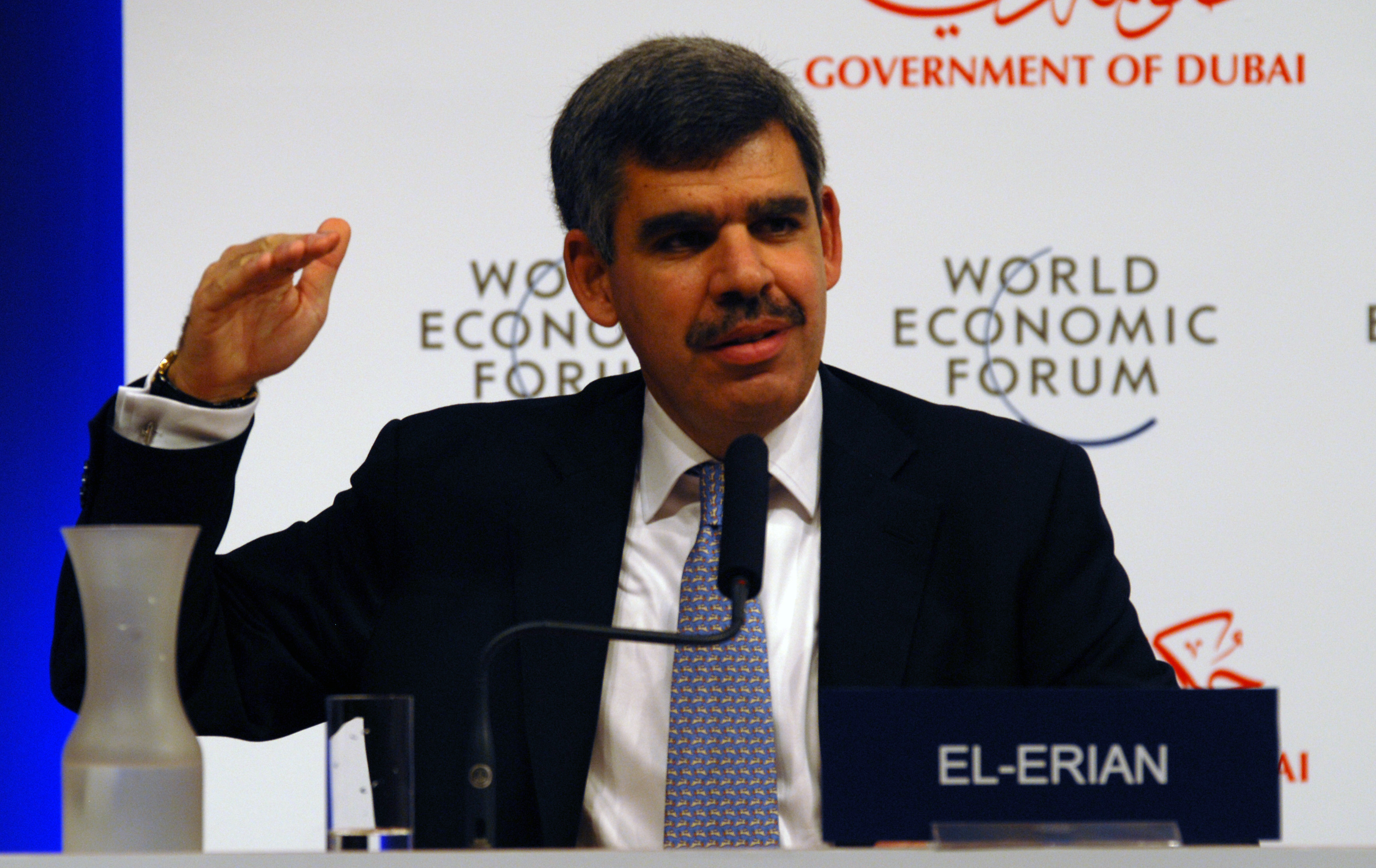
Mohamed El-Erian said the worst of inflation is behind the U.S. economy during an interview on CNBC’s Squawk Box this week.
The assessment comes as investors and policymakers monitor whether price stability can be maintained without triggering a recession. El-Erian, a Wharton School Rene Kern professor and Allianz chief economic advisor, said that the primary catalysts for recent price spikes are fading.
El-Erian pointed to a combination of easing tariff pressures and a significant drop in energy costs as the main reasons for the shift. Specifically, he noted that WTI crude prices have fallen 31% from their peak in April 2026 [1]. He said these factors are removing the most significant drivers of recent inflation.
Regarding monetary policy, El-Erian said that no further Federal Reserve rate hikes are anticipated [2]. This stability in interest rates may provide a buffer for markets, though he warned that the era of extreme American economic dominance may be peaking. "There's a limit to how much the US economy and market will be able to outperform the rest of the world," El-Erian said [3].
While the broader economy shows signs of cooling, certain sectors continue to see aggressive growth. Information-sector profits in the first quarter of 2026 reached $353 billion, representing a 33% increase over two years [4]. However, El-Erian said that the artificial intelligence sector could face an overbuild within three to four years [5].
Despite the optimistic outlook on inflation, other analysts maintain a more cautious stance. Some economists said inflation could rise again if geopolitical tensions, such as a potential Iran-related war, disrupt global supply chains [6].
“"The worst of inflation is behind us."”
El-Erian's outlook suggests a transition from a period of volatile price shocks to a more stable macroeconomic environment. By linking inflation relief to commodity prices and trade policy rather than just Federal Reserve intervention, he implies that external market forces are now doing the heavy lifting. However, the warning regarding AI overbuild suggests that while the 'inflation trade' may be ending, a new bubble in technology infrastructure could be forming.

