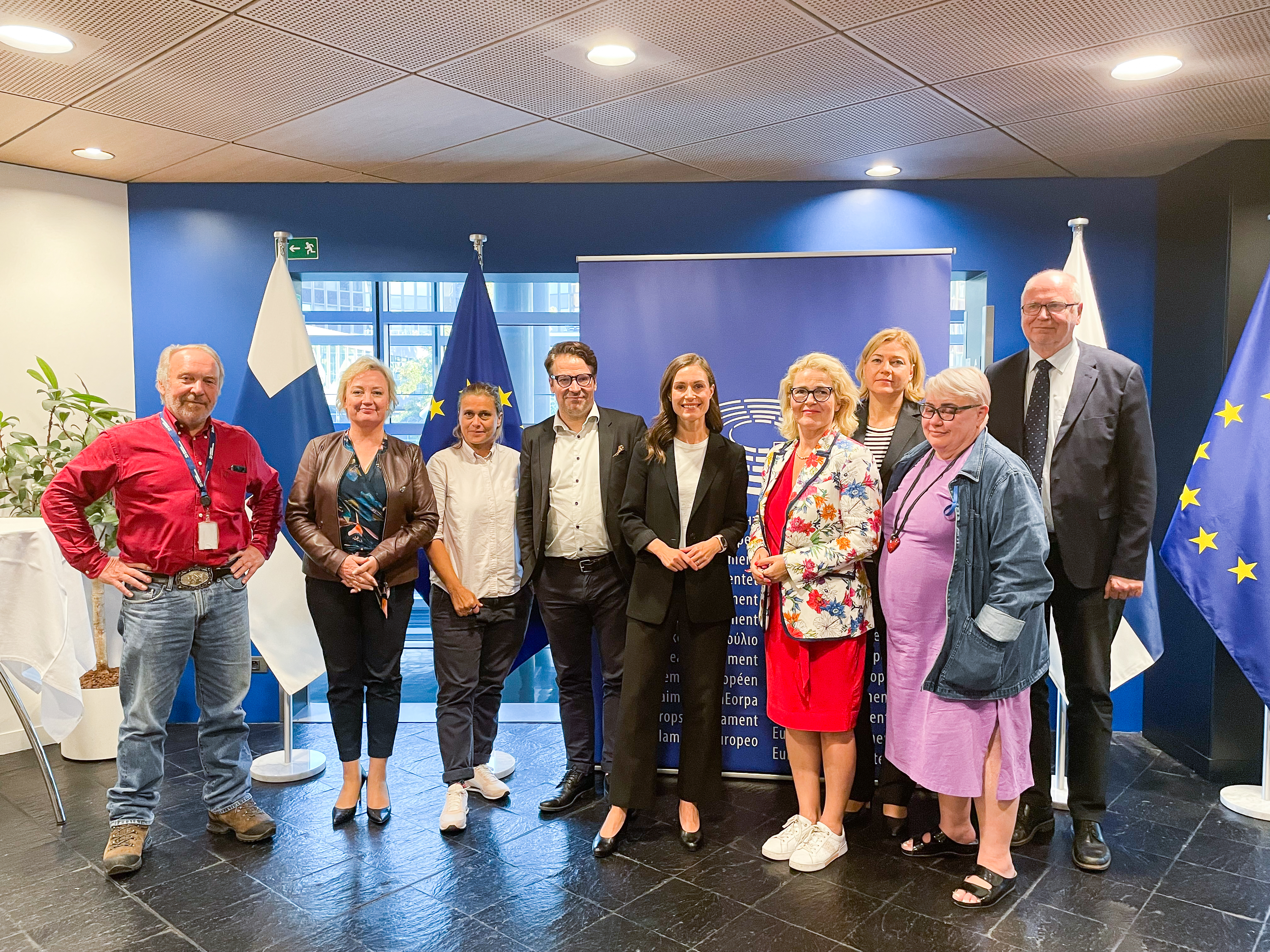
Finland is strengthening its defense and deterrence capabilities against Russia by maintaining a large standing army and an extensive reservist pool [1].
This posture reflects a strategic shift in Nordic security following Finland's entry into NATO on April 4, 2023 [1]. By integrating with the alliance while keeping a robust national military, Finland aims to prevent aggression along its shared border with Russia.
Former Prime Minister Sanna Marin discussed the nation's security strategy during an appearance on the German talk show “Markus Lanz” on April 30 [1]. She said that the country has learned from the past that a threat from Russia is always present [1].
This historical perspective is rooted in the experiences of the Winter War and the Cold War. Finnish leaders view these eras as evidence that the threat from the east is perpetual, a realization that drives the current scale of their military investment [1, 2].
Finland's military capacity is significant relative to its size. The country maintains 300,000 active-duty military personnel [1]. Additionally, Finland manages a reservist pool of 1,000,000 people [1].
These numbers are particularly striking when compared to the nation's total population of approximately 5.5 million [1]. The high ratio of military-trained citizens to civilians serves as a primary deterrent against potential incursions.
Government officials and armed forces continue to emphasize that deterrence is the most effective way to ensure peace. This approach combines the collective security guarantees of NATO with a sovereign ability to mobilize a large portion of the population quickly [1, 2].
“A threat from Russia is always present.”
Finland's decision to maintain a massive reserve force despite joining NATO indicates that the country does not view alliance membership as a replacement for national self-reliance. By keeping a high percentage of its 5.5 million citizens military-ready, Finland creates a 'tripwire' effect that increases the cost of aggression for Russia, blending historical survival instincts with modern collective security.
'%2F%3E%0A%20%20%20%20%3Crect%20width%3D'1600'%20height%3D'900'%20fill%3D'url(%23v)'%2F%3E%0A%20%20%20%20%3Cg%20opacity%3D'0.08'%20fill%3D'%23ffffff'%3E%0A%20%20%20%20%20%20%3Ccircle%20cx%3D'1420'%20cy%3D'180'%20r%3D'220'%2F%3E%0A%20%20%20%20%20%20%3Ccircle%20cx%3D'1500'%20cy%3D'760'%20r%3D'120'%2F%3E%0A%20%20%20%20%3C%2Fg%3E%0A%20%20%20%20%3Cline%20x1%3D'80'%20y1%3D'172'%20x2%3D'220'%20y2%3D'172'%20stroke%3D'%23ffffff'%20stroke-width%3D'3'%20stroke-opacity%3D'0.6'%2F%3E%0A%20%20%20%20%3Ctext%20x%3D'80'%20y%3D'140'%20font-family%3D'Inter%2C%20-apple-system%2C%20Helvetica%2C%20sans-serif'%20font-weight%3D'700'%20font-size%3D'28'%20fill%3D'%23ffffff'%20letter-spacing%3D'6'%3EHANNA%20%C2%B7%20NEWS%3C%2Ftext%3E%0A%20%20%20%20%3Ctext%20x%3D'80'%20y%3D'230'%20font-family%3D'Inter%2C%20-apple-system%2C%20Helvetica%2C%20sans-serif'%20font-weight%3D'600'%20font-size%3D'40'%20fill%3D'%23ffffffb3'%20letter-spacing%3D'4'%3EWORLD%3C%2Ftext%3E%0A%20%20%20%20%3Ctext%20x%3D'80'%20y%3D'622'%20font-family%3D'Playfair%20Display%2C%20Georgia%2C%20serif'%20font-weight%3D'800'%20font-size%3D'86'%20fill%3D'%23ffffff'%20letter-spacing%3D'-1'%3EVenezuela%20Faces%20Public%3C%2Ftext%3E%3Ctext%20x%3D'80'%20y%3D'721'%20font-family%3D'Playfair%20Display%2C%20Georgia%2C%20serif'%20font-weight%3D'800'%20font-size%3D'86'%20fill%3D'%23ffffff'%20letter-spacing%3D'-1'%3EHealth%20Crisis%20After%20Major%3C%2Ftext%3E%3Ctext%20x%3D'80'%20y%3D'820'%20font-family%3D'Playfair%20Display%2C%20Georgia%2C%20serif'%20font-weight%3D'800'%20font-size%3D'86'%20fill%3D'%23ffffff'%20letter-spacing%3D'-1'%3EEarthquakes%3C%2Ftext%3E%0A%20%20%20%20%3Ctext%20x%3D'80'%20y%3D'870'%20font-family%3D'Inter%2C%20-apple-system%2C%20Helvetica%2C%20sans-serif'%20font-weight%3D'500'%20font-size%3D'22'%20fill%3D'%23ffffff66'%20letter-spacing%3D'2'%3Enews.hanna-ai.com%3C%2Ftext%3E%0A%20%20%3C%2Fsvg%3E)

