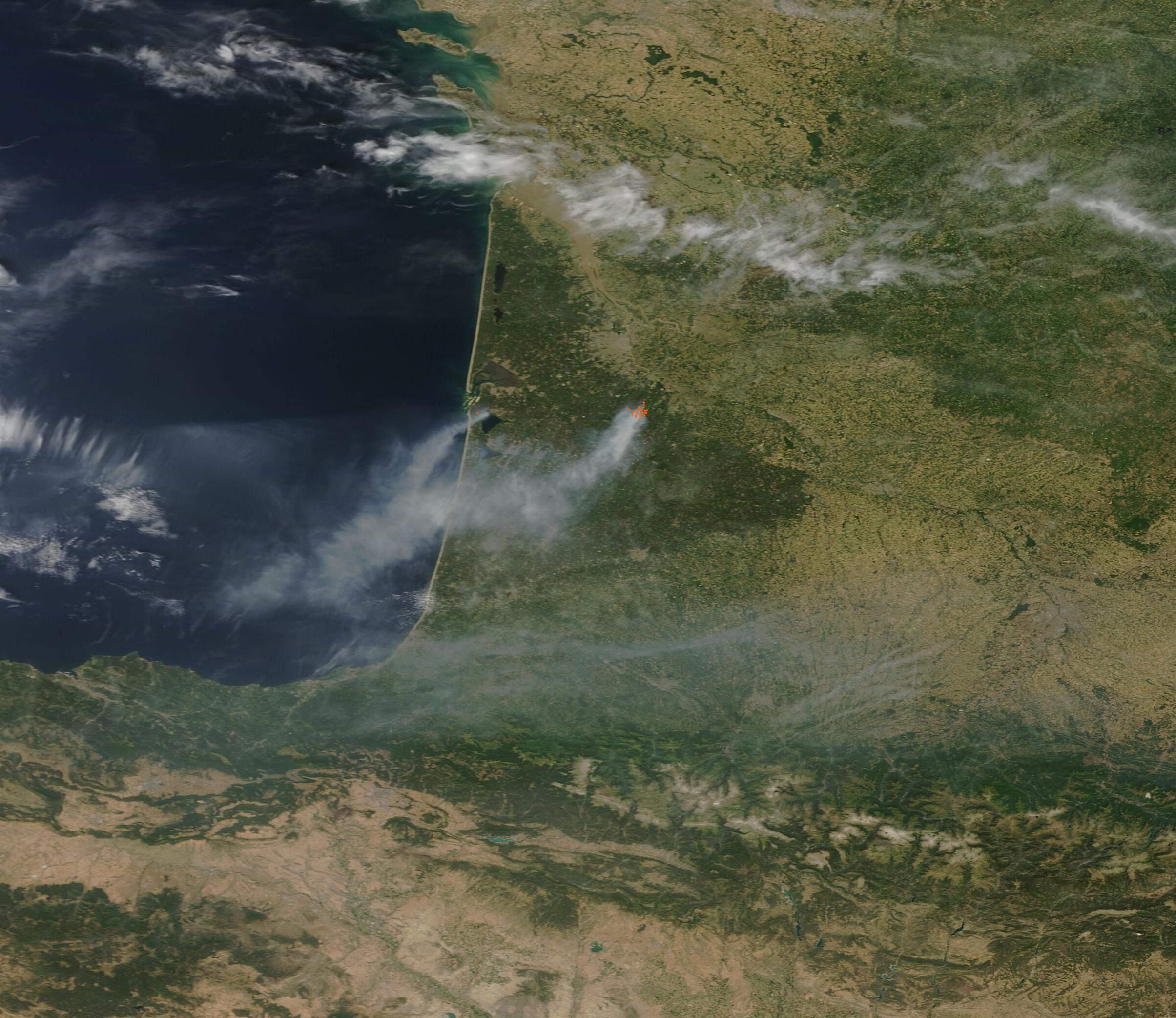
French authorities ordered nearly 4,000 people to evacuate tourist sites on the Atlantic coast this Tuesday [1].
The order comes as returning heat threatens the fragile hold firefighters have on a vast wildfire west of Bordeaux. The escalating conditions put residents and visitors at risk in a region heavily reliant on summer tourism.
The blaze has forced a rapid response from emergency services as they struggle to contain the perimeter. Officials said the new evacuation orders were issued to prevent casualties as the fire's behavior becomes more unpredictable due to the temperature spike [1].
This latest surge in activity is part of a broader pattern of historic wildfires affecting Southern Europe. In France and Spain, the scale of displacement has been significant. Reports on the total number of people affected vary—some data indicates 257,000 people have been evacuated [3], while other reports state over 300,000 people have fled their homes [2].
Firefighters continue to battle the flames west of Bordeaux, where the combination of dry vegetation and high heat has created a volatile environment. The Atlantic coast, typically a sanctuary for tourists, has become a primary zone of emergency operations as authorities prioritize life safety over property preservation [1].
Local officials said they have not yet provided a timeline for when the evacuated residents can return to their homes or businesses. The situation remains fluid as crews work to establish containment lines before the next heat wave further compromises their progress [1].
“French authorities ordered nearly 4,000 more people to evacuate from tourist sites on the Atlantic coast.”
The disparity in evacuation numbers between 257,000 and 300,000 suggests a rapidly evolving crisis across the Mediterranean region. The need for sudden, large-scale evacuations in high-traffic tourist zones indicates that existing fire containment strategies are struggling to keep pace with extreme heat cycles, increasing the pressure on European civil defense infrastructure.

