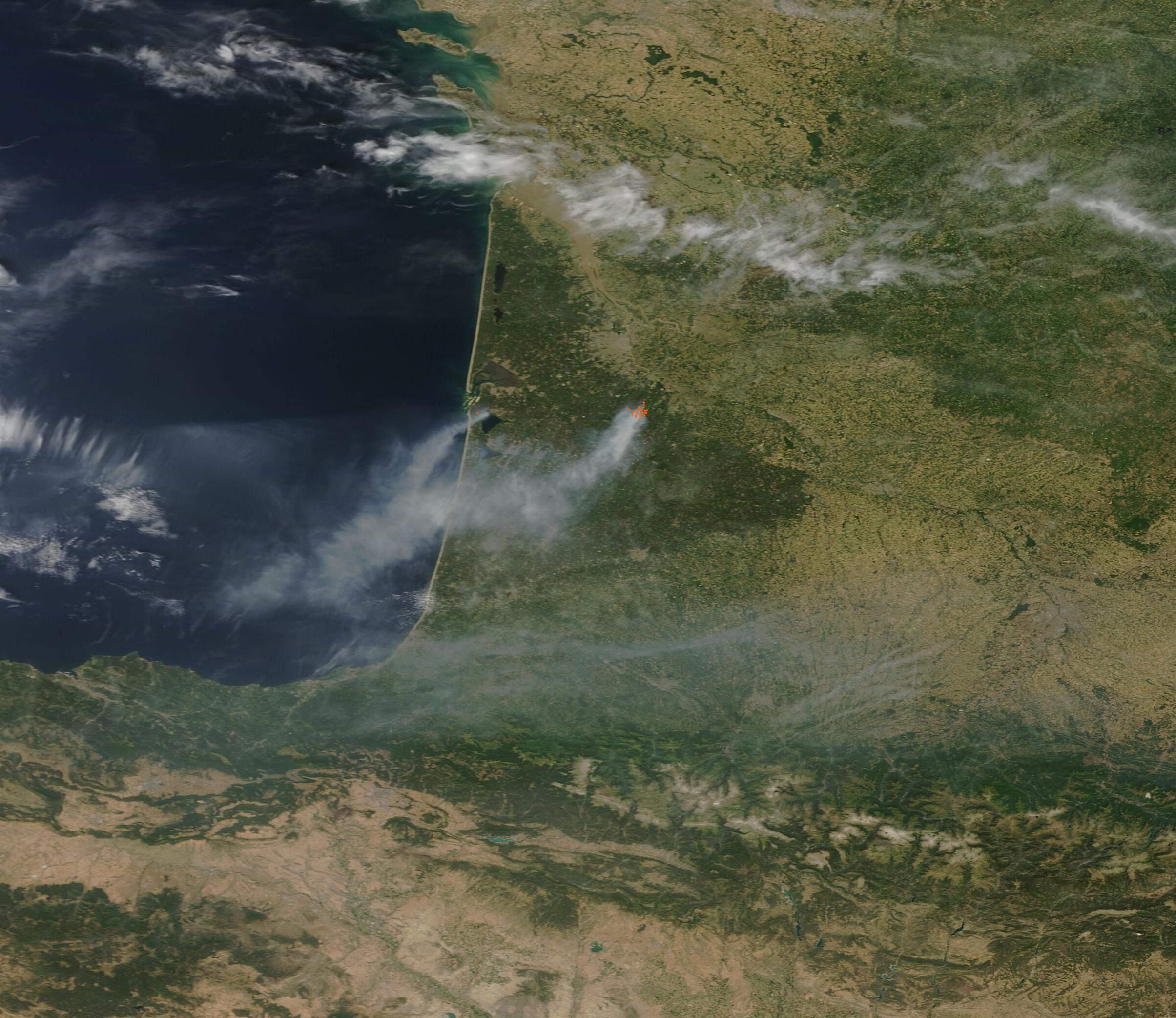
French authorities ordered a mass evacuation of the Lège-Cap-Ferret peninsula on Friday, July 24, as a large wildfire swept across the Atlantic coast [1].
The scale of the displacement underscores the vulnerability of tourist-heavy coastal regions to extreme weather events during the peak summer season. Because the peninsula is geographically isolated, the evacuation required a coordinated effort to move thousands of people to safety.
Emergency responders deployed about 800 firefighters to combat the blaze [3]. They were supported by hundreds of gendarmes and soldiers who managed the movement of residents and visitors away from the fire's path [4].
Reports on the number of displaced persons vary. Some data indicates over 20,000 people were evacuated from the tourist town [3], while other reports state more than 60,000 residents fled their homes [2]. The discrepancy likely reflects the difference between formal evacuation orders and those who left preemptively.
The fire threatened homes and public safety in the region west of Bordeaux [1]. To ensure the safety of those trapped by the geography of the peninsula, many residents were forced to leave by boat [1].
Authorities continued to monitor the wind and fire behavior to prevent the blaze from spreading further into residential areas. The deployment of military personnel was necessary to secure the perimeter and ensure that all residents had vacated the high-risk zones [4].
“Tens of thousands flee the Lège-Cap-Ferret peninsula as emergency crews battle blazes.”
The evacuation of Lège-Cap-Ferret highlights the increasing risk wildfires pose to European coastal tourism hubs. The need for military intervention and maritime evacuations suggests that traditional land-based emergency routes are insufficient for the geography of the region during large-scale disasters.


