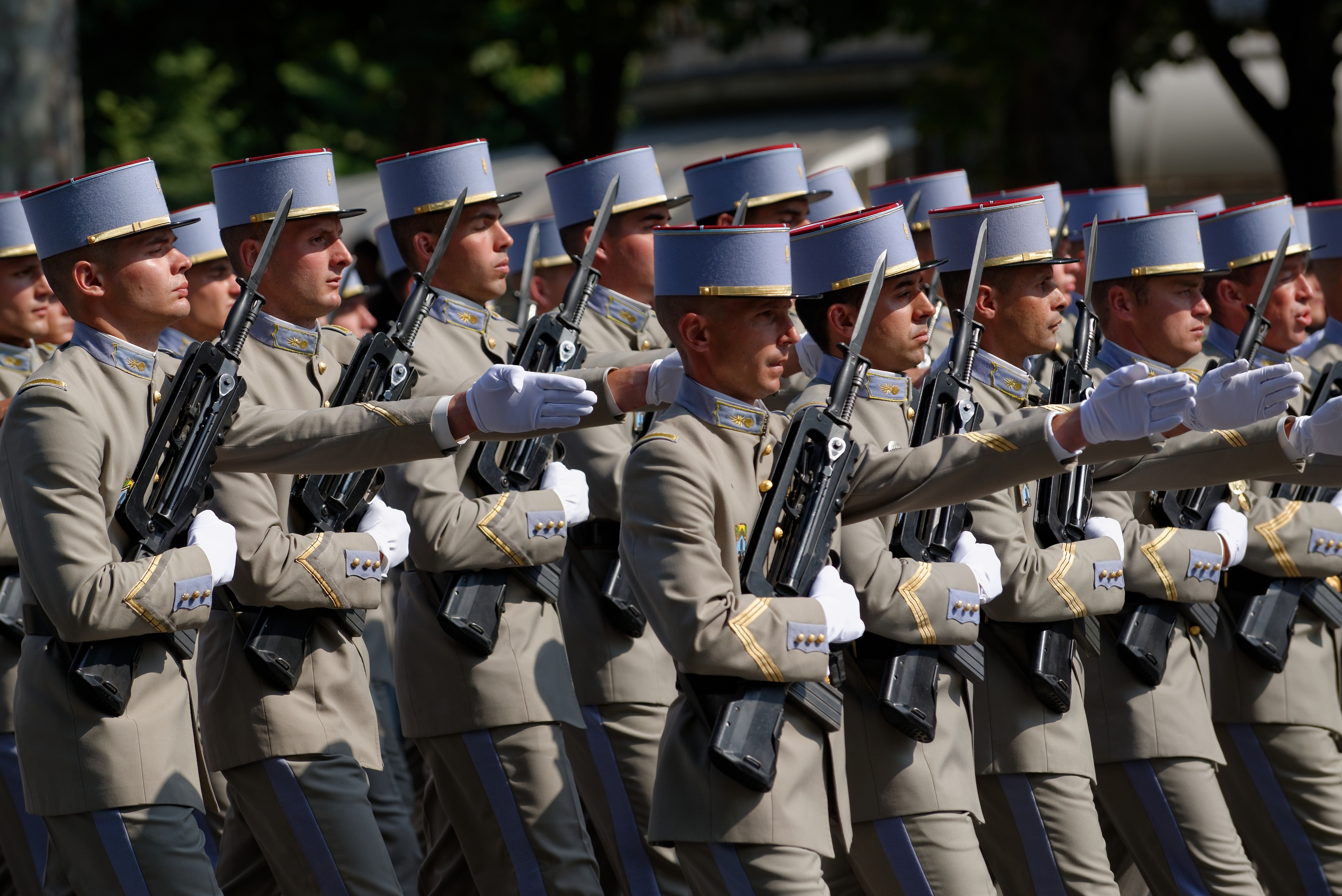
France held its largest-ever Bastille Day military parade in Paris on Tuesday to showcase military strength and unity with European allies.
The event serves as a strategic signal of solidarity with Ukraine during its ongoing conflict. By hosting high-profile leaders, including Ukrainian President Volodymyr Zelenskyy, France aims to demonstrate a coordinated European defense posture.
The procession followed the traditional route between the Arc de Triomphe and the Place de la Concorde. The scale of the event was unprecedented, featuring nearly 6,700 marching troops [1]. The display of hardware included 315 vehicles [1] and a significant aerial component.
Air support for the parade consisted of 98 aircraft [1], while 31 helicopters [1] participated in the flyovers. These assets were used to flaunt French firepower alongside the contributions of allied European forces.
President Emmanuel Macron hosted the festivities as a means of highlighting the collective security of the continent. The presence of Zelenskyy and other European leaders underscored the geopolitical intent of the celebration, linking national pride with international military cooperation.
The coordination of troops and warplanes from across Europe was designed to project a unified front. This display of force occurs as European nations continue to navigate the security challenges posed by the war in Ukraine.
“France held its largest-ever Bastille Day military parade in Paris”
The unprecedented scale of this parade suggests that France is leveraging its national holiday to transition from symbolic support to a visible projection of military readiness. By integrating allied troops and hosting President Zelenskyy, Macron is positioning France as the central coordinator of European defense, signaling to adversaries that the continent's military capabilities are increasingly integrated and resolute.


