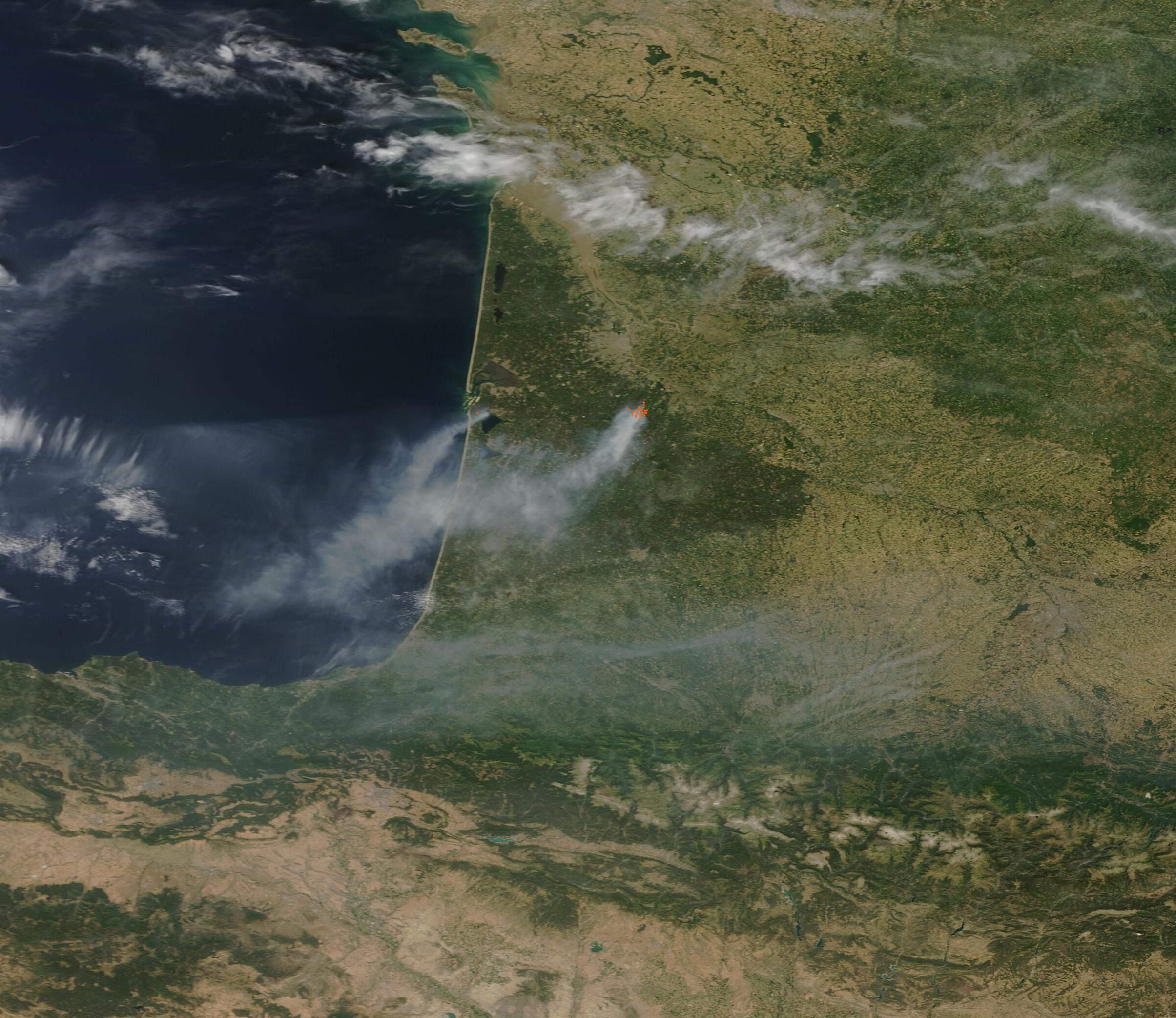
French fire crews are battling a massive wildfire west of Bordeaux that has grown to four times the size of Paris [3].
The disaster underscores the increasing vulnerability of Southern Europe to extreme weather, as a combination of prolonged drought and record heat transforms coastal regions into tinder-boxes.
The fire started a week ago and continues to burn across the Atlantic coast in south-west France [1, 2]. Officials said the blaze was fueled by the fourth heatwave this summer, with temperatures reaching 40°C [1, 5].
Emergency response efforts have come at a high cost to personnel. A total of 126 firefighters have been injured while attempting to contain the perimeter [1]. The regional crisis mirrors similar struggles across the continent, where three firefighters died in Spain [2] and two died in Greece [3] while fighting separate blazes.
Evacuation orders have shifted rapidly as the fire spreads. Reports on the total number of displaced residents vary, with estimates ranging from more than 250,000 [5] to approximately 333,000 people [2]. In specific tourist sites along the French Atlantic coast, nearly 4,000 people were evacuated [6].
Fire crews are currently preparing for the next phase of the operation to prevent the fire from reaching more residential areas. The scale of the fire has strained local resources, requiring coordinated efforts between regional and national fire services to maintain containment lines.
Local authorities said the extreme heat has made the terrain exceptionally volatile. The combination of dry vegetation and high temperatures has allowed the fire to jump containment barriers, forcing the large-scale evacuations seen this week.
“The blaze is four times the size of Paris.”
The simultaneous occurrence of massive wildfires in France, Spain, and Greece suggests a systemic failure of traditional containment strategies in the face of intensifying heatwaves. With temperatures hitting 40°C and multiple heatwaves occurring in a single season, the scale of displacement—reaching hundreds of thousands—indicates that current evacuation infrastructures may be overwhelmed by the speed of modern climate-driven fires.